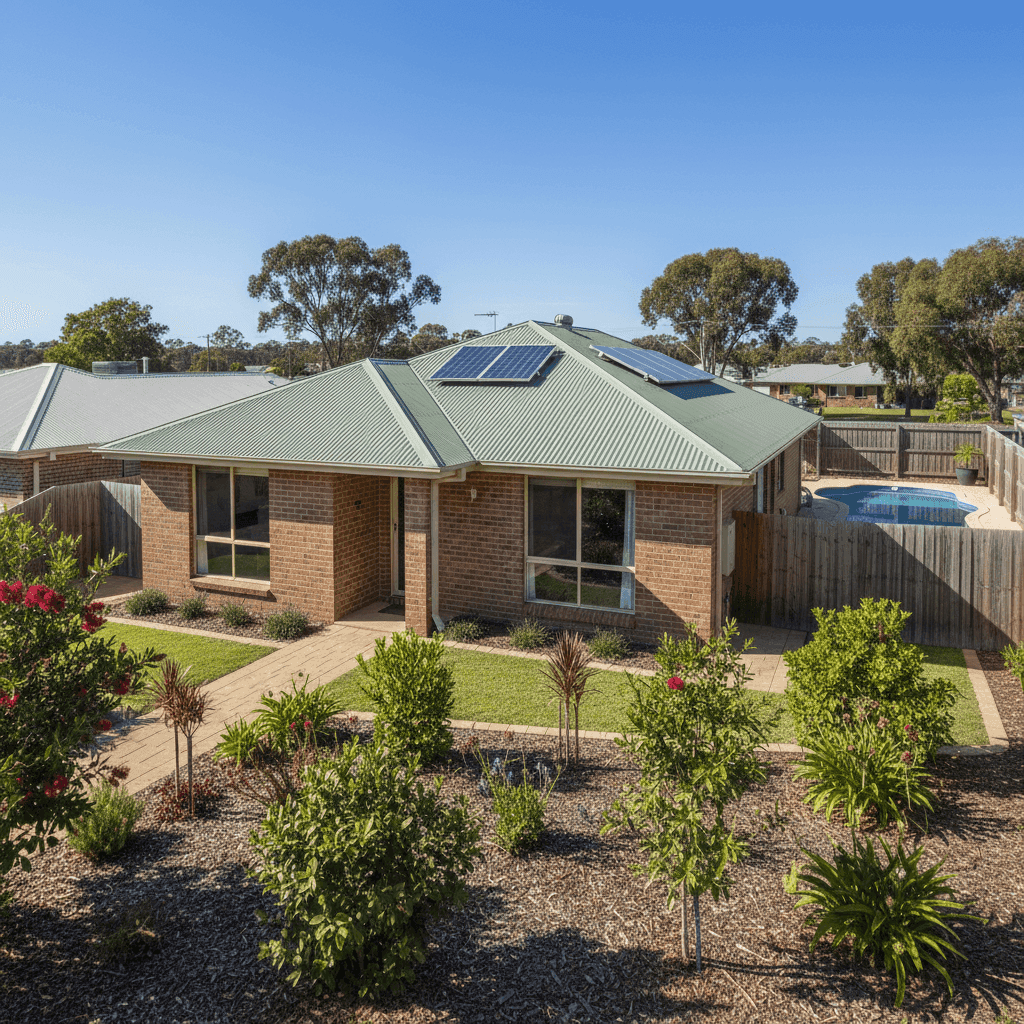
Wee Waa is a quiet agricultural town in north-western New South Wales, best known as the "Cotton Capital of Australia." It's a place where wide open paddocks meet tight-knit community living — and where home insurance is just as important as anywhere else in the country. This article breaks down a real home and contents insurance quote for a four-bedroom, free-standing home in Wee Waa (postcode 2388), helping you understand what's driving the price and how it stacks up against the broader market.
---
Is This Quote Fair?
The annual premium for this property came in at $5,076 per year (or $479/month), covering both building (sum insured: $950,000) and contents ($250,000), each with a $2,000 excess. Our pricing engine rates this quote as FAIR — Around Average.
That assessment holds up when you dig into the local data. The suburb average premium for Wee Waa sits at $4,443/year, with a median of $4,495. This quote lands above both of those figures, but it's still comfortably within the suburb's 75th percentile of $5,092 — meaning roughly three-quarters of comparable quotes in the area come in at or below this level. You're not being gouged, but there may be room to sharpen the price with a bit of shopping around.
It's also worth noting that the sum insured here is relatively high at $950,000 for the building alone. A 268 sqm brick veneer home built in 1965 carries real replacement cost risk — especially factoring in labour and materials in a regional area — so a higher sum insured is sensible, even if it nudges the premium upward.
---
How Wee Waa Compares
Understanding your premium in isolation only tells part of the story. Here's how Wee Waa sits within the broader insurance landscape:
| Benchmark | Average Premium | Median Premium |
|---|---|---|
| Wee Waa (2388) | $4,443/yr | $4,495/yr |
| NSW | $9,528/yr | $3,770/yr |
| National | $5,347/yr | $2,764/yr |
| Coonamble LGA | $7,925/yr | — |
A few things stand out here. The NSW state average of $9,528 looks alarming at first glance, but the median of just $3,770 tells a very different story — it signals that a small number of extremely high-risk or high-value properties (think flood-prone areas, coastal suburbs, or high-sum-insured homes in Sydney) are pulling the average up significantly. Wee Waa's premiums are actually quite moderate by NSW standards.
At the national level, the average of $5,347 is close to this quote's $5,076, while the national median of $2,764 reflects the large volume of lower-value or lower-risk properties across the country. The Coonamble LGA average of $7,925 is notably higher than the Wee Waa suburb average, suggesting that some properties within the broader local government area carry elevated risk profiles — possibly due to flood exposure or other geographic factors. By comparison, this Wee Waa quote looks relatively reasonable.
---
Property Features That Affect Your Premium
Several characteristics of this property have a meaningful influence on what insurers charge. Here's what matters most:
Age and construction (1965, Brick Veneer, Colorbond roof): Homes built in the 1960s are well past their prime in terms of modern building standards. Insurers factor in the age of a property when assessing the likelihood of claims related to ageing plumbing, wiring, and structural components. That said, brick veneer walls are generally viewed favourably — they're durable and fire-resistant. The steel Colorbond roof is a plus too, offering good longevity and resistance to the elements compared to older tile or fibrous cement alternatives.
Slab foundation: A concrete slab foundation is standard for this era of construction and doesn't typically attract a premium loading on its own. However, in areas with reactive soils (which can be common in inland NSW), slab movement can be a concern over time.
Swimming pool: The presence of a pool adds to the insurable risk — both in terms of liability and the cost to repair or replace the pool structure itself. Most insurers factor this into their building premium calculations.
Solar panels: Solar systems are increasingly common, and most insurers now include them as part of the building sum insured. It's worth confirming with your insurer that your panels are covered for damage from storms, hail, or fire — and that the $950,000 sum insured adequately accounts for their replacement value.
Ducted climate control: Ducted air conditioning systems are expensive to repair or replace, and their inclusion as a fixed building feature is another reason a higher sum insured makes sense here.
Carpet flooring, standard fittings: These choices keep the overall fit-out value at a moderate level, which is reflected in the $250,000 contents figure — a reasonable amount for a four-bedroom home with standard appointments.
---
Tips for Homeowners in Wee Waa
1. Review your sum insured regularly. Building costs in regional NSW have risen sharply over the past few years. A $950,000 sum insured may feel like a lot, but for a 268 sqm home in a regional area where tradies and materials can cost a premium, it's worth getting an independent building replacement cost estimate to make sure you're not underinsured. Many insurers offer online calculators to help.
2. Check your flood and storm cover carefully. Wee Waa sits within the Namoi River catchment, and while the town itself has flood mitigation infrastructure, surrounding rural areas can be significantly affected during major rainfall events. Make sure your policy clearly defines what's covered under storm, rainwater, and flood — these are often treated as separate events with different conditions.
3. Shop around — even a "fair" price can be beaten. Our rating of "fair" means you're not overpaying dramatically, but you're also not getting the sharpest deal on the market. With 17 quotes sampled in the Wee Waa area, there's genuine variation in what insurers will charge for this type of property. A few minutes comparing options could save you hundreds annually.
4. Consider your excess level strategically. Both the building and contents excess on this policy are set at $2,000. Opting for a higher excess can meaningfully reduce your annual premium — but only makes sense if you have the financial buffer to cover that amount in the event of a claim. Conversely, if cash flow is tight, a lower excess (at a slightly higher premium) might offer better peace of mind.
---
Compare Your Own Quote
Whether you're a long-time Wee Waa local or new to the area, it pays to make sure your home insurance is working as hard as you are. CoverClub makes it easy to see how your current premium stacks up and find a better deal if one exists. Get a home insurance quote today and see where your property sits in the market — it only takes a few minutes.