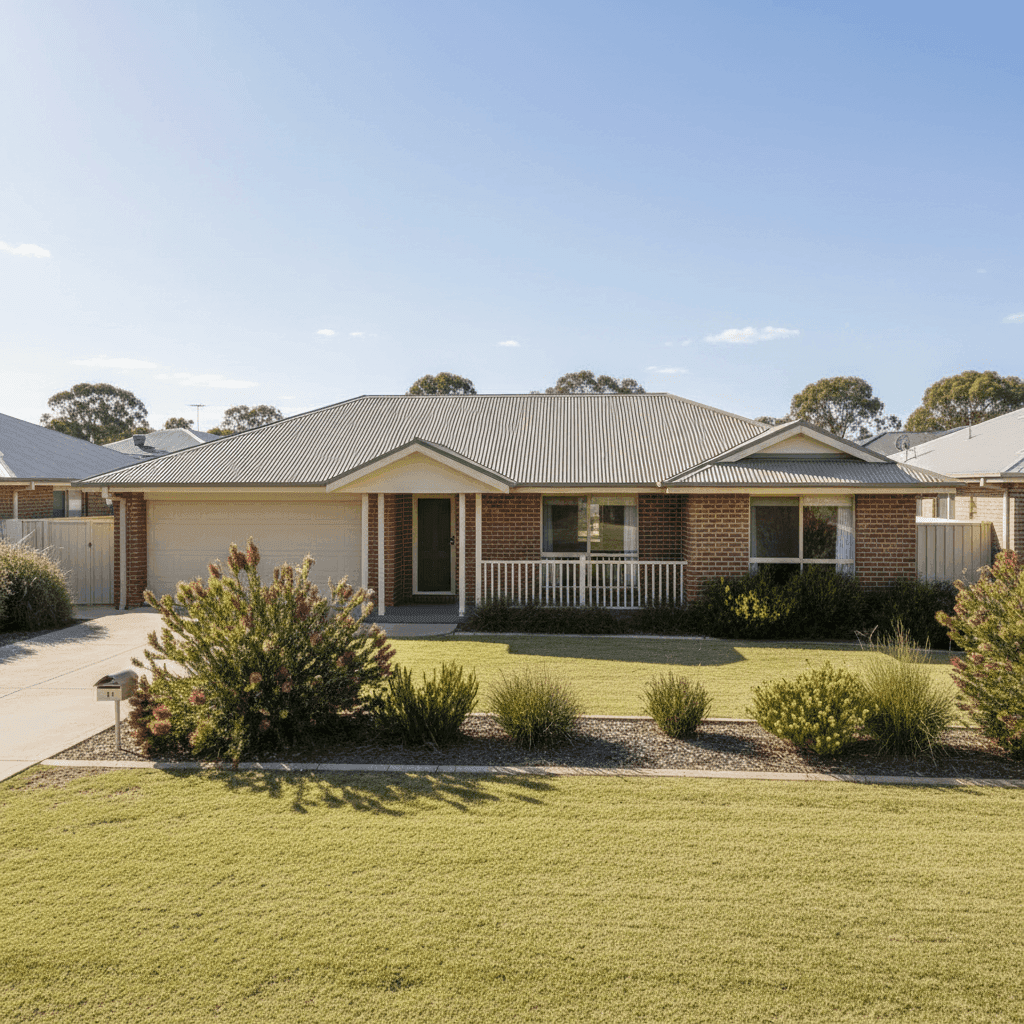
If you own a free standing home in Wee Waa, NSW 2388, you've probably noticed that home insurance doesn't come cheap in this part of regional New South Wales. Wee Waa is a small cotton-growing town in the Narrabri Shire, sitting in the heart of the Liverpool Plains — an area that brings with it a distinct set of risks that insurers take very seriously. In this article, we break down a real home and contents insurance quote for a 3-bedroom, 2-bathroom brick veneer home in Wee Waa, and put the numbers into context so you can judge whether you're getting a fair deal.
---
Is This Quote Fair?
The quote in question comes in at $21,344 per year (or $2,046/month) for combined home and contents cover, with a building sum insured of $580,000 and contents valued at $122,000. Both the building and contents excess are set at $1,000.
Our price rating for this quote is Expensive — above average for the area.
To put that in perspective, the suburb average for Wee Waa sits at just $4,443 per year, with a median of $4,495. That means this particular quote is roughly 4.8 times the local suburb average — a significant gap that warrants a closer look.
It's worth noting, however, that the sum insured here is substantial. A $580,000 building cover for a 130 sqm home, combined with $122,000 in contents, represents a fairly high level of protection. Higher insured values naturally attract higher premiums, and this is likely one of the key drivers pushing this quote well above the suburb norm. That said, even accounting for the elevated sums insured, the premium is on the steeper end of the scale and it would be well worth shopping around.
---
How Wee Waa Compares
Understanding where your premium sits relative to broader benchmarks is one of the most useful tools a homeowner has. Here's how Wee Waa stacks up:
| Benchmark | Average Premium | Median Premium |
|---|---|---|
| Wee Waa (2388) | $4,443/yr | $4,495/yr |
| LGA (Coonamble) | $7,925/yr | — |
| NSW | $9,528/yr | $3,770/yr |
| National | $5,347/yr | $2,764/yr |
A few things stand out here. The NSW state average of $9,528 per year is quite high, though the median of $3,770 tells a different story — it suggests a relatively small number of very expensive policies are pulling the average up considerably. Similarly, at the national level, the average of $5,347 is nearly double the median of $2,764, pointing to the same pattern of outlier-heavy data.
Wee Waa's suburb average of $4,443 is actually quite reasonable compared to the broader NSW and LGA figures, suggesting that for standard policies with typical sums insured, the area isn't excessively risky in insurer eyes. The LGA average of $7,925 (covering the Coonamble region) is notably higher, which may reflect a wider spread of rural and flood-prone properties across the local government area.
The quote analysed here sits well above all of these benchmarks, reinforcing the view that the high sums insured — and potentially the specific risk profile of this property — are significant factors.
---
Property Features That Affect Your Premium
Several characteristics of this home are relevant to how insurers assess risk and calculate your premium.
Brick veneer construction is generally viewed favourably by insurers. It offers solid fire resistance and structural durability, which can help moderate premiums compared to timber-framed or clad homes. The steel/Colorbond roof is similarly well-regarded — it's lightweight, durable, and resistant to ember attack, which matters in bushfire-prone regions of NSW.
The slab foundation is a practical choice for the flat terrain common around Wee Waa, and it generally doesn't raise any red flags for insurers. Tiled flooring throughout is another neutral-to-positive factor; tiles are durable and less susceptible to water damage than carpet or timber floors.
The home was built in 2001, which places it in a relatively modern bracket. Homes built after the mid-1990s typically comply with updated building codes, meaning they're constructed to better withstand environmental stressors than older dwellings.
The presence of ducted climate control is worth flagging. Ducted systems are considered a higher-value fitting and can contribute to a higher contents or building replacement value — which may be reflected in the sum insured and, by extension, the premium.
There's no pool and no solar panels on this property, which removes two common sources of additional premium loading. Pools add liability risk, while solar panels increase the cost of roof-related claims.
One of the most significant risk factors for properties in the Wee Waa region is flooding. The Namoi River and surrounding floodplains make parts of the area susceptible to inundation during heavy rainfall events. Insurers assess flood risk at a granular level, and even properties that haven't flooded historically may attract a loading if they sit within a mapped flood zone. This is likely a meaningful contributor to premiums in this postcode.
---
Tips for Homeowners in Wee Waa
1. Review your sum insured carefully. A $580,000 building sum insured for a 130 sqm home works out to roughly $4,460 per square metre — which is on the higher end for a standard brick veneer build. It's worth getting an independent building replacement cost estimate to ensure you're not over-insured, which could be inflating your premium unnecessarily. Equally, being under-insured carries its own serious risks, so accuracy is key.
2. Ask about flood cover exclusions and loadings. Not all policies treat flood the same way. Some include it automatically, others offer it as an optional add-on, and some exclude it entirely. Given Wee Waa's proximity to the Namoi floodplain, it's essential to understand exactly what your policy covers — and at what cost. Comparing policies side-by-side on flood terms could reveal meaningful savings.
3. Compare multiple insurers — don't accept the first quote. The spread between the 25th percentile ($3,724/yr) and 75th percentile ($5,092/yr) in Wee Waa shows there's real variation in what insurers charge for similar properties. Getting at least three quotes gives you a much clearer picture of what's reasonable for your specific home.
4. Consider your excess strategically. Both the building and contents excess on this policy are set at $1,000. Opting for a higher voluntary excess — say $2,500 or $5,000 — can meaningfully reduce your annual premium. If your home is well-maintained and you're unlikely to make small claims, a higher excess can be a smart way to lower ongoing costs.
---
Ready to Find a Better Deal?
Whether this quote is your current policy or one you're considering, it's always worth seeing what else is out there. CoverClub makes it easy to compare home and contents insurance options for properties across regional NSW. Get a quote today at CoverClub and see how much you could save — or at least confirm you're already getting a competitive rate for your Wee Waa home.
For more localised data on insurance costs in your area, visit the Wee Waa suburb stats page or explore the broader NSW insurance statistics to understand how your premium fits into the bigger picture.