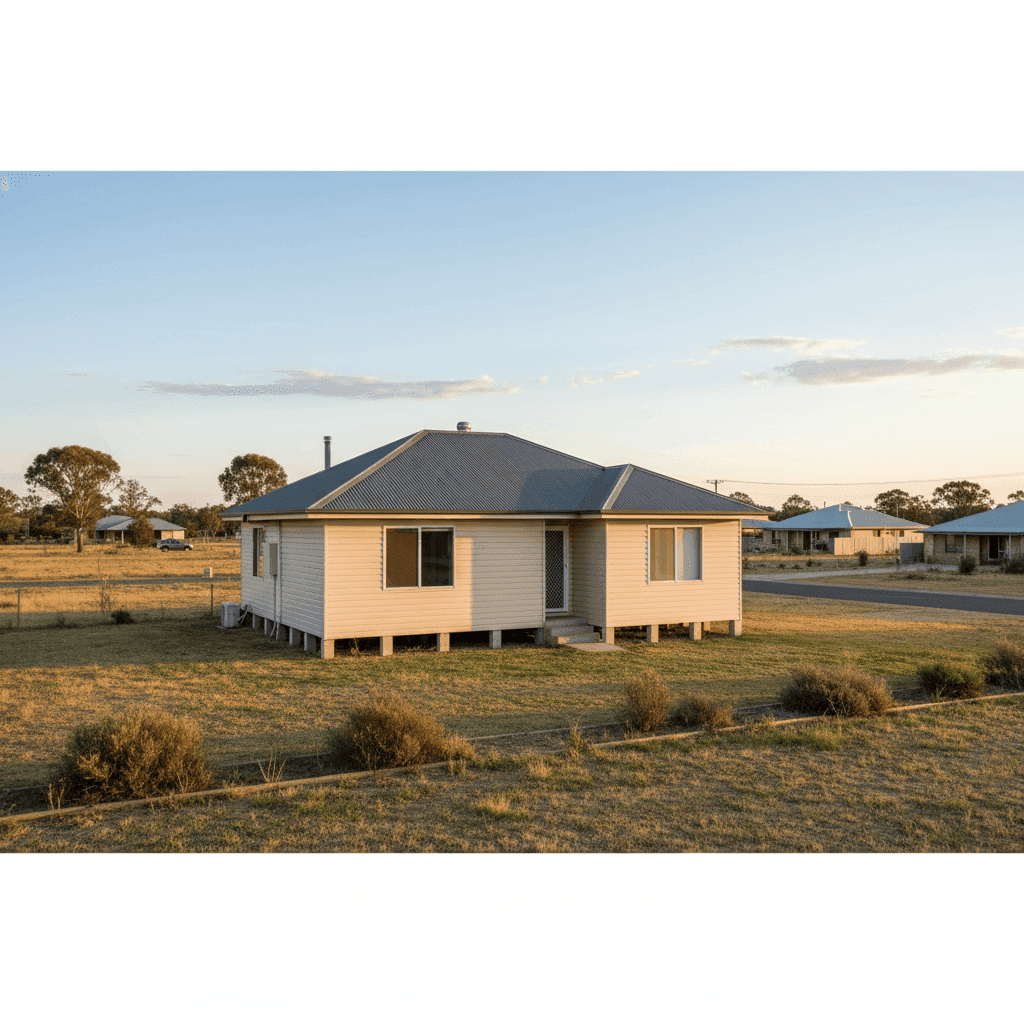
If you own or are thinking about insuring a free standing home in Wee Waa, NSW 2388, understanding what a fair premium looks like can save you hundreds of dollars a year. This article breaks down a real home and contents insurance quote for a three-bedroom property in the area, comparing it against local, state, and national benchmarks — so you know exactly where you stand.
---
Is This Quote Fair?
The quote in question comes to $3,461 per year (or $339 per month) for combined home and contents cover, with a building sum insured of $582,000 and contents covered to $50,000. The building excess is $2,000 and the contents excess is $1,000.
Based on our pricing data, this quote is rated CHEAP — below average for the area. That's genuinely good news for the homeowner. With premiums in Wee Waa ranging widely depending on the insurer, property characteristics, and level of cover, landing below the suburb average is a meaningful result.
To put it in context: the suburb average premium sits at $4,443 per year, and the suburb median is $4,495. This quote comes in roughly $1,000 below the average — a significant saving. It also falls below the 25th percentile for the suburb ($3,724), meaning it's among the more competitively priced quotes available in the area. For a property of this age and construction type, that's worth noting.
---
How Wee Waa Compares
Wee Waa is a small rural town in the Coonamble Local Government Area of north-western NSW, and its insurance pricing reflects a number of regional factors. Here's how the numbers stack up across different levels:
| Benchmark | Average Premium | Median Premium |
|---|---|---|
| Wee Waa (suburb) | $4,443/yr | $4,495/yr |
| Coonamble LGA | $7,925/yr | — |
| NSW (state) | $9,528/yr | $3,770/yr |
| National | $5,347/yr | $2,764/yr |
A few things stand out here. The NSW state average of $9,528 is strikingly high — but this is heavily skewed by expensive coastal and flood-prone postcodes across the state. The NSW median of $3,770 is far more representative of typical properties, and this quote sits just slightly above that mark.
The Coonamble LGA average of $7,925 is notably elevated compared to the Wee Waa suburb figures, which suggests there's meaningful variation within the LGA itself. Wee Waa homeowners appear to be faring better than many of their LGA neighbours when it comes to insurance costs.
At the national level, the average premium of $5,347 is higher than this quote, though the national median of $2,764 reflects the large number of lower-risk metropolitan properties dragging that figure down.
You can explore more detailed pricing data for the area on the Wee Waa suburb stats page, or compare it against all NSW postcodes and national benchmarks.
---
Property Features That Affect Your Premium
Several characteristics of this particular property will have influenced the final premium — both positively and negatively.
Construction year (1930): This is one of the most significant factors. A home built nearly a century ago carries inherent risks: older electrical wiring, ageing plumbing, and materials that may not meet current building codes. Insurers typically apply a loading to older homes, which can push premiums up. The fact that this quote is still below the suburb average despite the age of the home suggests other factors are working in its favour.
Vinyl cladding external walls: Vinyl cladding is generally considered a moderate-risk material. It's not as fire-resistant as brick veneer but is relatively low-maintenance and less susceptible to rot than timber weatherboard. Insurers tend to view it more favourably than some other cladding types.
Steel/Colorbond roof: A Colorbond roof is a strong positive for insurance purposes. It's durable, fire-resistant, and handles the extremes of the Australian climate well. Compared to older tile or corrugated iron roofs, Colorbond is a material most insurers are comfortable with.
Stump foundations: Homes on stumps (also called pier foundations) are common in older Australian properties, particularly in rural NSW. While they allow for good airflow and are practical in certain soil conditions, they can be more vulnerable to movement, pest damage, and flooding. This is a factor some insurers price carefully.
Timber/laminate flooring: These floor types are standard in older homes and don't typically attract significant loadings, though they can be costly to replace after a water damage event.
Ducted climate control: The presence of ducted air conditioning adds to the overall replacement value of the home and can contribute modestly to the premium. It's worth ensuring this is properly accounted for in your sum insured.
No pool, no solar panels: The absence of a pool and solar panels simplifies the risk profile slightly, removing two common sources of additional liability or equipment breakdown cover.
---
Tips for Homeowners in Wee Waa
Whether you're reviewing an existing policy or shopping for the first time, here are some practical steps to make sure you're getting the right cover at the right price.
- Review your sum insured carefully. A building sum insured of $582,000 for a 130 sqm home in Wee Waa is on the higher end — make sure this figure reflects the actual cost to rebuild the property (not its market value), including demolition, debris removal, and current construction costs. Overinsuring drives up your premium unnecessarily, while underinsuring can leave you badly exposed at claim time.
- Get multiple quotes every renewal. Insurance pricing varies enormously between providers for the same property. With a suburb 25th-to-75th percentile range of $3,724 to $5,092, there's over $1,300 of variation within Wee Waa alone. Shopping around each year is one of the simplest ways to avoid paying more than you need to.
- Consider your excess levels strategically. This quote carries a $2,000 building excess and $1,000 contents excess. Choosing a higher excess typically lowers your premium, but make sure you can comfortably cover that amount out of pocket if you need to make a claim. For older homes that may be more claim-prone, a very high excess can backfire.
- Maintain the property proactively. Insurers can reduce or deny claims if damage is attributed to lack of maintenance. For a home built in 1930 on stumps with vinyl cladding, staying on top of pest inspections, stump condition, and roof integrity is both good practice and good insurance hygiene.
---
Compare Your Own Quote
Curious how your home insurance stacks up? CoverClub makes it easy to see real premium data for your postcode and compare quotes from multiple insurers in one place. Get a quote today and find out whether you're paying a fair price — or whether it's time to switch.