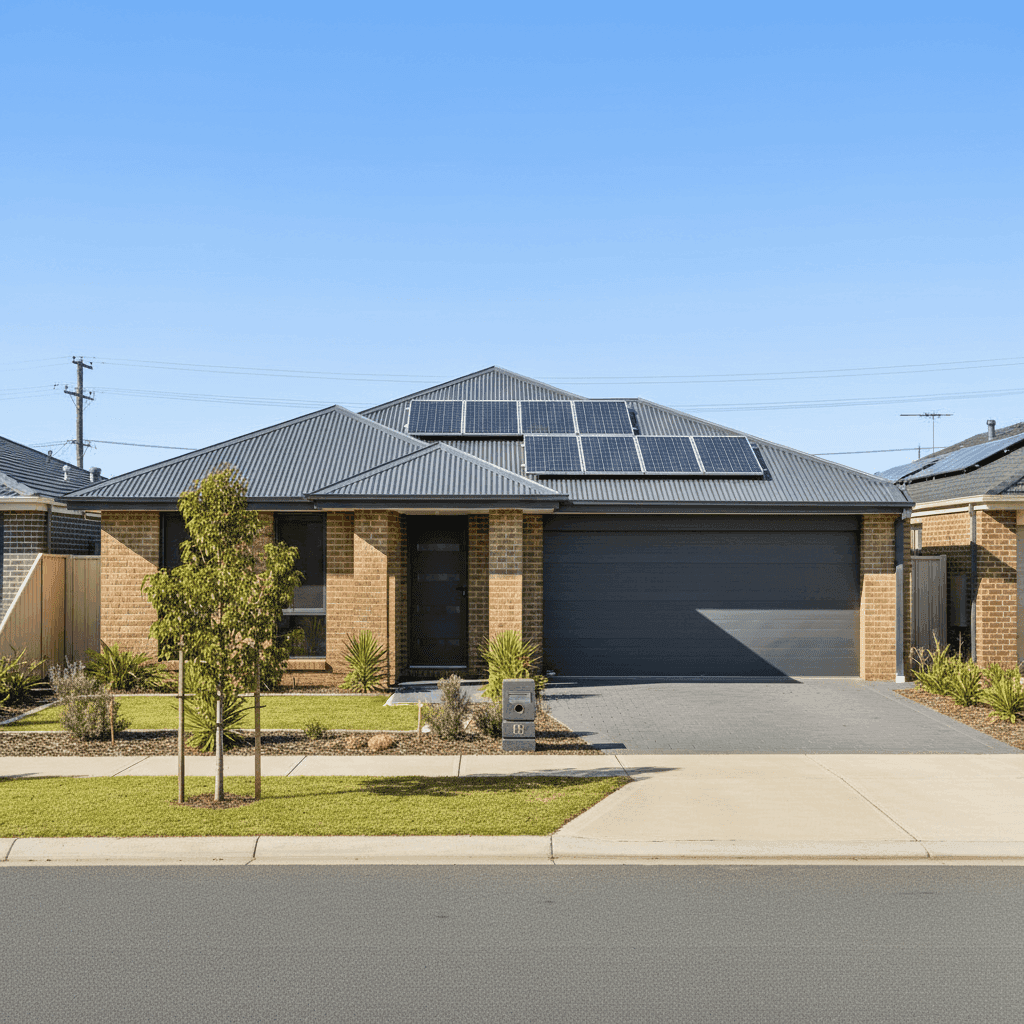
If you own a free standing home in Wentworth, NSW 2648, you already know this part of the world is unlike anywhere else in Australia. Perched at the confluence of the Murray and Darling rivers in the Far West of New South Wales, Wentworth is a region of striking natural beauty — and a unique set of insurance considerations to match. This article breaks down a real home and contents insurance quote for a three-bedroom, double brick home in the area, rated Fair (Around Average), and puts it in context against local, state and national benchmarks to help you understand what you're actually paying for.
---
Is This Quote Fair?
The quote in question comes in at $5,260 per year (or $504/month) for combined home and contents cover, with a building sum insured of $542,000 and contents valued at $92,000. Both the building and contents excess are set at $1,000 each.
Our pricing engine has rated this quote as Fair — Around Average, and the data backs that up. Looking at home insurance quotes across Wentworth (NSW 2648), the suburb average sits at $6,632 per year, while the median — a more reliable indicator when sample sizes are modest — lands at $5,642 per year. At $5,260, this quote is comfortably below both the local average and median, sitting closer to the 25th percentile of $4,884.
In other words, roughly three-quarters of comparable quotes in the suburb are more expensive. That's a reasonably strong result, though there is still room to potentially do better — particularly if you shop around and compare multiple insurers.
---
How Wentworth Compares
To fully appreciate what this quote means, it helps to zoom out and look at the broader picture.
| Benchmark | Annual Premium |
|---|---|
| This quote | $5,260 |
| Wentworth suburb average | $6,632 |
| Wentworth suburb median | $5,642 |
| NSW average | $9,528 |
| NSW median | $3,770 |
| National average | $5,347 |
| National median | $2,764 |
| Unincorporated NSW LGA average | $4,060 |
A few things stand out here. First, the NSW state average of $9,528 is dramatically higher than both this quote and the local suburb figures — largely driven by high-risk coastal and flood-prone areas, as well as the premium costs of Sydney metropolitan properties. The NSW median of $3,770 tells a different story, suggesting that the average is being pulled upward by a relatively small number of very expensive quotes.
Compared to the national average of $5,347, this quote of $5,260 is actually marginally below the Australian benchmark — a solid outcome for a regional property. The national median of $2,764 is considerably lower, which reflects the large number of lower-risk, lower-value properties across the country bringing that figure down.
It's also worth noting that the Unincorporated NSW LGA average of $4,060 is noticeably lower than this quote. That gap may reflect differences in property values, building ages, or cover levels across the broader LGA — but it's worth keeping in mind when reviewing your options.
With only 23 quotes in the suburb sample, the local data is directionally useful but not statistically definitive. Treat the suburb figures as a guide rather than a hard benchmark.
---
Property Features That Affect Your Premium
Several characteristics of this property have a meaningful influence on what insurers charge.
Age of construction (1890): This is one of the most significant factors. A home built in 1890 is well over 130 years old, placing it firmly in the heritage category. Older homes often attract higher premiums because they can be more expensive to repair or rebuild to current standards, and may have ageing infrastructure such as original plumbing or wiring that increases the risk of damage or loss.
Double brick construction: On the positive side, double brick walls are generally viewed favourably by insurers. They offer excellent structural integrity, strong fire resistance, and good thermal performance. In regional NSW, where summer temperatures can be extreme, this is a genuine asset.
Steel/Colorbond roof: A Colorbond roof is a relatively modern and low-maintenance roofing material that tends to perform well in harsh Australian conditions. Insurers typically regard it as lower risk compared to older materials like terracotta tiles or corrugated iron, which can be more prone to damage or leakage.
Slab foundation: Concrete slab foundations are common across Australia and generally considered stable and reliable. They don't carry the additional risk associated with elevated stumped foundations, which can be more vulnerable to movement or pest damage.
Solar panels: The presence of solar panels adds modest complexity to a home insurance policy. Panels represent an additional asset that needs to be covered, and their installation on the roof can affect claims related to roof damage. It's worth confirming with your insurer that your solar system is explicitly included in your building sum insured.
Ducted climate control: A ducted system is a significant mechanical installation that adds to the overall replacement cost of the home. Ensuring your building sum insured accounts for this is important — underinsurance is a common and costly mistake.
Building size (139 sqm): At 139 square metres, this is a modest-sized home for a three-bedroom property. A lower floor area generally means a lower rebuild cost, which can work in your favour when setting your sum insured — provided the figure is calculated accurately.
---
Tips for Homeowners in Wentworth
1. Review your sum insured regularly With a heritage property built in 1890, rebuild costs can be notoriously difficult to estimate. Construction costs have risen sharply in recent years, and older homes often require specialist trades and materials. Use a professional building estimator or your insurer's calculator to ensure your $542,000 sum insured reflects current rebuild costs — not what you paid for the property.
2. Confirm solar panel coverage Solar systems are sometimes excluded or capped under standard building policies. Ask your insurer specifically whether your panels, inverter, and associated wiring are covered under the building sum insured, and whether accidental damage is included.
3. Understand your flood and bushfire exposure Wentworth sits at the junction of two major river systems, making flood risk a real consideration. Check whether your policy includes flood cover as standard or as an optional add-on. Bushfire risk in the surrounding region is also worth discussing with your insurer to ensure you have adequate protection.
4. Consider your excess carefully Both building and contents excesses are set at $1,000. A higher excess can reduce your annual premium, while a lower excess means less out-of-pocket cost at claim time. Think about what you could comfortably afford to pay in the event of a claim, and adjust accordingly.
---
Compare Your Quote with CoverClub
Whether you're reviewing an existing policy or shopping for cover for the first time, comparing quotes is the single most effective way to ensure you're not overpaying. CoverClub makes it easy to see how your premium stacks up against real quotes from across your suburb, state and the country. Get a home insurance quote today and find out if you can do better.