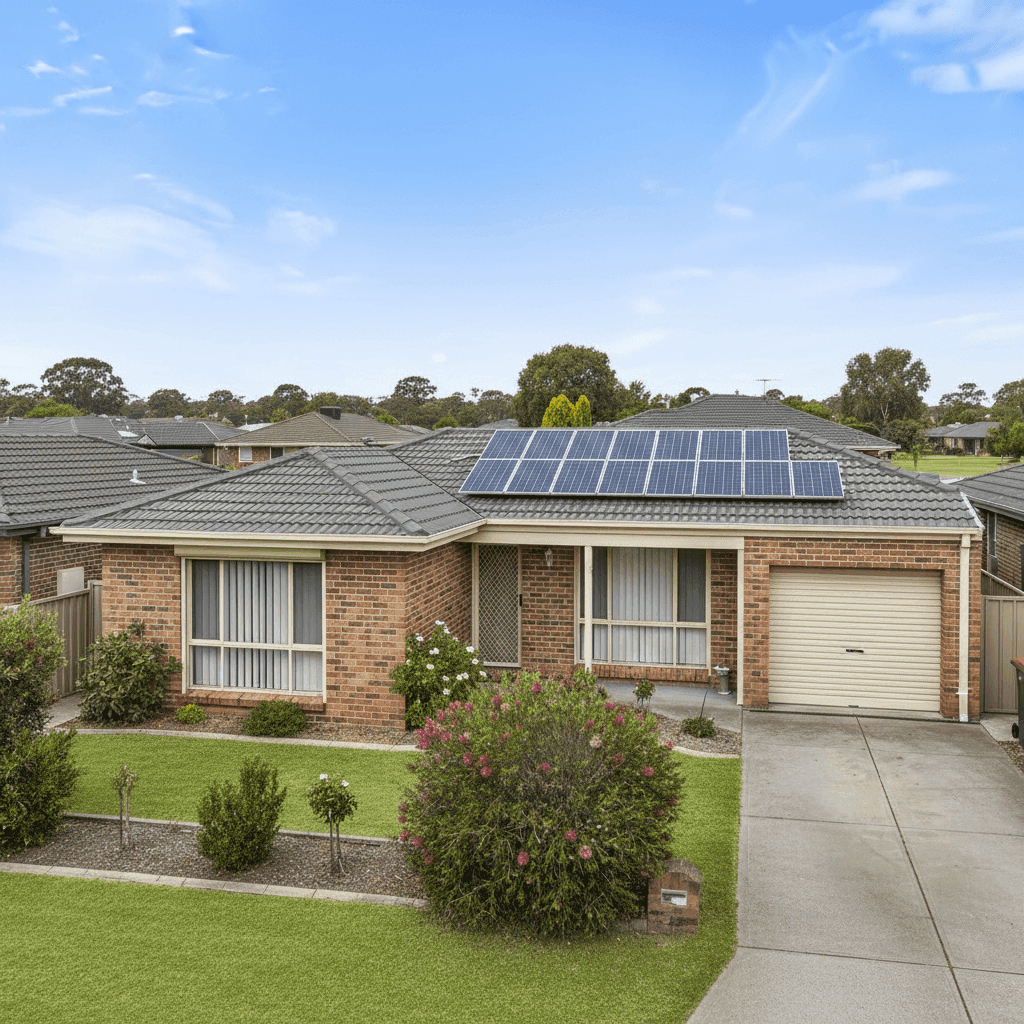
Werribee, located in Melbourne's fast-growing south-western corridor, is a well-established suburb that blends older residential streets with newer housing estates. For homeowners with a free standing brick veneer property in postcode 3030, understanding what a fair insurance premium looks like — and what's driving it — can mean the difference between being underinsured and overpaying. This article breaks down a real home and contents insurance quote for a 3-bedroom, 1-bathroom home in Werribee and puts it in context against local, state, and national benchmarks.
---
Is This Quote Fair?
The annual premium for this property comes in at $1,153 per year (or $110/month), covering both building (sum insured: $384,000) and contents ($31,000), each with a $1,000 excess.
Based on data from 125 quotes collected for Werribee (3030), this premium sits below the suburb average of $1,741/yr and comfortably under the suburb median of $1,554/yr. It even comes in just below the 25th percentile mark of $1,206/yr — meaning roughly 75% of comparable quotes in the area are more expensive.
Our price rating for this quote is CHEAP (Below Average), and the numbers back that up. For a homeowner in Werribee, this represents genuinely strong value, particularly given that the property includes solar panels and ducted climate control — features that can sometimes nudge premiums upward.
---
How Werribee Compares
To appreciate how well-priced this quote is, it helps to zoom out and look at the broader picture.
| Benchmark | Average Premium | Median Premium |
|---|---|---|
| Werribee (3030) | $1,741/yr | $1,554/yr |
| Wyndham LGA | $1,591/yr | — |
| Victoria | $3,000/yr | $2,718/yr |
| National | $5,347/yr | $2,764/yr |
The Victorian state average of $3,000/yr is already 2.6 times higher than this quote, while the national average of $5,347/yr — heavily influenced by high-risk regions like Far North Queensland and cyclone-prone coastal areas — is nearly five times the cost of this premium.
Even within the Wyndham LGA, which encompasses Werribee and surrounding suburbs, the average sits at $1,591/yr — still 38% more than this quote. It's worth noting that Werribee itself sits outside cyclone risk zones, which is a significant factor keeping premiums lower compared to many other parts of the country.
The suburb's 25th–75th percentile range of $1,206–$2,040/yr gives a useful sense of the spread. This quote landing near the bottom of that range suggests the insurer has assessed the risk profile of this property favourably.
---
Property Features That Affect Your Premium
Several characteristics of this home work in its favour from an insurance risk perspective:
Brick Veneer Construction Brick veneer is one of the most common wall materials in Melbourne's suburban housing stock, and insurers generally view it as a solid, lower-risk construction type. It offers reasonable resistance to fire and weathering compared to timber-framed weatherboard homes, which can attract higher premiums.
Tiled Roof Terracotta or concrete tile roofs are considered durable and are widely used across Victoria. They hold up well against hail and general wear, making them a preferred roofing type for insurers assessing storm and impact risk.
Slab Foundation A concrete slab foundation is generally viewed as stable and low-maintenance. Unlike older properties with timber stumps or raised foundations, slabs carry a lower risk of subsidence-related claims — particularly relevant in parts of Melbourne's west where reactive clay soils can be an issue.
Construction Year: 1992 At around 33 years old, this home is mature but not aged. Properties built in the early 1990s typically comply with building codes that introduced improved structural and fire safety requirements, without the complications that can arise with very old homes (pre-1970s).
Solar Panels The presence of solar panels adds a modest layer of complexity to a building sum insured. Panels themselves can be damaged by hail or storm events, and their replacement cost should ideally be factored into the building sum insured of $384,000. It's worth confirming with your insurer that solar panels are explicitly covered under the policy.
Ducted Climate Control Ducted heating and cooling systems are a fixed building feature and should be included in the building sum insured. Their presence can slightly increase the cost to rebuild — another reason to periodically review whether your sum insured remains adequate.
No Pool The absence of a swimming pool removes a common source of liability and maintenance-related claims, which can contribute to a cleaner risk profile.
---
Tips for Homeowners in Werribee
1. Review Your Building Sum Insured Regularly Construction costs in Victoria have risen significantly over recent years. A sum insured of $384,000 for a 130 sqm home works out to roughly $2,950/sqm — which is within a reasonable range, but worth revisiting annually. Use a building cost calculator or speak to a quantity surveyor to avoid being underinsured when it matters most.
2. Confirm Solar Panels Are Covered Not all standard home insurance policies automatically extend cover to rooftop solar systems. Check your Product Disclosure Statement (PDS) to confirm whether panels are included under the building definition, or whether you need to add them as a specified item.
3. Consider Your Excess Strategy Both building and contents excesses are set at $1,000 here. Opting for a higher voluntary excess is one of the most straightforward ways to reduce your annual premium — but make sure the saving is meaningful and that you can comfortably cover the excess in the event of a claim.
4. Don't Set and Forget Even if your current premium is competitively priced, insurers can reprice at renewal without much fanfare. Set a reminder to compare quotes at CoverClub each year before your renewal date. A few minutes of comparison could save you hundreds.
---
Compare Your Own Quote
Whether you're a first-time buyer in Werribee or a long-term homeowner wondering if you're getting a fair deal, CoverClub makes it easy to see how your premium stacks up. Get a home insurance quote today and compare it against real data from your suburb — no jargon, no pressure, just clear information to help you decide.