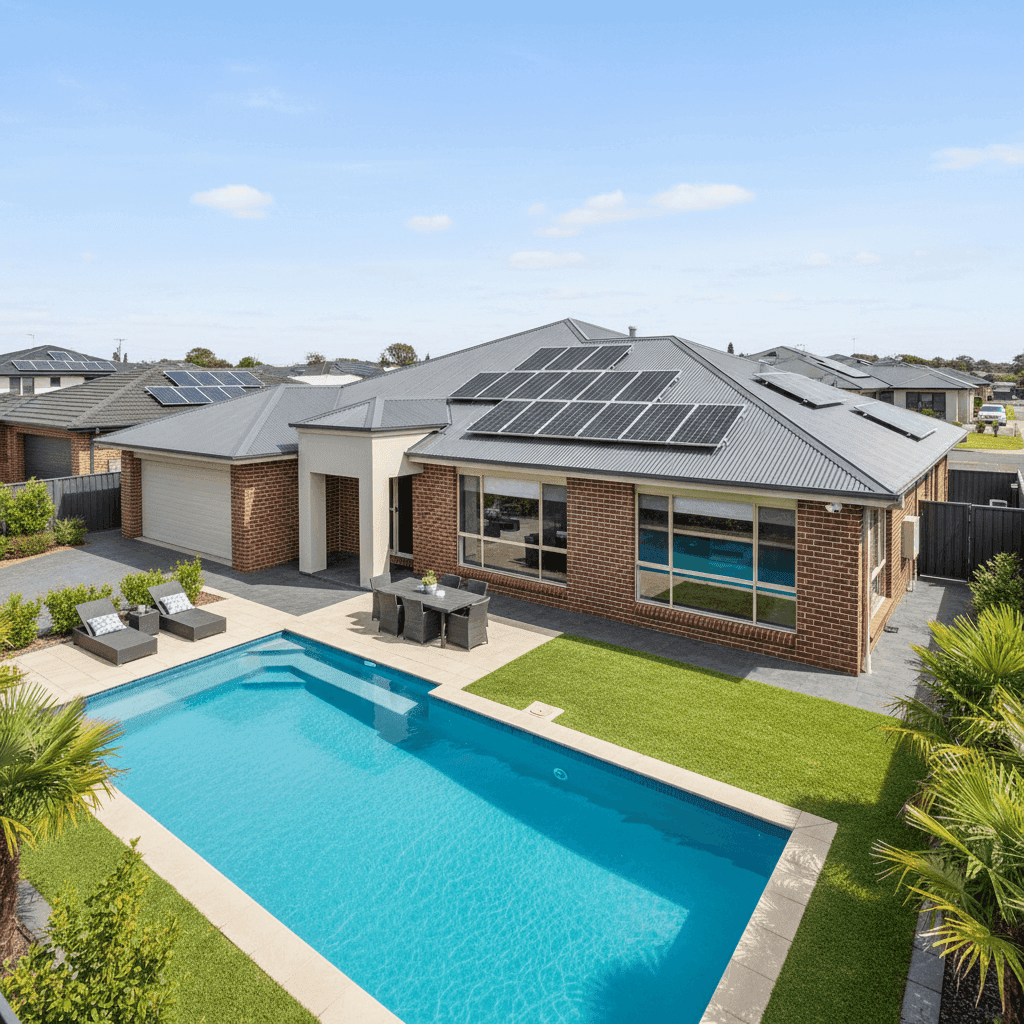
Werribee, in Melbourne's fast-growing south-west corridor, is home to a wide range of residential properties — from compact townhouses to larger family homes. This article takes a close look at a home and contents insurance quote for a five-bedroom, free-standing home in Werribee (postcode 3030), breaking down whether the quoted premium represents fair value and what factors are likely driving the cost.
---
Is This Quote Fair?
The annual premium on this quote comes in at $3,902 per year (or $382 per month), covering a building sum insured of $1,997,000 and contents valued at $379,000, each with a $1,000 excess.
Based on our price rating methodology, this quote is classified as Expensive (Above Average). To understand why, it helps to look at the numbers in context.
The suburb average for Werribee sits at just $1,741 per year, with a median of $1,554. This quote is more than double the suburb median — a significant gap that warrants a closer look. However, it's important not to compare apples with oranges. The median Werribee quote in our dataset likely covers a more modestly sized or valued property. With a building sum insured of nearly $2 million and contents cover approaching $380,000, this is a high-value policy, and the premium will naturally reflect that.
That said, even accounting for the elevated coverage levels, the premium is on the steeper side. Homeowners in this situation would be well-served by shopping around to ensure they're getting competitive pricing for the level of cover they need.
---
How Werribee Compares
To put this quote in broader perspective, here's how the Werribee market stacks up against Victorian and national benchmarks:
| Benchmark | Average Premium | Median Premium |
|---|---|---|
| Werribee (3030) | $1,741/yr | $1,554/yr |
| Wyndham LGA | $1,591/yr | — |
| Victoria (VIC) | $3,000/yr | $2,718/yr |
| National | $5,347/yr | $2,764/yr |
A few things stand out here. First, Werribee premiums are notably below the Victorian state average, suggesting the suburb is considered relatively low-risk by insurers — good news for local homeowners. The Wyndham LGA average of $1,591 aligns closely with the suburb figure, reinforcing this picture.
Second, while the national average premium of $5,347 sounds alarming, it's heavily skewed by high-risk areas in Queensland, Western Australia, and the Northern Territory — regions prone to cyclones, floods, and other extreme weather events. The national median of $2,764 is a more realistic comparison point for most Australian homeowners.
At $3,902, this quote sits above both the Victorian and national medians, but below the national average. For a property with this level of coverage and the features described below, that's not entirely surprising — though it does suggest room to negotiate or compare.
Based on 125 quotes in our Werribee dataset, the 75th percentile premium is $2,040 per year. This quote exceeds even that upper band, which is partly a function of the high sum insured rather than the suburb itself being expensive to insure.
---
Property Features That Affect Your Premium
Several characteristics of this property are likely influencing the premium — some pushing it up, others potentially keeping it in check.
Building size and sum insured: At 214 sqm and a building sum insured of $1,997,000, this is a substantial property. Rebuild costs for a five-bedroom home with above-average fittings can be significant, and insurers price accordingly. It's worth periodically reviewing your sum insured to ensure it reflects current construction costs — neither over- nor under-insuring.
Above-average fittings quality: This is one of the more meaningful premium drivers. Kitchens, bathrooms, and fixtures of a higher standard cost more to repair or replace, and insurers factor this into their pricing. With three bathrooms and five bedrooms, the potential claims exposure on fixtures and fittings alone is considerable.
Swimming pool: Pools add both value and liability to a property. From an insurance perspective, they increase the potential for accidental damage claims and can also affect public liability coverage. If your policy includes liability cover — as most home and contents policies do — having a pool is a relevant risk factor.
Solar panels: This property has rooftop solar, which is increasingly common in Werribee's newer estates. Solar panels can be a double-edged sword for insurance: they add value to the home but also introduce additional risk (fire, storm damage, installation issues). Some insurers cover panels automatically under building insurance; others require them to be specified. It's worth confirming your panels are adequately covered.
Brick veneer construction and Colorbond roof: These are generally viewed favourably by insurers. Brick veneer is durable and fire-resistant, while Colorbond steel roofing is lightweight, weather-resistant, and well-suited to Australian conditions. Compared to older timber-framed or tile-roofed homes, this construction profile can attract more competitive premiums.
Slab foundation: A concrete slab is a stable and low-maintenance foundation type that insurers typically view as lower risk than older pier-and-beam or strip footings, particularly in areas without significant soil movement issues.
Ducted climate control: Ducted systems are a significant asset but also a meaningful contents or building item depending on how they're classified. Ensuring your sum insured accounts for the replacement cost of the system is worthwhile.
No cyclone risk: Werribee is not in a cyclone-prone area, which keeps a lid on premiums compared to properties in northern Australia. This is reflected in the suburb's below-average insurance costs relative to the national picture.
---
Tips for Homeowners in Werribee
1. Review your sum insured regularly Building costs have risen sharply in recent years. If your home was last valued several years ago, there's a real chance it's either under- or over-insured. Use a building cost calculator or speak to a quantity surveyor to get an accurate rebuild estimate, then adjust your sum insured accordingly. Over-insuring means you're paying more premium than necessary; under-insuring can leave you significantly out of pocket after a major claim.
2. Confirm solar panel coverage With solar panels on the roof, make sure your policy explicitly covers them — both for physical damage and any liability arising from system faults. Not all standard building policies include solar panels by default, and some require them to be listed as a specified item.
3. Compare quotes before renewing Given that this premium sits above the Werribee suburb average and above both the Victorian and national medians, it's worth getting competing quotes before simply rolling over at renewal. Prices can vary significantly between insurers for the same level of cover. Use CoverClub to compare quotes and see what other providers are offering for your property.
4. Consider your excess strategically Both the building and contents excess on this policy are set at $1,000. Opting for a higher excess — say, $2,000 or $2,500 — can meaningfully reduce your annual premium. If you have a solid emergency fund and are unlikely to make small claims, a higher excess can be a cost-effective trade-off over the long term.
---
Compare Your Home Insurance Options
Whether you're renewing an existing policy or insuring a new property, it pays to compare. CoverClub makes it easy to see what home and contents insurance costs for properties like yours in Werribee and across Victoria. Get a quote today and find out if you could be paying less for the same level of protection — or getting more cover for what you're already spending.
For more local data, explore Werribee suburb insurance stats, Victorian averages, or the national overview.