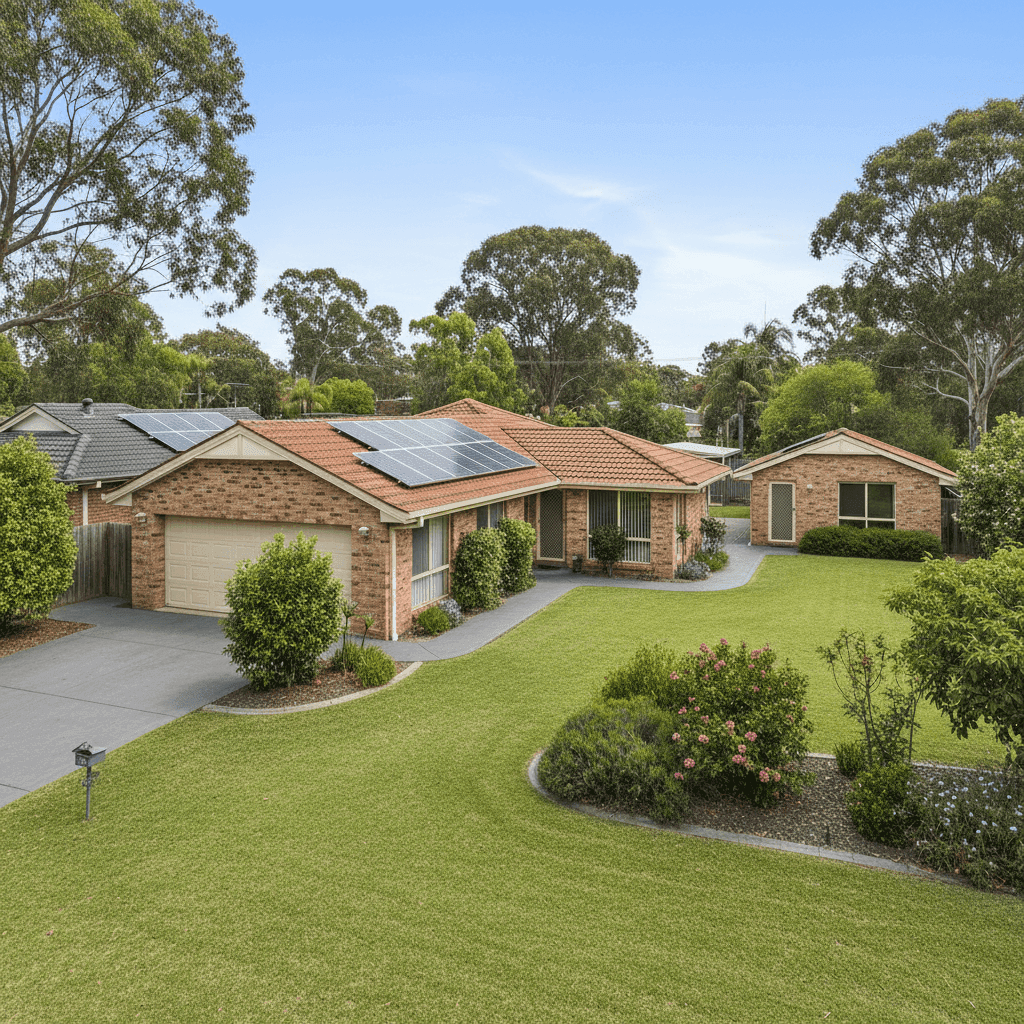
If you own a free standing home in Werrington Downs, NSW 2747, you've probably wondered whether your home insurance premium is competitive — or whether you're quietly overpaying year after year. In this article, we break down a real home and contents insurance quote for a six-bedroom property in the suburb, compare it against local, state, and national benchmarks, and share practical tips to help you get better value on your cover.
---
Is This Quote Fair?
The quote in question comes in at $4,436 per year (or $425 per month) for combined home and contents insurance, with a building sum insured of $2,300,000 and contents valued at $150,000. Both the building and contents excess are set at $1,000.
Our price rating for this quote is Expensive — Above Average.
To put that in context: the average home and contents premium in Werrington Downs sits at just $1,270 per year, with a median of $1,251. This quote is roughly 3.5 times the suburb average — a significant gap that warrants a closer look.
That said, it's important to understand why a premium might sit well above the local average before assuming something has gone wrong. In this case, the property is a large, six-bedroom home with a building sum insured of $2.3 million — considerably higher than what a typical three- or four-bedroom home in the area would carry. The higher insured value alone drives a substantial portion of the premium difference. Add in above-average fittings quality, solar panels, ducted climate control, and a granny flat, and the picture becomes clearer: this is not a standard suburban home, and its insurance cost reflects that.
Still, even accounting for these factors, it's worth shopping around to ensure the rate is genuinely competitive for a property of this size and specification.
---
How Werrington Downs Compares
Understanding where your premium sits relative to broader benchmarks is one of the most useful tools a homeowner has. Here's how this quote stacks up:
| Benchmark | Premium |
|---|---|
| Werrington Downs average | $1,270/yr |
| Werrington Downs median | $1,251/yr |
| LGA (Blacktown) average | $2,242/yr |
| NSW average | $9,528/yr |
| NSW median | $3,770/yr |
| National average | $5,347/yr |
| National median | $2,764/yr |
| This quote | $4,436/yr |
A few things stand out here. First, Werrington Downs premiums are generally quite affordable compared to both state and national figures — the suburb average of $1,270 is well below the NSW median of $3,770 and the national median of $2,764. This suggests the area carries relatively low risk in the eyes of insurers, which is good news for most homeowners in the postcode.
Second, this particular quote — while expensive relative to the suburb — actually sits below the NSW average of $9,528 and also below the national average of $5,347. When benchmarked at the state and national level, a $4,436 premium for a large, high-value home with a granny flat and premium inclusions is not unreasonable.
You can explore suburb-level data for Werrington Downs at our Werrington Downs insurance stats page, compare it against NSW state averages, or view national home insurance benchmarks.
---
Property Features That Affect Your Premium
Several characteristics of this property have a direct bearing on the cost of cover. Here's what's likely influencing the premium:
Size and sum insured At 354 sqm and six bedrooms, this is a large home by any measure. The building sum insured of $2,300,000 reflects the cost to fully rebuild a property of this scale with above-average fittings — and insurers price accordingly. Higher rebuild costs mean higher premiums, full stop.
Brick veneer construction and tiled roof Brick veneer walls and a tiled roof are generally viewed favourably by insurers. These materials offer solid fire resistance and durability, which can help moderate premiums compared to, say, weatherboard cladding or a metal roof in a high-wind area.
Slab foundation A concrete slab foundation is standard for homes of this era in Western Sydney and is generally considered low-risk from an insurance perspective — there's no subfloor cavity to worry about, and the structure tends to be stable in most soil conditions.
Timber and laminate flooring Timber and laminate floors can be more expensive to replace than carpet, which may contribute marginally to the contents or building valuation. Above-average fittings quality across the board reinforces this.
Solar panels Solar panels are an increasingly common feature in Australian homes, but they do add to the rebuild cost and require specific coverage. Not all standard policies cover solar systems adequately, so it's worth confirming your policy explicitly includes them.
Granny flat The presence of a granny flat adds significant floor area and replacement value to the property. It also introduces questions around whether the structure is covered under the same policy as the main dwelling — something to clarify with your insurer.
Ducted climate control Ducted air conditioning systems are expensive to install and replace. This is factored into the building sum insured and can nudge premiums upward.
No pool, no cyclone risk The absence of a pool removes a common liability concern, and Werrington Downs is not classified as a cyclone risk area — both of which help keep the premium from climbing even higher.
---
Tips for Homeowners in Werrington Downs
1. Review your building sum insured regularly With a sum insured of $2.3 million, it's essential this figure accurately reflects current rebuild costs — not the market value of the property. Construction costs have risen sharply in recent years, and being underinsured can leave you significantly out of pocket after a major claim. Use a quantity surveyor or your insurer's rebuild cost calculator to check the figure annually.
2. Confirm your granny flat is fully covered Some policies treat secondary dwellings differently to the main home. Check whether your granny flat is explicitly included in your building cover, and whether any contents inside it are also protected. If not, you may need a separate policy or an endorsement.
3. Check your solar panel coverage Ask your insurer directly: are the solar panels covered for accidental damage, storm damage, and electrical breakdown? Some policies include them automatically; others require you to list them as a specified item. Given the replacement cost of a full solar system, this is worth confirming in writing.
4. Compare quotes before renewal Even if your current premium feels reasonable, the insurance market changes every year. Comparing quotes at renewal — rather than simply auto-renewing — is one of the easiest ways to save hundreds of dollars without reducing your level of cover. Loyalty doesn't always pay in insurance.
---
Compare Your Home Insurance Today
Whether you're reviewing your current policy or insuring a new property, comparing quotes is the smartest first step. At CoverClub, we make it easy to see how your premium stacks up and find competitive cover for your home. Get a home insurance quote today and make sure you're not paying more than you need to.