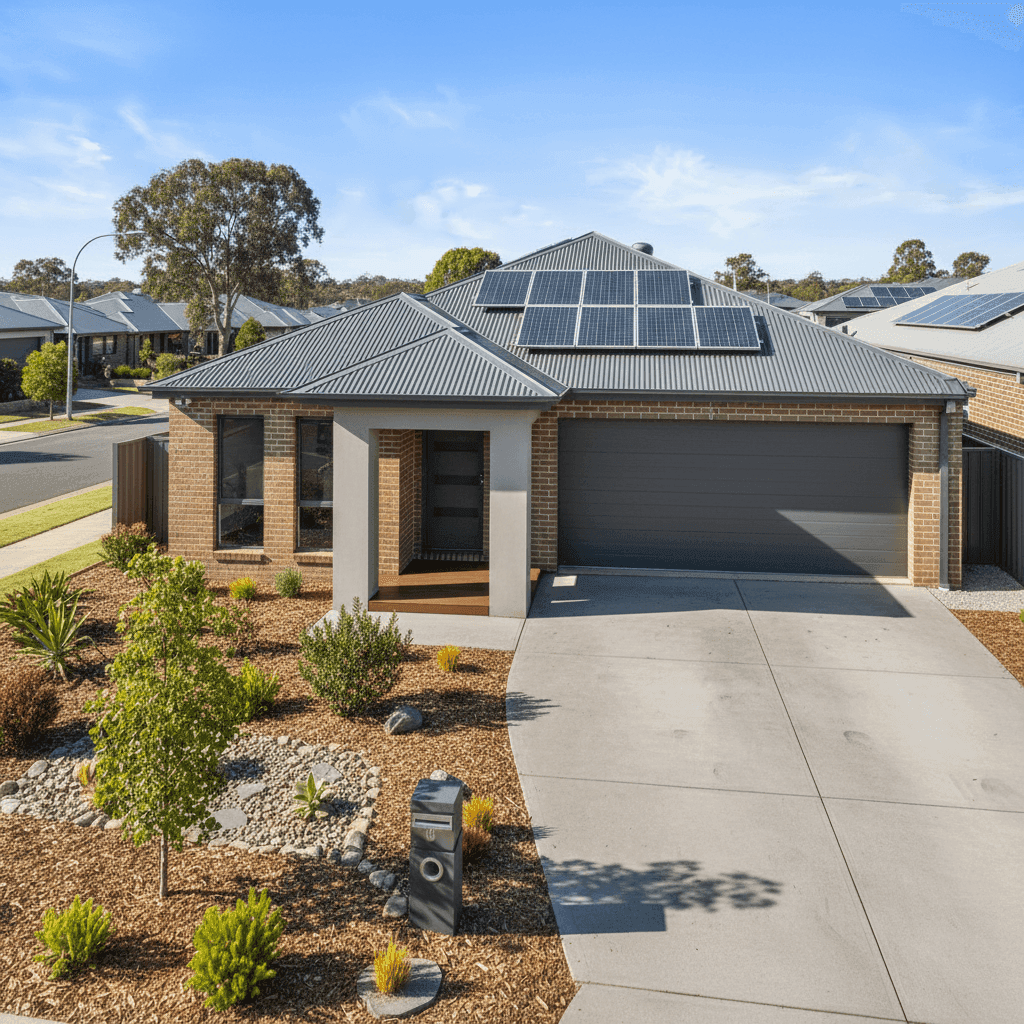
If you own a free standing home in West Gladstone, QLD 4680, you've probably wondered whether you're paying a fair price for building insurance — or quietly overpaying. This article breaks down a recent building-only insurance quote for a four-bedroom, two-bathroom brick veneer home in the suburb, and puts the numbers in context against local, state, and national benchmarks.
---
Is This Quote Fair?
The quote in question comes in at $3,597 per year (or roughly $338 per month) for building-only cover on a 235 sqm free standing home, with a $1,000 building excess and a sum insured of $956,000.
Our price rating for this quote is FAIR — Around Average.
That label might sound underwhelming, but in the context of Queensland's notoriously volatile insurance market, landing near the middle of the pack is actually a reasonable outcome. Queensland homeowners face some of the highest premiums in the country, driven by extreme weather events, flooding, and cyclone exposure across many parts of the state. A quote sitting close to the suburb median — rather than nudging toward the upper quartile — is worth appreciating.
To put it plainly: this homeowner isn't getting a bargain, but they're not being stung either. There's likely room to improve, but the quote is defensible given the property's characteristics and location.
---
How West Gladstone Compares
Digging into the West Gladstone suburb insurance data, the local pricing landscape looks like this:
| Benchmark | Premium |
|---|---|
| This Quote | $3,597/yr |
| Suburb 25th Percentile | $3,240/yr |
| Suburb Median | $4,088/yr |
| Suburb Average | $6,072/yr |
| Suburb 75th Percentile | $6,399/yr |
This quote sits below the suburb median of $4,088 and well below the suburb average of $6,072 — a meaningful gap that suggests a significant number of West Gladstone homeowners are paying considerably more. The wide spread between the 25th percentile ($3,240) and the 75th percentile ($6,399) tells us the local market is quite varied, likely reflecting differences in sum insured, insurer choice, and individual property risk profiles.
Zooming out to the QLD state level, the picture becomes even more striking:
- QLD average premium: $9,129/yr
- QLD median premium: $3,903/yr
The state average is dramatically inflated by high-risk coastal and cyclone-prone regions across Queensland. West Gladstone's median sits below the state median, which is encouraging for local homeowners. This quote, at $3,597, comes in below both the state median and the suburb median — a solid position.
Compared to national benchmarks:
- National average premium: $5,347/yr
- National median premium: $2,764/yr
The national median of $2,764 is lower than this quote, which reflects the fact that many Australian homes — particularly in lower-risk southern states — attract significantly cheaper premiums. Queensland properties, even those outside the highest-risk zones, tend to carry a weather-related loading that pushes costs above the national midpoint.
---
Property Features That Affect Your Premium
Several characteristics of this particular property influence where its premium lands.
Brick veneer construction is generally viewed favourably by insurers. It offers solid fire resistance and structural durability compared to timber-framed weatherboard homes, which can translate to a modest premium benefit.
Steel/Colorbond roofing is another positive signal. Colorbond is lightweight, corrosion-resistant, and performs well in high-wind conditions — a relevant consideration in Central Queensland. Insurers typically regard it as lower risk than older terracotta or concrete tile roofing, which can crack or dislodge in storms.
Slab foundation homes are generally straightforward to insure, as they don't carry the subsidence or pest-related risks sometimes associated with suspended timber floors.
Tiled flooring throughout the home reduces the insurer's exposure to water damage claims that can affect carpet or timber floors, and may contribute to a slightly cleaner risk profile.
Solar panels are worth a specific mention. While they add value to the property, they also add to the sum insured — and some insurers treat rooftop solar as an additional risk factor due to potential fire hazards or storm damage. It's worth confirming with your insurer that your solar system is explicitly covered under your building policy.
The 1998 construction year places the home in a relatively modern bracket. Properties built after the mid-1990s generally benefit from updated building codes that improved cyclone and flood resilience standards. This is a subtle but real factor in how underwriters assess risk.
Finally, the $956,000 sum insured for a 235 sqm home works out to roughly $4,068 per sqm — sitting within a plausible range for a standard-quality build in regional Queensland, though homeowners should periodically review their sum insured to ensure it reflects current construction costs, which have risen sharply in recent years.
---
Tips for Homeowners in West Gladstone
1. Review your sum insured annually Construction costs across Queensland have increased significantly since 2020. If your sum insured hasn't been updated in a few years, you may be underinsured — meaning a total loss payout might not cover a full rebuild. Use a building cost calculator or speak with a quantity surveyor to get an accurate figure.
2. Confirm solar panel coverage with your insurer Not all standard building policies automatically cover solar panel systems for all types of damage. Ask your insurer specifically whether your panels are covered for storm damage, hail, and electrical faults, and whether there are any sub-limits that apply.
3. Compare at least three quotes before renewing The spread of premiums in West Gladstone — from $3,240 at the 25th percentile to $6,399 at the 75th — shows that insurer pricing varies enormously for similar properties. Shopping around at renewal time is one of the most effective ways to avoid drifting into the upper end of that range.
4. Consider your excess strategically This policy carries a $1,000 building excess. Opting for a higher excess (say, $2,000 or $2,500) can meaningfully reduce your annual premium, particularly if you have a strong emergency fund and are unlikely to make small claims. Conversely, if cash flow is tight, a lower excess may be worth the extra cost.
---
Compare Your Home Insurance with CoverClub
Whether you're renewing an existing policy or insuring a home for the first time, it pays to know where your quote stands. CoverClub makes it easy to benchmark your premium against real data from your suburb, your state, and across Australia. Get a quote and compare today — it only takes a few minutes and could save you hundreds.