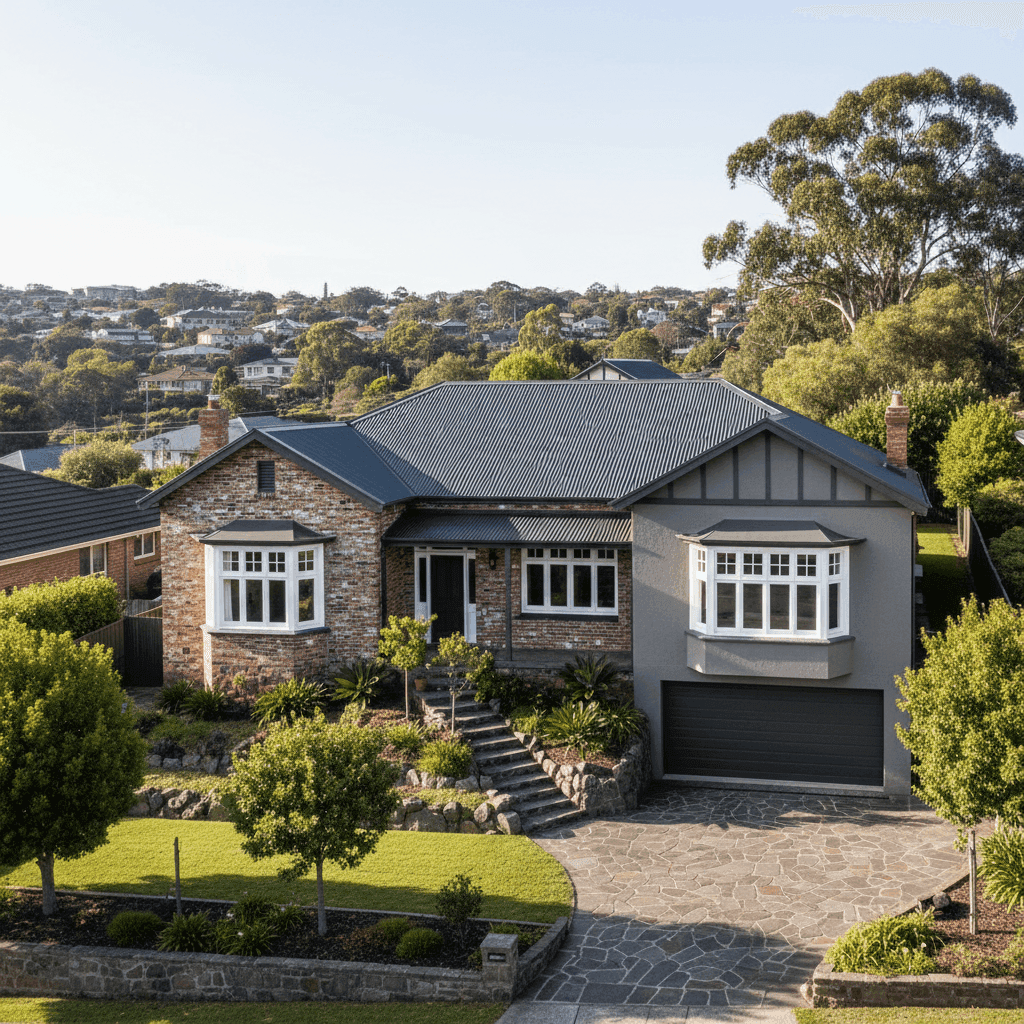
West Hobart is one of Hobart's most characterful inner suburbs — perched on the slopes of Mount Wellington, lined with heritage streetscapes, and home to a diverse mix of period and contemporary properties. If you own a free standing home here, understanding what you should be paying for building insurance is genuinely useful knowledge. This article breaks down a recent building-only quote for a five-bedroom, double brick home in West Hobart (TAS 7000) and puts that number into context using real market data.
---
Is This Quote Fair?
The quote in question comes in at $3,177 per year (or $298 per month) for building-only cover, with a $1,000 building excess and a sum insured of $2,000,000.
Our price rating for this quote is FAIR — Around Average, and the data backs that up. The suburb average premium for West Hobart sits at $2,880 per year, meaning this quote lands about 10% above the local average. It's also above the suburb median of $2,286 — but importantly, it falls comfortably within the interquartile range, which runs from $1,800 (25th percentile) to $3,519 (75th percentile) across 28 quotes sampled in the area.
In other words, roughly a quarter of West Hobart homeowners are paying more than this quote. It's not a bargain, but it's far from the most expensive option on the market either. For a large, older home with a high sum insured, a "fair" rating is a reasonable outcome — though there's always room to do better with a bit of shopping around.
---
How West Hobart Compares
Context is everything when evaluating an insurance premium. Here's how this quote stacks up across different geographic benchmarks:
| Benchmark | Average Premium | Median Premium |
|---|---|---|
| West Hobart (suburb) | $2,880/yr | $2,286/yr |
| LGA (Hobart) | $2,275/yr | — |
| Tasmania (state) | $2,814/yr | $2,326/yr |
| National | $5,347/yr | $2,764/yr |
A few things stand out here. First, the West Hobart suburb average of $2,880 is actually slightly above the Tasmanian state average of $2,814 — suggesting that inner Hobart properties carry a modest premium over the broader state market. This is likely driven by older building stock, steeper terrain, and higher rebuild costs in the area.
Second, both the suburb and state figures are dramatically lower than the national average of $5,347 per year. Much of that national figure is skewed upward by high-risk zones in Queensland and Western Australia — cyclone-prone coastal regions where premiums can be eye-watering. Tasmania, by contrast, sits in a relatively benign risk environment, which keeps premiums comparatively affordable.
The LGA (Hobart City) average of $2,275 is the lowest benchmark here, which suggests that some parts of the broader Hobart council area enjoy lower premiums — potentially properties on flatter ground or with newer construction.
---
Property Features That Affect Your Premium
Every property is different, and insurers price risk based on a range of structural and locational factors. Here's how the specific features of this home influence the premium:
Double Brick Construction Double brick walls are generally viewed favourably by insurers. They offer strong fire resistance, good structural integrity, and durability — all of which can moderate risk. However, double brick homes can also be more expensive to repair or rebuild, which can push the sum insured (and therefore the premium) higher.
Steel/Colorbond Roof Colorbond roofing is a solid choice from an insurance perspective. It's highly durable, resistant to fire and wind, and requires less maintenance than older materials like terracotta tiles or corrugated iron. Insurers tend to rate steel roofing favourably.
1970s Construction The build year of 1970 places this home in a period where construction standards were solid but pre-date modern building codes. Older homes can carry slightly higher risk profiles due to ageing electrical wiring, plumbing, and structural components — factors that some insurers weigh when calculating premiums.
286 sqm Floor Area At 286 square metres, this is a substantial home. Larger homes cost more to rebuild, which directly influences the sum insured and, in turn, the annual premium. A $2,000,000 sum insured is on the higher end and will naturally attract a higher base premium.
Ducted Climate Control The presence of ducted climate control is a minor risk factor — HVAC systems add complexity to a home's mechanical infrastructure and represent an additional asset to protect. That said, the impact on premium is generally modest.
Slab Foundation & Tiled Flooring Concrete slab foundations are considered low-risk and are standard across much of Australia's residential stock. Combined with tiled flooring, these features suggest a well-constructed home with durable, water-resistant finishes — both neutral-to-positive factors for insurers.
No Pool, No Solar Panels The absence of a pool removes a notable liability risk, and no solar panels means there's no additional electrical infrastructure to account for. Both omissions simplify the risk profile slightly.
---
Tips for Homeowners in West Hobart
1. Review your sum insured carefully A $2,000,000 sum insured is significant. Make sure it reflects the actual cost to rebuild your home from scratch — not its market value. Over-insuring inflates your premium unnecessarily, while under-insuring leaves you exposed. Tools like the Cordell Sum Sure calculator can help you estimate rebuild costs accurately.
2. Compare at least three to four quotes With 28 quotes sampled in the West Hobart area, there's genuine variation in the market. The gap between the 25th percentile ($1,800) and the 75th percentile ($3,519) is substantial — nearly $1,700 per year. Shopping around is one of the most effective ways to reduce your premium without changing your cover.
3. Consider your excess level A $1,000 excess is fairly standard, but opting for a higher excess (say, $2,500 or $5,000) can meaningfully reduce your annual premium. If you're a careful homeowner with a good claims history, a higher excess may be a smart trade-off.
4. Ask about discounts for security and safety features Many insurers offer discounts for homes with monitored alarm systems, deadbolts, and smoke detectors. If your home has these features and you haven't declared them, you could be leaving money on the table.
---
Ready to Find a Better Deal?
Whether this quote looks right for your situation or you're keen to see if you can do better, the easiest next step is to compare. At CoverClub, we make it simple to get multiple building insurance quotes side by side — so you can see exactly where your premium sits relative to the market.