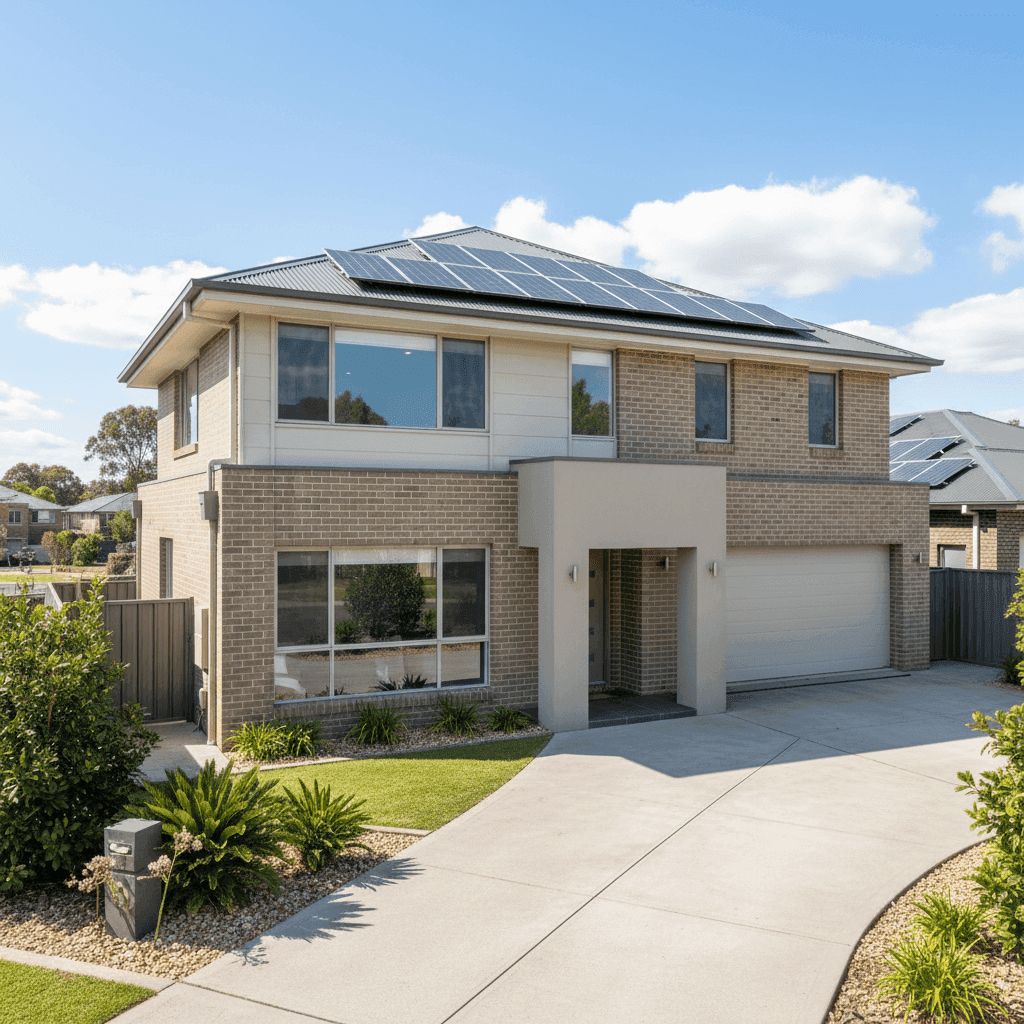
West Hoxton is a well-established residential suburb in Sydney's south-west, sitting within the Liverpool local government area. Known for its family-friendly streets and newer housing stock, it's home to a mix of large, modern properties — exactly the kind of home we're looking at here. This article breaks down a Home and Contents insurance quote for a five-bedroom, five-bathroom free-standing home in West Hoxton (NSW 2171), and explores whether the premium stacks up against local, state, and national benchmarks.
---
Is This Quote Fair?
The annual premium for this property comes in at $3,069 per year (or $312/month), covering a building sum insured of $1,879,000 and contents valued at $103,000. The building excess is set at $3,000, with a separate $1,000 excess applying to contents claims.
Our pricing engine has rated this quote as Fair — Around Average, which is a reasonable result for a property of this size and specification. Given that this is a large, high-value home with top-of-the-range fittings, a substantial building sum insured, and premium features like solar panels and ducted climate control, landing near the average is actually a solid outcome.
The excess structure is worth noting: a $3,000 building excess is on the higher side, which is likely contributing to a slightly lower base premium than you might otherwise see for a home of this calibre. Higher excesses reduce the insurer's exposure to small claims, and that saving is typically passed on in the premium. Whether that trade-off suits you depends on your financial comfort with out-of-pocket costs at claim time.
---
How West Hoxton Compares
Here's where the numbers get interesting. Let's put this quote in context:
| Benchmark | Premium |
|---|---|
| This quote | $3,069/yr |
| West Hoxton suburb average | $2,879/yr |
| West Hoxton suburb median | $2,881/yr |
| West Hoxton 25th percentile | $2,109/yr |
| West Hoxton 75th percentile | $3,773/yr |
| Liverpool LGA average | $2,768/yr |
| NSW state average | $3,801/yr |
| NSW state median | $3,410/yr |
| National average | $2,965/yr |
| National median | $2,716/yr |
This quote sits above the West Hoxton suburb average ($2,879/yr) by around $190, but that's largely explained by the property's size and the high building sum insured of nearly $1.9 million — well above what a typical home in the area would be insured for. It also falls comfortably below the NSW state average of $3,801/yr, which is a meaningful saving given that Sydney premiums can run quite high.
Compared to the national average of $2,965/yr, this quote is only marginally higher — impressive for a five-bedroom home with premium inclusions in a major metro area.
It's also worth noting that the suburb data is based on a sample of 14 quotes, so while directionally useful, the local comparison pool is relatively small. For a broader picture, you can explore West Hoxton insurance statistics, NSW state-wide data, or national home insurance benchmarks.
---
Property Features That Affect Your Premium
Several characteristics of this property have a direct influence on what insurers charge. Here's a breakdown of the key factors at play:
Size and sum insured At 315 sqm, this is a large home — and the $1,879,000 building sum insured reflects the cost to rebuild a five-bedroom, five-bathroom property with top-of-the-range fittings. Higher rebuild costs mean higher premiums, full stop. Underinsuring to save on premiums is a false economy that can leave you significantly out of pocket after a major loss.
Construction quality Brick veneer walls and a Colorbond steel roof are a well-regarded combination in Australian residential construction. Brick veneer offers good fire resistance and structural durability, while Colorbond roofing is lightweight, corrosion-resistant, and performs well in harsh weather. Insurers generally view this pairing favourably compared to, say, weatherboard cladding or older tile roofs.
Slab foundation A concrete slab foundation is standard for modern construction and is generally considered low-risk by insurers — there's no subfloor cavity to worry about, and slabs tend to perform well in stable soil conditions.
Timber and laminate flooring While aesthetically popular, timber and laminate floors can be more susceptible to water damage than tiles. This is worth keeping in mind when assessing your contents and building coverage, particularly for accidental damage and escape of liquid claims.
Solar panels Solar panels add value to the property but also introduce additional risk — they're exposed to hail, storm damage, and potential electrical faults. Many insurers cover rooftop solar as part of the building sum insured, but it's worth confirming this explicitly with your insurer and ensuring the panels are reflected in your rebuild cost estimate.
Ducted climate control Ducted air conditioning systems are expensive to repair or replace and are typically covered under the building component of a home insurance policy. Their inclusion in the property adds to the overall rebuild value.
No pool, no cyclone risk The absence of a swimming pool removes a meaningful liability and maintenance risk factor. West Hoxton is also outside designated cyclone risk zones, which keeps weather-related loading off the premium.
Built in 2017 A relatively modern build means the property benefits from current building codes — better fire safety standards, improved structural engineering, and more durable materials throughout. Newer homes generally attract more competitive premiums than older properties requiring maintenance or upgrades.
---
Tips for Homeowners in West Hoxton
1. Review your building sum insured regularly Construction costs have risen significantly in recent years. A rebuild estimate that was accurate two or three years ago may now fall short. Use a quantity surveyor or your insurer's online calculator to check that your sum insured keeps pace with current labour and materials costs — especially for a high-spec home like this one.
2. Confirm solar panel coverage Ask your insurer directly whether your rooftop solar system is included in the building sum insured, and whether damage caused by electrical faults originating from the panels is covered. This is an area where policy wording varies considerably between providers.
3. Consider whether your excess is right for you The $3,000 building excess on this policy is relatively high. While it helps reduce the annual premium, you'll need to be comfortable covering that amount out of pocket if you ever need to make a claim. If cash flow is a concern, it may be worth getting a comparison quote with a lower excess to see what the premium difference looks like.
4. Don't set and forget your contents cover With $103,000 in contents, it's worth doing an annual stocktake of your belongings — particularly high-value items like electronics, jewellery, artwork, or appliances. Contents values tend to creep up over time, and being underinsured on contents can be just as costly as being underinsured on the building.
---
Compare Quotes and Find Better Value
Whether you're renewing your current policy or shopping around for the first time, comparing multiple quotes is the single most effective way to ensure you're getting fair value. Premiums for the same property can vary by hundreds — sometimes thousands — of dollars between insurers.
Get a home insurance quote at CoverClub and see how your premium compares against real data from your suburb, your state, and across Australia. It takes just a few minutes and could save you a significant amount at renewal time.