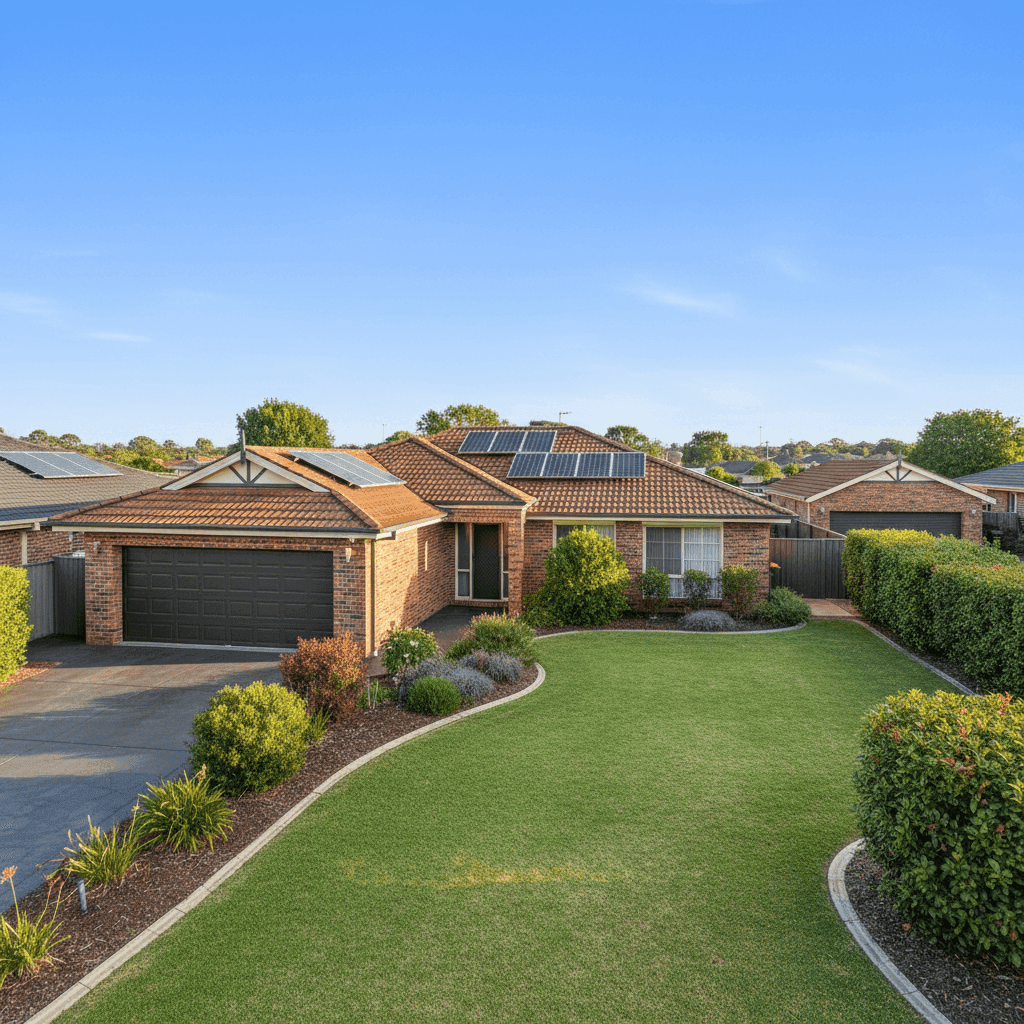
West Hoxton is a well-established residential suburb in Sydney's south-west, sitting within the Liverpool local government area. Known for its family-friendly streets and sizeable homes, it's the kind of suburb where a large, free-standing brick veneer home is very much the norm. This article breaks down a recent home and contents insurance quote for a six-bedroom property in the area — rated Expensive (Above Average) — and puts it in context against suburb, state, and national benchmarks to help you understand what's driving the cost and what you can do about it.
---
Is This Quote Fair?
The quote in question comes in at $3,874 per year (or $369/month) for combined home and contents cover, with a $1,000 excess on both building and contents. The building is insured for $1,350,000 and contents for $100,000.
Our pricing engine has rated this quote as Expensive — Above Average, meaning it sits noticeably higher than what most comparable properties in West Hoxton are paying. That said, "above average" doesn't automatically mean "wrong." A six-bedroom home with a granny flat, solar panels, and ducted climate control is a more complex risk than a standard three-bedroom house, and insurers price accordingly.
Still, there's enough of a gap here to warrant a closer look. The suburb average sits at $2,879/year, which means this quote is roughly $995 — or 35% — above what the typical West Hoxton home and contents policy costs. Even accounting for the property's size and features, that's a meaningful premium to be paying without shopping around.
One important caveat: the sum insured of $1,350,000 for a 235 sqm home built in 2004 is on the higher end. Building sum insured is one of the biggest levers in your premium calculation, so it's worth verifying that figure reflects a realistic rebuild cost rather than an over-estimate.
---
How West Hoxton Compares
Here's how the $3,874 annual premium stacks up across different benchmarks:
| Benchmark | Annual Premium |
|---|---|
| This Quote | $3,874 |
| West Hoxton Suburb Average | $2,879 |
| West Hoxton Suburb Median | $2,881 |
| West Hoxton 25th Percentile | $2,109 |
| West Hoxton 75th Percentile | $3,773 |
| NSW State Average | $3,801 |
| NSW State Median | $3,410 |
| National Average | $2,965 |
| National Median | $2,716 |
| Liverpool LGA Average | $2,768 |
A few things stand out from this data. First, this quote actually sits above the NSW state average of $3,801 — which itself is already well above the national average of $2,965. NSW is generally a more expensive state for home insurance due to storm, flood, and bushfire exposure in various pockets, but West Hoxton's own suburb average of $2,879 is significantly lower than the state figure, suggesting local risk factors are relatively moderate.
The quote also exceeds the suburb's 75th percentile of $3,773 — meaning it's more expensive than at least three-quarters of comparable quotes gathered in the area. That's a strong signal that there may be room to negotiate or find better value elsewhere.
You can explore the full pricing landscape for this postcode at our West Hoxton insurance stats page, or broaden your view with NSW state-wide data and national home insurance benchmarks.
---
Property Features That Affect Your Premium
Several characteristics of this property will be influencing the quote, both upward and downward.
Size and bedroom count are significant factors. A six-bedroom, three-bathroom home at 235 sqm is a substantial dwelling, and insurers factor in floor area, room count, and the cost to rebuild when calculating the building premium. Larger homes simply cost more to reconstruct.
Brick veneer construction with a tiled roof is generally viewed favourably by insurers. Brick veneer is resilient, fire-resistant, and durable — a better risk profile than timber-framed or clad exteriors. Tiled roofs similarly fare well in underwriting assessments compared to Colorbond or older materials.
The granny flat adds complexity to the risk. Separate accommodation on the same property means additional structures to insure, potentially additional occupants, and a higher overall replacement cost. Some insurers include granny flats within a standard building policy; others treat them as a separate risk or require a specific endorsement. It's worth confirming your policy explicitly covers the granny flat.
Solar panels are increasingly common in Australian homes, but they do add to the replacement cost of the building. A quality solar system can represent $10,000–$20,000 or more in rebuild value, and not all standard policies cover solar panels automatically — always check the Product Disclosure Statement (PDS).
Ducted climate control is another high-value fixture that increases the insured building value. Ducted systems can cost $10,000–$25,000 to replace and should be factored into your sum insured calculation.
Slab foundation and tile flooring are neutral-to-positive risk indicators. Slabs are stable and less susceptible to subsidence than some other foundation types, and hard flooring is generally easier to repair or replace than carpet after a water or fire event.
No pool and no cyclone risk work in the property's favour. Pools add liability exposure and can increase premiums, while West Hoxton's location well inland means cyclone loading doesn't apply here.
---
Tips for Homeowners in West Hoxton
1. Double-check your building sum insured A $1,350,000 building sum insured for a 235 sqm home built in 2004 is worth scrutinising. Use a reputable rebuild cost calculator (many insurers provide one) to verify you're not over-insured. Being over-insured won't pay out more in a claim — it just costs you more in premiums every year.
2. Confirm your granny flat is explicitly covered Don't assume your policy covers all structures on the property. Ask your insurer directly whether the granny flat is included in the building sum insured and what the terms are. If it's used as a rental, you may need landlord insurance or a specific endorsement.
3. Check that solar panels are covered under your policy Review your PDS to confirm solar panels are listed as an insured item. Some policies cover them as part of the building, others require you to specify them. Given the replacement cost involved, this is not a detail to overlook.
4. Shop around — this quote is above the 75th percentile The data is clear: this quote sits above what most West Hoxton homeowners are paying. Even if some premium increase is justified by the property's size and features, comparing quotes from multiple insurers is the most reliable way to ensure you're not overpaying. Premiums for the same property can vary by hundreds — sometimes thousands — of dollars between providers.
---
Ready to Compare?
If you're a homeowner in West Hoxton or anywhere in NSW, CoverClub makes it easy to compare home and contents insurance quotes side by side. Our tools are free to use and designed to help you find genuine value — not just the cheapest option, but the right cover for your property. Get a quote today and see how your current policy stacks up.