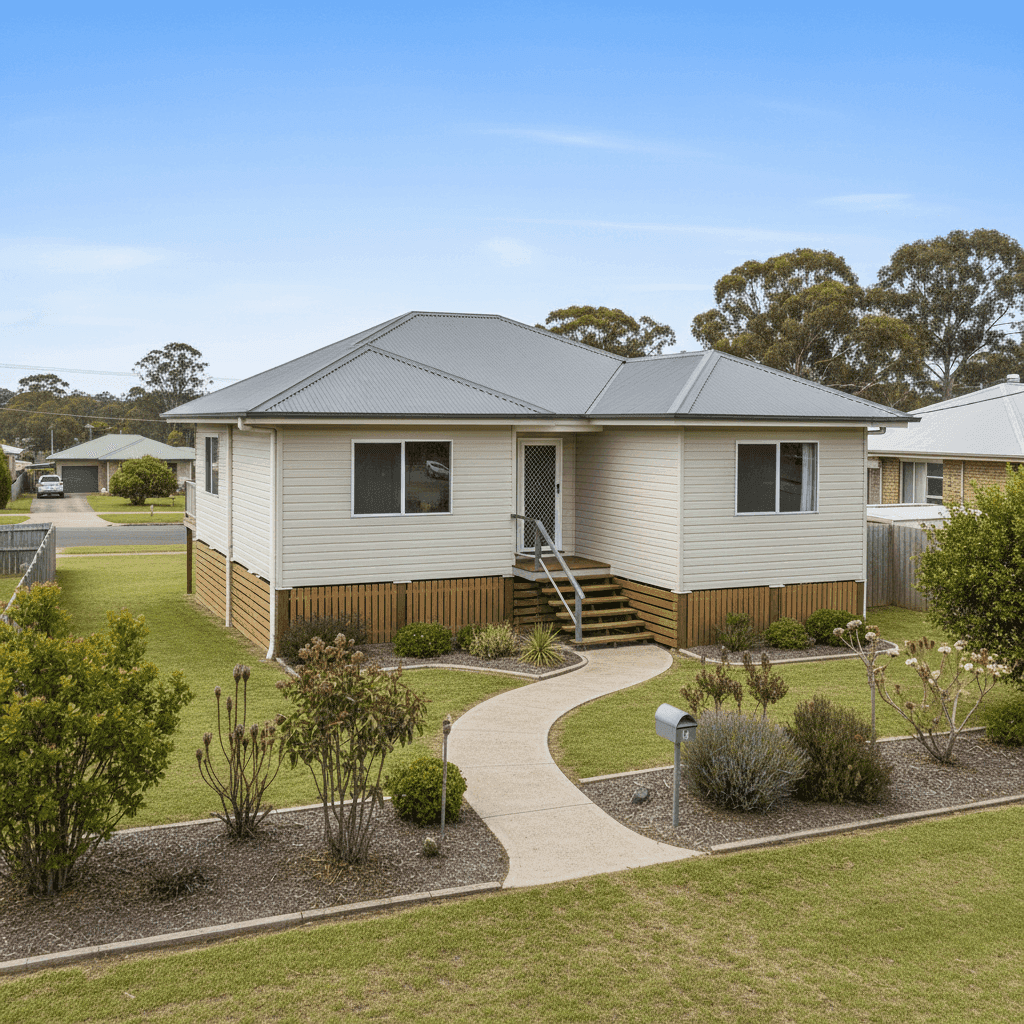
If you own a free standing home in West Kempsey, NSW 2440, you've probably noticed that home insurance can feel like a significant expense — especially when you're not sure whether what you're paying is reasonable. This article breaks down a real building insurance quote for a three-bedroom, two-bathroom home in the area, and puts it in context against suburb, state, and national benchmarks so you can make a more informed decision.
---
Is This Quote Fair?
The quote in question comes in at $2,768 per year (or $258 per month) for building-only cover, with a building excess of $5,000 and a sum insured of $536,000 on a 139 sqm free standing home.
Our price rating for this quote is EXPENSIVE — above average for the West Kempsey area.
To understand why, it helps to look at what other homeowners in the suburb are paying. The suburb average premium for West Kempsey (NSW 2440) sits at $2,276 per year, with a median of $1,779. That means this quote is roughly $492 above the suburb average and nearly $1,000 above the median — a meaningful gap worth investigating before renewing or accepting.
That said, the quote isn't wildly out of step with the upper range of the market. The 75th percentile for the suburb is $2,570/yr, and this quote sits just above that threshold. So while it's on the pricier end, it's not completely out of the ordinary — it simply signals that there may be better options available with some shopping around.
---
How West Kempsey Compares
Putting this quote into a broader context reveals some interesting dynamics.
| Benchmark | Premium |
|---|---|
| This quote | $2,768/yr |
| West Kempsey suburb average | $2,276/yr |
| West Kempsey suburb median | $1,779/yr |
| NSW state average | $3,801/yr |
| NSW state median | $3,410/yr |
| National average | $2,965/yr |
| National median | $2,716/yr |
| Port Macquarie-Hastings LGA average | $5,055/yr |
Compared to the NSW state average of $3,801/yr, this quote is actually below the state benchmark — which is worth noting. New South Wales as a whole carries elevated premiums due to the diversity of risk across the state, from flood-prone river towns to bushfire-exposed hinterlands.
When measured against national averages, the picture is similar: the $2,768 quote sits just below the national average of $2,965, suggesting it's broadly in line with what Australians are paying across the country.
Perhaps the most striking figure is the Port Macquarie-Hastings LGA average of $5,055/yr — nearly double this quote. This likely reflects the wide range of properties and risk profiles across the LGA, including coastal and flood-affected areas. By that measure, this West Kempsey quote looks considerably more competitive.
The key takeaway? This quote is expensive for the suburb, but not unreasonable when viewed through a state or national lens. West Kempsey tends to attract lower premiums than many other parts of NSW, so local homeowners have reason to expect — and shop for — below-average pricing.
---
Property Features That Affect Your Premium
Several characteristics of this particular property are worth examining, as they directly influence what insurers charge.
Vinyl cladding exterior walls are a mixed signal for insurers. On one hand, vinyl is relatively low-maintenance and resistant to rot and termites. On the other, it can be more vulnerable to impact damage and extreme heat, which may nudge premiums slightly higher compared to brick veneer or double brick construction.
Steel/Colorbond roofing is generally well-regarded by insurers. It's durable, fire-resistant, and performs well in high-wind conditions — all factors that can work in a homeowner's favour at renewal time.
Stump foundations are common in older Queensland-style homes and are widespread across regional NSW. While they offer great ventilation and are well-suited to the local climate, insurers sometimes apply a loading to stump-founded homes due to the potential for subfloor damage, pest access, and structural movement over time.
Timber and laminate flooring is a standard feature that doesn't typically attract a significant premium loading, though it can be more costly to replace than concrete or tile in the event of a claim.
Construction year: 1978 — at nearly 50 years old, this home falls into a category that insurers scrutinise more carefully. Older homes may have ageing wiring, plumbing, or structural elements that increase the likelihood of a claim. This is one of the more likely contributors to the above-average premium.
Standard fittings quality keeps things straightforward — high-end or bespoke fittings would push the sum insured and premium higher, so this is a factor working in the homeowner's favour.
---
Tips for Homeowners in West Kempsey
If you're looking to get better value on your building insurance, here are four practical steps worth considering:
- Shop around before renewing. Loyalty rarely pays in insurance. With the suburb median sitting at $1,779/yr, there's a real chance a competing insurer could offer meaningful savings. Use a comparison tool like CoverClub to see multiple quotes side by side.
- Review your sum insured carefully. A sum insured of $536,000 for a 139 sqm home works out to roughly $3,856 per square metre — on the higher end for a standard-finish regional home. It's worth getting a current building replacement cost estimate to ensure you're not over-insured (and overpaying) or dangerously under-insured.
- Ask about your excess options. This quote carries a $5,000 building excess, which is relatively high. While a higher excess does reduce your premium, make sure it's an amount you could genuinely afford to pay in the event of a claim. Some insurers offer more flexible excess structures.
- Document your home's condition and upgrades. If you've updated the electrical wiring, re-roofed, or made structural improvements since 1978, make sure your insurer knows. These upgrades can reduce perceived risk and may lead to a lower premium at your next renewal.
---
Compare Your Options with CoverClub
Whether you're renewing your policy or insuring a new purchase, it pays to compare. CoverClub makes it easy for Australian homeowners to benchmark their premiums against real data from their suburb, state, and across the country. Get a quote today and find out whether you're getting a fair deal — or leaving money on the table.