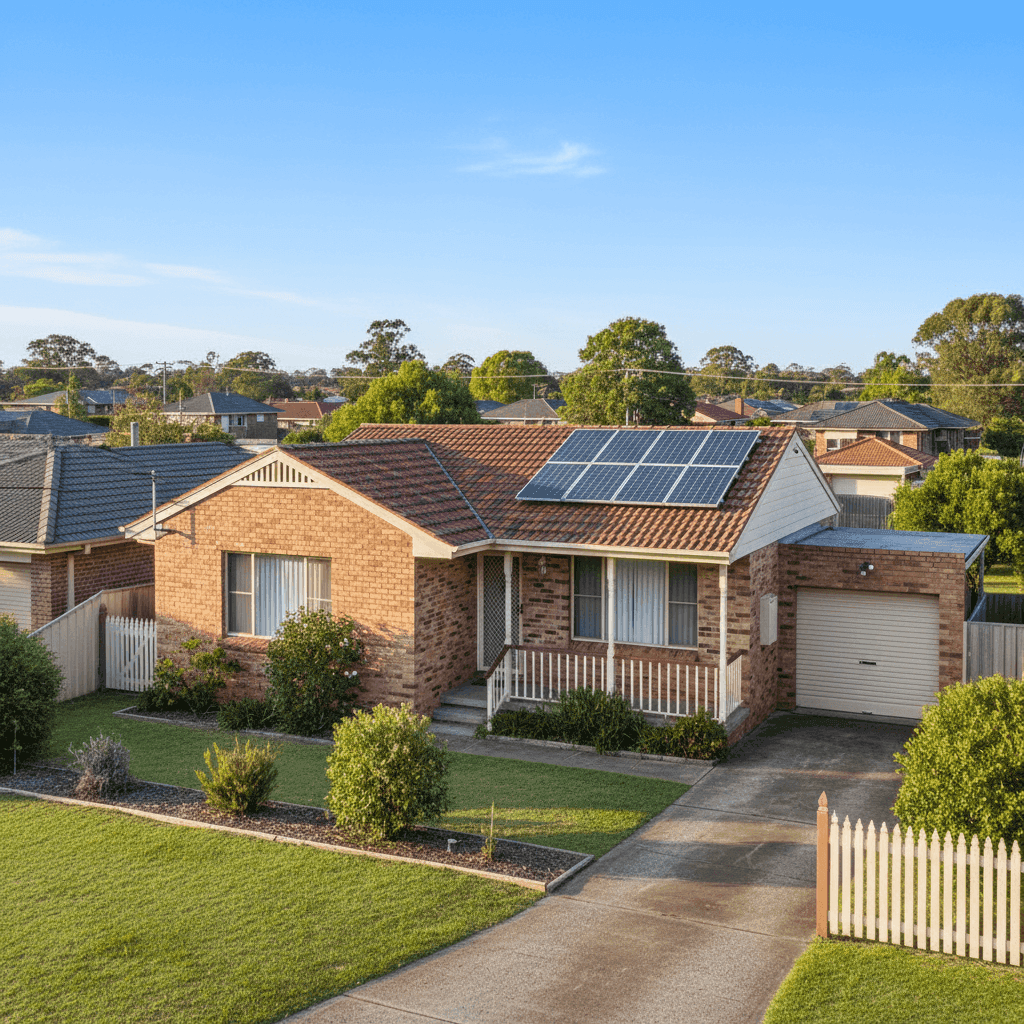
West Kempsey is a residential suburb sitting within the Kempsey Shire on the mid-north coast of New South Wales. Like much of the region, it's a place where older character homes sit alongside more modern builds — and where the cost of insuring those homes can vary quite significantly depending on the property's age, construction, and location. This article breaks down a real home and contents insurance quote for a three-bedroom, free-standing home in West Kempsey (postcode 2440) and puts the numbers into context so you can judge whether you're getting a fair deal.
---
Is This Quote Fair?
The quote in question comes in at $3,893 per year (or $366 per month) for combined home and contents cover, with a building sum insured of $630,000 and contents valued at $70,000. Both the building and contents excess are set at $1,000.
Based on our pricing data, this quote is rated Expensive — above average for the area. To put that in perspective, the suburb average annual premium in West Kempsey sits at $2,323, and the median is $2,277. That means this quote is running roughly $1,570 above the local average — a gap of around 67%.
It's worth noting that the 75th percentile for the suburb is $2,923, meaning this quote sits above even the most expensive quarter of policies we've seen in the area. That's a meaningful signal that there may be room to shop around.
That said, premiums are influenced by a range of factors beyond just location — including the insurer's own risk appetite, the specific coverage terms, and the characteristics of the individual property. We'll unpack those below.
---
How West Kempsey Compares
To understand whether this quote is truly out of step, it helps to zoom out and look at the broader picture. Here's how West Kempsey's insurance costs stack up against state and national benchmarks:
| Benchmark | Average Premium | Median Premium |
|---|---|---|
| West Kempsey (2440) | $2,323/yr | $2,277/yr |
| NSW | $9,528/yr | $3,770/yr |
| National | $5,347/yr | $2,764/yr |
| Port Macquarie-Hastings LGA | $7,001/yr | — |
A few things stand out here. First, the NSW state average is extraordinarily high at $9,528 — this is heavily skewed by premium-intensive areas like flood-prone regions, coastal zones, and parts of Greater Sydney. The median of $3,770 is a more reliable guide for typical NSW homeowners.
Similarly, the national average of $5,347 is pulled upward by high-risk postcodes across Queensland, Northern Territory, and parts of Western Australia. The national median of $2,764 is closer to what most Australian homeowners actually pay.
Compared to the West Kempsey suburb median of $2,277, this quote of $3,893 is noticeably elevated. And while the Port Macquarie-Hastings LGA average of $7,001 suggests some properties in the broader region attract very high premiums (likely flood-affected or high-value homes), the suburb-level data is the most relevant comparison for a property like this one.
---
Property Features That Affect Your Premium
Several characteristics of this particular property are worth examining when thinking about why the premium has landed where it has.
Age of construction (1970): Homes built in the 1970s are now over 50 years old. Insurers factor in the age of a property because older homes can carry higher risks around plumbing, electrical wiring, and structural integrity. Replacement costs can also be harder to estimate accurately, which may push premiums higher.
Brick veneer walls and tile roof: These are generally considered mid-range construction materials in terms of risk. Brick veneer is more fire-resistant than timber weatherboard but can be more susceptible to structural movement. Tiled roofs are durable but can crack or shift over time, particularly in older homes. Overall, this combination is fairly standard and shouldn't dramatically inflate premiums on its own.
Stumps foundation: Homes on stumps (also called pier foundations) are common in regional NSW and Queensland, particularly in older housing stock. This type of foundation can be associated with subsidence risk and may attract slightly higher premiums than slab-on-ground construction.
Timber and laminate flooring: From an insurance perspective, timber floors in older homes can be a consideration for water damage claims. Combined with a stumped foundation, moisture-related issues are a known risk.
Solar panels: The property has solar panels installed. While solar is increasingly common, insurers do factor in the added replacement cost of panels when calculating building sum insured. Some policies also have specific conditions around solar, so it's worth checking your Product Disclosure Statement carefully.
Ducted climate control: Ducted systems represent a significant asset and add to the overall replacement cost of the home. This is appropriately reflected in a higher building sum insured.
Building sum insured ($630,000): For a 139 sqm home in regional NSW, $630,000 is a substantial sum insured. It's important this figure reflects the true cost to rebuild — not the market value of the property — and includes demolition, professional fees, and compliance with current building codes. An over-insured property can result in unnecessarily high premiums, while under-insurance can leave you exposed after a claim.
---
Tips for Homeowners in West Kempsey
If you're looking to get better value on your home insurance, here are some practical steps worth considering:
- Compare quotes from multiple insurers. The single biggest lever you have is shopping around. With a quote sitting above the 75th percentile for the suburb, there's a reasonable chance another insurer will offer comparable coverage at a lower price. Use a comparison tool like CoverClub to see multiple options side by side.
- Review your building sum insured. Make sure your sum insured reflects the actual rebuild cost of your home — not the purchase price or market value. A qualified quantity surveyor can provide a formal rebuild estimate. If your current figure is too high, adjusting it could reduce your premium meaningfully.
- Ask about discounts for bundling and security features. Many insurers offer discounts when you combine home and contents cover (as this policy does), but also for things like deadbolts, monitored alarms, or being claims-free for several years. It's always worth asking what discounts apply.
- Check your excess settings. A higher voluntary excess typically results in a lower annual premium. If you're financially comfortable absorbing a larger out-of-pocket cost in the event of a claim, increasing your excess from $1,000 to $2,000 or more could reduce what you pay each year.
---
Find a Better Deal with CoverClub
Whether you're renewing your policy or shopping for the first time, it pays to compare. CoverClub makes it easy for Australian homeowners to benchmark their premiums against real data from their suburb, state, and across the country. Get a home insurance quote today and see how your current cover stacks up — you might be surprised at what you could save.