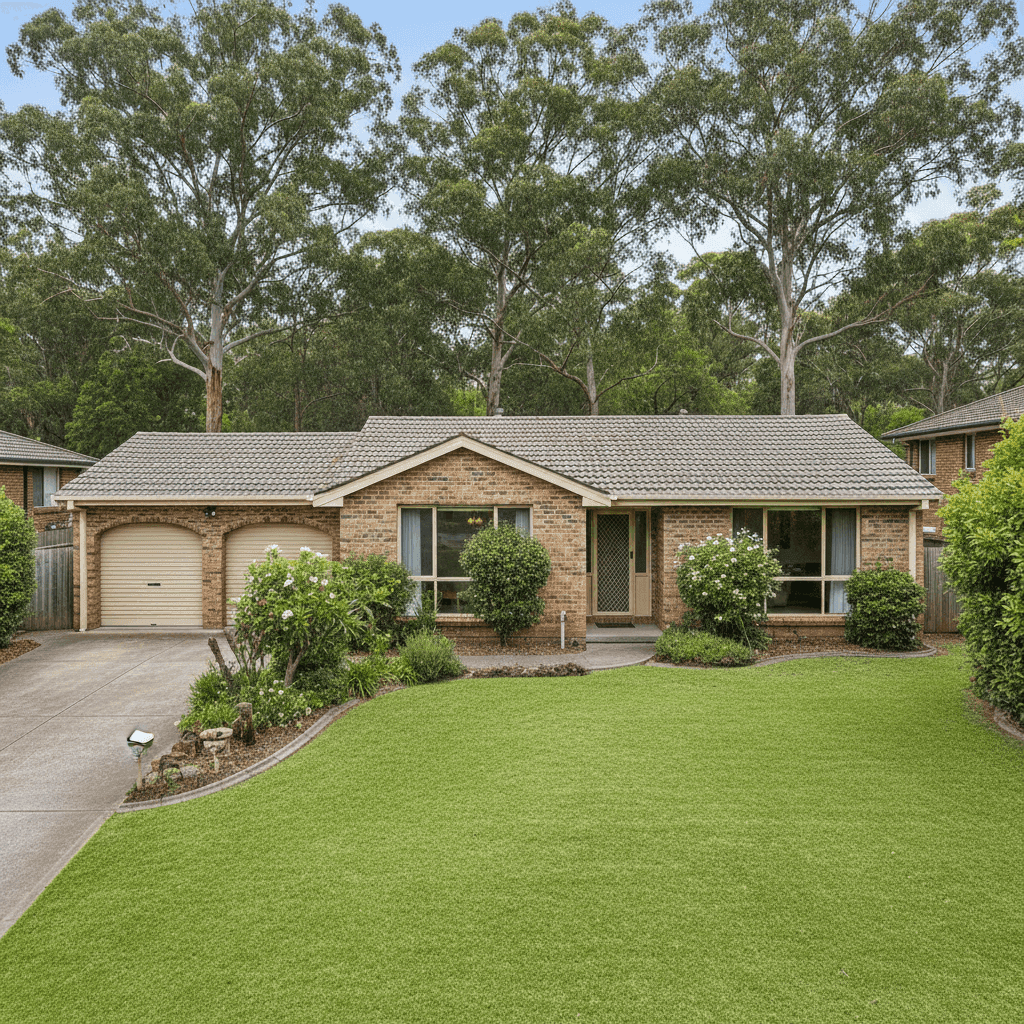
West Pennant Hills is one of Sydney's most sought-after leafy suburbs — a quiet, established pocket of the Hills District where large family homes sit on generous blocks surrounded by natural bushland. If you own a four-bedroom free standing home here, you're likely paying a significant sum to insure it. This article breaks down a real building insurance quote of $2,639 per year for a property in West Pennant Hills (postcode 2125), and helps you understand whether that figure is reasonable — or whether it's time to shop around.
---
Is This Quote Fair?
The short answer: this quote is rated Expensive (Above Average) for the area.
At $2,639 per year (or $253 per month), this premium sits noticeably above the West Pennant Hills suburb average of $2,467/yr and well above the suburb median of $2,006/yr. In fact, it lands above the 75th percentile for the suburb ($2,400/yr), meaning roughly three-quarters of comparable quotes in this postcode come in cheaper.
That said, context matters. The property in question carries a building sum insured of $1,108,000 — a substantial figure that reflects the cost of rebuilding a 235 sqm brick veneer home with above-average fittings. Higher rebuild values directly drive higher premiums, so some elevation above the median is expected. The question is whether the margin is justified, or whether a different insurer could offer a more competitive rate for the same level of cover.
With a $1,000 building excess, the policy sits at a standard threshold. Opting for a higher excess — say $2,500 or $5,000 — could meaningfully reduce the annual premium if you're comfortable absorbing a larger out-of-pocket cost in the event of a claim.
---
How West Pennant Hills Compares
To put this quote in perspective, here's how it stacks up across different benchmarks:
| Benchmark | Premium |
|---|---|
| This quote | $2,639/yr |
| Suburb average (West Pennant Hills) | $2,467/yr |
| Suburb median | $2,006/yr |
| Suburb 25th percentile | $1,687/yr |
| Suburb 75th percentile | $2,400/yr |
| LGA average (Hornsby) | $3,958/yr |
| NSW average | $9,528/yr |
| NSW median | $3,770/yr |
| National average | $5,347/yr |
| National median | $2,764/yr |
A few things stand out here. The NSW state average of $9,528/yr is extraordinarily high — driven by flood-prone and cyclone-affected regions that pull the mean upward significantly. The state median of $3,770/yr is a more useful reference point, and this quote comes in well below it, which is a positive sign.
Compared to the national median of $2,764/yr, this quote is only slightly above average — suggesting the pricing isn't dramatically out of step with the broader Australian market. However, given the suburb's relatively low-risk profile (no cyclone zone, established infrastructure, low flood exposure), homeowners in West Pennant Hills should arguably be able to secure cover closer to the suburb median. The gap between $2,006 and $2,639 represents over $630 per year — real money worth chasing with a comparison.
It's also worth noting that the suburb sample size used in this analysis is 11 quotes, which provides a reasonable directional guide but isn't a large dataset. Premiums can vary significantly between insurers for the same property.
---
Property Features That Affect Your Premium
Several characteristics of this property influence what insurers charge:
Brick veneer construction is generally viewed favourably by insurers. It offers solid fire resistance and structural durability compared to timber or clad exteriors, and typically attracts lower premiums than more vulnerable wall types.
Tiled roof is another positive factor. Terracotta or concrete tiles are considered resilient against hail and general weathering, and are a standard, well-understood material for insurers to price.
Slab foundation is common in homes built in the 1990s and is generally considered stable, though it can be more costly to repair if subsidence or cracking occurs — something insurers factor into their risk models.
Above-average fittings quality is a meaningful premium driver. Homes fitted with higher-end joinery, appliances, fixtures, and finishes cost more to repair or replace to the same standard. This is reflected in both the sum insured and the premium itself.
Ducted climate control adds to the insured value of the home. Ducted air conditioning systems are expensive to replace and are included in the building sum insured, contributing to the higher rebuild estimate.
Construction year (1994) places this home in a mature but not aged category. Homes from this era are generally well-regarded by insurers — built to reasonable standards, but without the unknown risks of very old wiring or plumbing that can affect properties from the 1960s or earlier.
The absence of a pool and solar panels simplifies the risk profile slightly. Both features can add complexity and cost to a policy, so their absence is a minor positive.
---
Tips for Homeowners in West Pennant Hills
1. Compare at least three quotes before renewing Insurers price risk differently, and the spread in this suburb — from $1,687 at the 25th percentile to $2,639 for this quote — shows there's genuine variation in the market. Don't let your policy auto-renew without checking alternatives first.
2. Review your sum insured carefully A building sum insured of $1,108,000 is substantial. Make sure it reflects the actual cost to rebuild your home (not its market value), including site clearance, architect fees, and council approvals. Over-insuring pushes your premium up unnecessarily; under-insuring leaves you exposed at claim time. Tools like the Cordell Sum Sure Calculator can help you validate your figure.
3. Consider adjusting your excess If you have a financial buffer and are unlikely to make small claims, increasing your excess from $1,000 to $2,500 or higher can reduce your annual premium. Just make sure the saving outweighs the additional risk you're absorbing.
4. Ask about bushfire preparedness discounts West Pennant Hills borders bushland, and some insurers offer discounts or more competitive pricing for homes with ember-proofing measures, metal gutters, or bushfire-rated construction features. It's worth asking your insurer directly whether any mitigation work could reduce your premium.
---
Ready to Find a Better Rate?
If this quote feels high for your property, the best move is to compare. CoverClub makes it easy to see what multiple insurers would charge for your home — without the back-and-forth of calling around individually. Get a quote at CoverClub and find out whether you could be paying less for the same level of protection. You can also explore detailed premium data for your area on the West Pennant Hills insurance stats page.