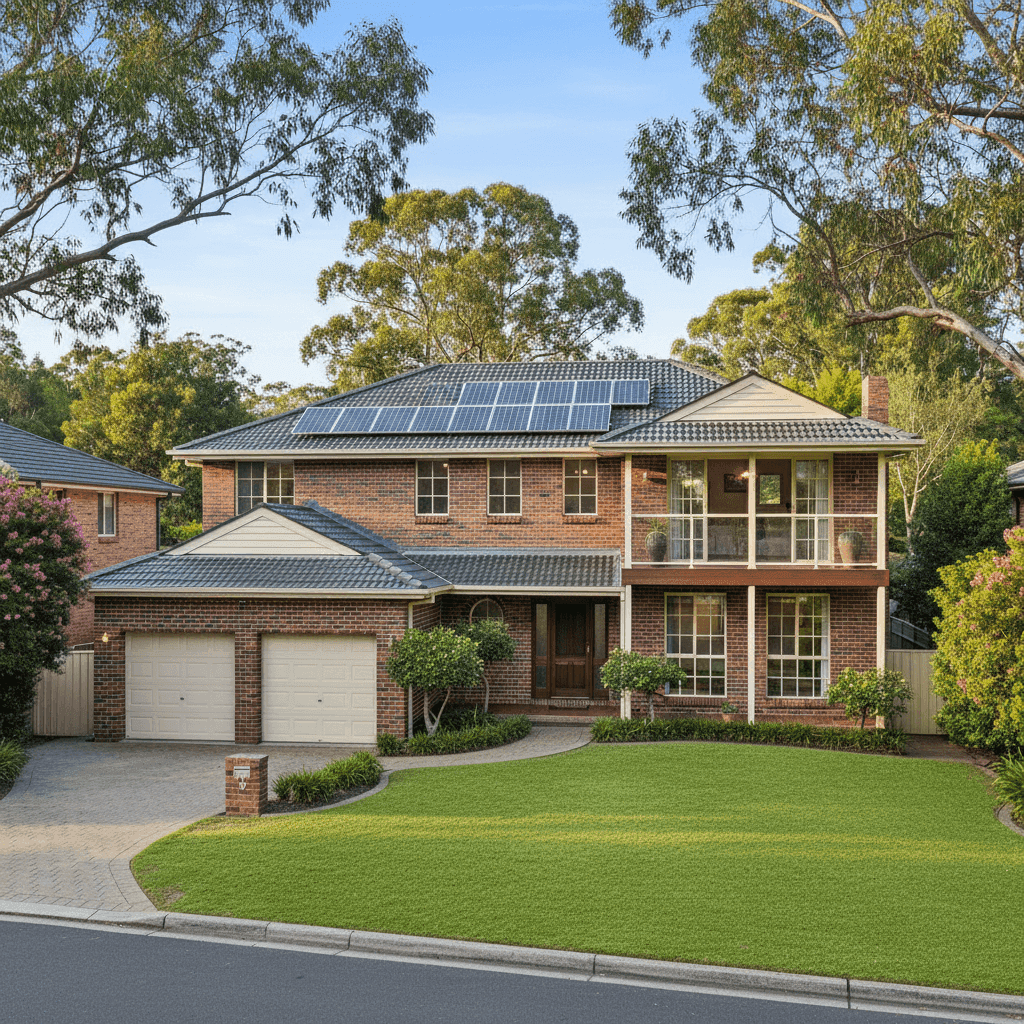
West Pymble is one of Sydney's leafy Upper North Shore suburbs — a well-established residential area known for its large family homes, tree-lined streets, and proximity to national parkland. It's precisely the kind of suburb where home insurance can get complicated: generous block sizes, high rebuild costs, and substantial contents make for significant sums insured. This article takes a close look at a real home and contents insurance quote for a five-bedroom, three-bathroom free standing home in West Pymble (NSW 2073), built in 1985 with brick veneer walls and a tiled roof, and asks the question every homeowner should be asking — is this quote actually fair?
---
Is This Quote Fair?
The quote in question comes in at $5,067 per year (or $486 per month) for combined home and contents cover, with a building sum insured of $1,502,000 and contents valued at $249,000. Both the building and contents excess are set at $1,000.
Our pricing engine has rated this quote as Expensive (Above Average) — and the data backs that up.
Compared to the West Pymble suburb average of $3,530/yr, this quote sits 43.5% above what most homeowners in the same postcode are paying. Even against the suburb's 75th percentile — meaning only 25% of quotes are higher — the figure of $4,739/yr still falls below this quote's $5,067. In other words, this premium is on the expensive end even among the priciest quotes in the suburb.
That said, context matters. This property carries a notably high building sum insured ($1,502,000), which is a significant driver of premium cost. Larger, higher-value homes naturally attract higher premiums, and a 334 sqm home with above-average fittings in a sought-after Sydney suburb will command a higher rebuild cost than the typical property. It's worth checking whether the sum insured is accurately calibrated — both over-insurance and under-insurance carry real risks.
---
How West Pymble Compares
To understand whether this quote is genuinely expensive or simply reflects the property's scale, it helps to zoom out and look at the broader picture.
| Benchmark | Premium |
|---|---|
| This Quote | $5,067/yr |
| West Pymble Suburb Average | $3,530/yr |
| West Pymble Suburb Median | $2,995/yr |
| West Pymble 75th Percentile | $4,739/yr |
| Ku-ring-gai LGA Average | $3,965/yr |
| NSW State Average | $9,528/yr |
| NSW State Median | $3,770/yr |
| National Average | $5,347/yr |
| National Median | $2,764/yr |
(Based on 31 quotes collected for the West Pymble area)
A few things stand out here. First, the NSW state average of $9,528/yr is dramatically higher than the suburb average — this is largely skewed by high-risk coastal and flood-prone areas across the state. West Pymble, by contrast, is a relatively low-risk suburb with no cyclone exposure, which keeps premiums more moderate at a local level.
Compared to the national average of $5,347/yr, this quote is actually slightly below — a reminder that Australia's insurance market is heavily influenced by catastrophe-prone regions in Queensland and northern WA. For a Sydney North Shore property of this size and value, a premium around the $5,000 mark is not unusual, but it's still worth shopping around.
---
Property Features That Affect Your Premium
Several characteristics of this property have a meaningful impact on what insurers will charge:
Brick Veneer Construction & Tiled Roof Brick veneer with a tiled roof is generally viewed favourably by insurers. It's a durable, fire-resistant combination that reduces risk compared to timber-framed or metal-clad alternatives. This construction type is common across Sydney's North Shore and tends to attract more competitive premiums.
1985 Build Year Homes built in the mid-1980s are well past the high-risk "new build" phase but are also old enough to raise questions about the condition of plumbing, electrical systems, and roofing. Insurers may price in a slightly higher risk for properties of this era, particularly around water damage and storm claims.
Solar Panels The presence of solar panels adds to the insurable value of the property and can introduce specific risks — particularly around storm or hail damage to panels. Not all standard home insurance policies cover solar panels as a default, so it's important to confirm your policy explicitly includes them.
Ducted Climate Control Ducted air conditioning systems are a significant fixed asset and contribute to the overall rebuild cost. They're also a common source of claims (water leaks, electrical faults), which can influence how some insurers price the risk.
Above-Average Fittings With above-average fittings quality, this home likely features higher-end fixtures, flooring, and finishes. This is reflected in both the higher sum insured and the premium — quality fittings cost more to repair or replace after a claim.
Slab Foundation & Tile Flooring A concrete slab foundation is standard for the era and region and doesn't typically attract a premium loading. Tiled flooring is durable and relatively straightforward to replace, which is a mild positive from an insurer's perspective.
---
Tips for Homeowners in West Pymble
1. Review your sum insured carefully At $1,502,000, the building sum insured is substantial. Make sure this figure reflects the actual cost to rebuild your home — not its market value. Use a reputable building cost calculator or engage a quantity surveyor to validate the number. Being over-insured means you're paying more than necessary; being under-insured can leave you seriously out of pocket after a major claim.
2. Confirm your solar panels are covered Solar panel coverage varies significantly between policies. Some insurers include panels automatically under building cover; others require an endorsement or have specific sub-limits. Review your Product Disclosure Statement (PDS) carefully and ask your insurer directly if you're unsure.
3. Compare at least three quotes before renewing Our data shows a wide spread of premiums in West Pymble — from around $2,228/yr at the 25th percentile to over $4,739/yr at the 75th. That's a difference of more than $2,500 per year for broadly similar cover. Shopping around at renewal time is one of the most effective ways to reduce your insurance costs without sacrificing protection.
4. Consider bundling and excess adjustments Many insurers offer discounts for bundling home and contents cover (which this policy already does). If your financial position allows, increasing your excess modestly — say from $1,000 to $1,500 — can deliver a meaningful reduction in annual premium. Just make sure the saving is worth the additional out-of-pocket cost if you do need to claim.
---
Compare Your Home Insurance on CoverClub
Whether you're renewing your existing policy or shopping for the first time, it pays to know where your quote stands. CoverClub makes it easy to see how your premium compares to others in your suburb, your LGA, and across Australia — so you can make a genuinely informed decision.
Get a home insurance quote today and see real data for West Pymble and surrounding areas. Don't pay more than you need to.