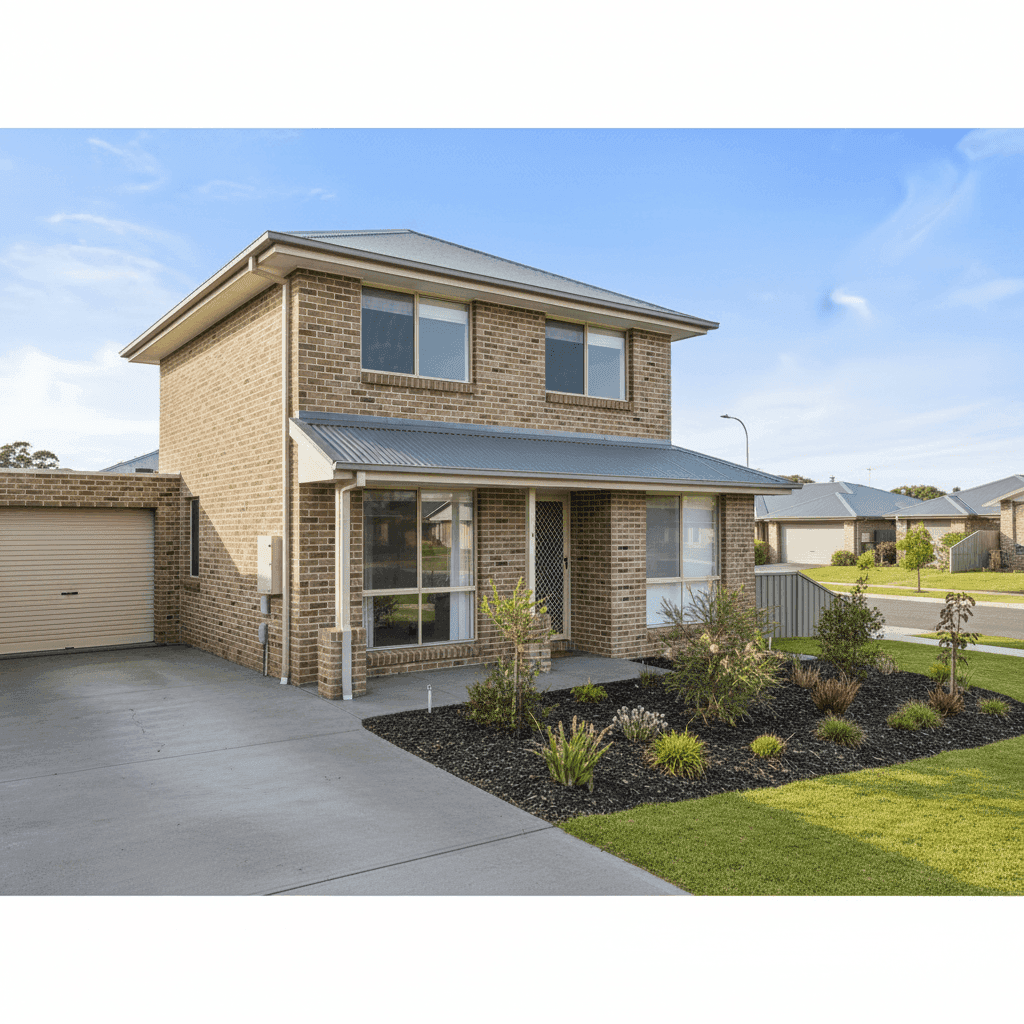
West Ulverstone is a quiet residential pocket on Tasmania's scenic north-west coast, and like many established suburbs in the region, it offers a mix of solid, well-built homes at relatively accessible price points. If you own a semi detached property here — or you're shopping around for cover — understanding what a fair home insurance premium looks like can save you hundreds of dollars a year. This article takes a close look at a real home and contents quote for a three-bedroom, two-bathroom semi detached in West Ulverstone (postcode 7315) and puts it in context against local, state, and national benchmarks.
---
Is This Quote Fair?
The short answer: yes — and then some. At $1,450 per year (or roughly $139 per month), this quote carries a "Cheap" price rating, meaning it sits comfortably below the average for the suburb. That's a meaningful result for a policy covering $399,000 in building sum insured and $50,000 in contents, with a $1,000 excess on both building and contents components.
To put it in perspective, the suburb average for West Ulverstone sits at $1,937 per year, and the median is even higher at $2,037 per year. This quote lands below the suburb's 25th percentile of $1,486 — meaning fewer than one in four quotes in the area come in this low. That's a genuinely competitive result, and one worth paying attention to if you're currently paying more for similar cover.
It's worth noting that the sample of local quotes is relatively small (seven quotes), so there's some natural variability in those figures. That said, the directional signal is clear: this is a well-priced policy for the area.
---
How West Ulverstone Compares
Zooming out beyond the suburb tells an equally interesting story. Check out the West Ulverstone insurance stats to see how premiums are trending locally.
| Benchmark | Annual Premium |
|---|---|
| This quote | $1,450 |
| Suburb average (West Ulverstone) | $1,937 |
| Suburb median | $2,037 |
| LGA average (Kentish) | $2,013 |
| TAS state average | $2,814 |
| TAS state median | $2,326 |
| National average | $5,347 |
| National median | $2,764 |
What stands out here is just how much cheaper Tasmania is compared to the national average. The state average of $2,814 is already well below the national average of $5,347 — a difference driven largely by the relatively low exposure to catastrophic weather events like cyclones, severe flooding, and the extreme bushfire risk zones found in other parts of the country.
West Ulverstone itself sits slightly below the broader Kentish LGA average of $2,013, which suggests the suburb benefits from a combination of favourable geography and solid housing stock. And this particular quote, at $1,450, undercuts even those already-reasonable local benchmarks.
---
Property Features That Affect Your Premium
Several characteristics of this property work in the homeowner's favour from an insurance pricing perspective.
Double brick construction is one of the most significant. Brick walls are highly regarded by insurers for their durability, fire resistance, and structural integrity. Compared to timber-framed or clad homes, double brick properties typically attract lower premiums because they're less susceptible to storm damage and fire spread.
Colorbond steel roofing is another positive. Steel roofs are durable, low-maintenance, and perform well in high-wind conditions. They're less prone to the cracking or lifting issues that can affect older tile roofs, and insurers generally view them favourably.
The slab foundation is standard for a home built in 2007 and presents no particular risk flags. Similarly, tile flooring is a resilient choice that holds up well to moisture and wear — relevant in the event of a water-related claim.
The property's ducted climate control system is worth noting. While it adds value to the home and contributes to the overall sum insured, it also represents a potential claims item if the system is damaged. Homeowners should confirm with their insurer that ducted systems are covered under the building policy, as some policies treat them as fixtures while others may classify components differently.
At 139 square metres, this is a modestly sized home, which naturally keeps the replacement cost — and therefore the building sum insured — at a manageable level. The $399,000 building sum insured appears appropriate for a double brick semi detached of this size in regional Tasmania, though it's always worth reviewing your sum insured annually to account for rising construction costs.
The absence of a pool or solar panels simplifies the risk profile, and the property's location outside a cyclone risk zone is a meaningful factor in keeping premiums down.
---
Tips for Homeowners in West Ulverstone
1. Review your sum insured every year Construction costs have risen significantly across Australia in recent years. A sum insured that was accurate when you first took out your policy may now leave you underinsured. Use a building replacement cost calculator or speak to a quantity surveyor to make sure your $399,000 figure still reflects what it would actually cost to rebuild your home today.
2. Bundle building and contents for potential savings This quote already combines home and contents cover, which is often the most cost-effective approach. If you currently hold these as separate policies with different insurers, it's worth getting a combined quote — you may find a better deal while also simplifying your paperwork.
3. Don't assume your ducted system is fully covered Ducted climate control is a significant asset in a home. Check your policy's product disclosure statement (PDS) to confirm how your system is covered — both for mechanical breakdown (if applicable) and for damage caused by an insured event like a storm or fire.
4. Compare quotes regularly — not just at renewal Insurance markets shift, and the cheapest option this year may not be the best value next year. Platforms like CoverClub make it straightforward to compare multiple quotes side by side, so you're not locked into a premium that's crept up without you noticing.
---
Ready to See What You Could Be Paying?
Whether you're a current homeowner in West Ulverstone or just starting your search for cover, comparing quotes is the single most effective way to make sure you're not overpaying. CoverClub aggregates quotes from across the Australian market so you can see your options clearly and make a confident decision. Get a quote today and find out where your premium sits relative to your neighbours.