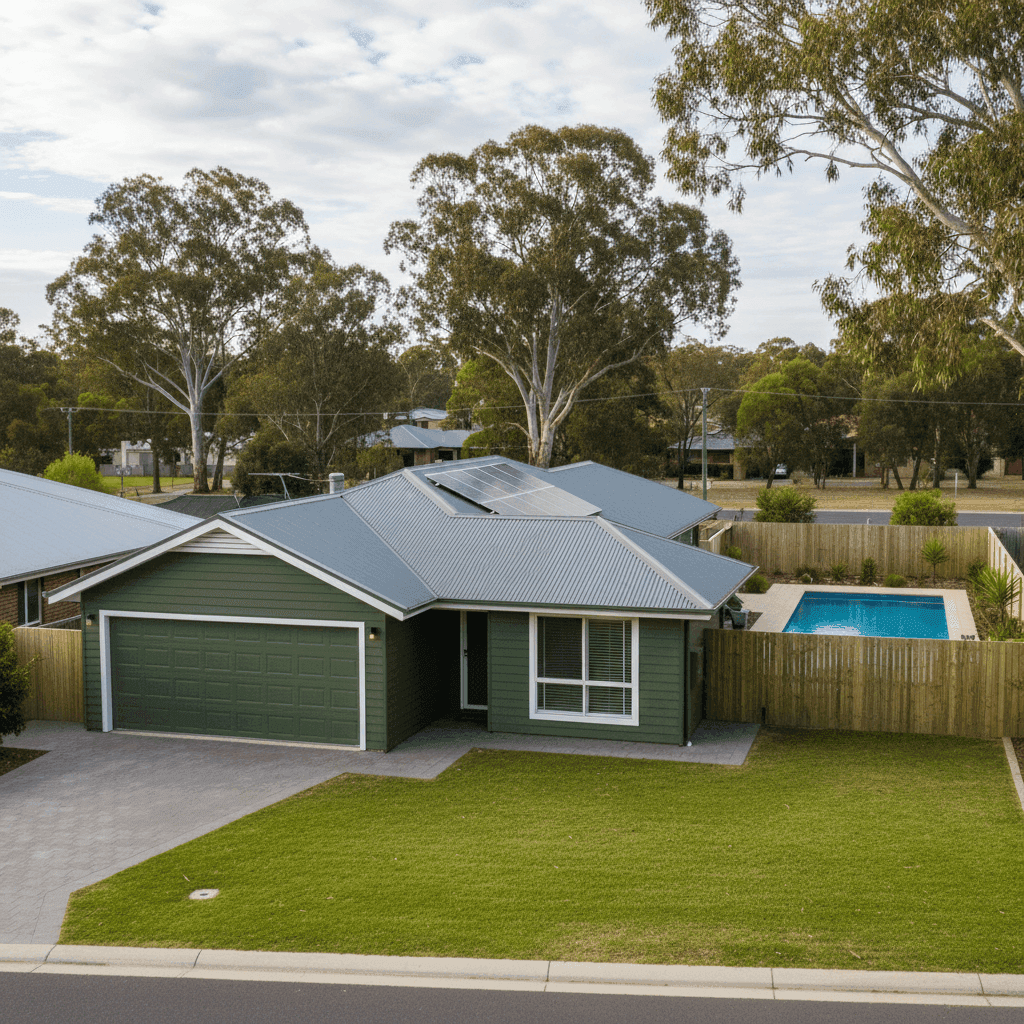
If you own a free standing home in West Wallsend, NSW 2286, you're likely familiar with the leafy, relaxed character of this Lake Macquarie suburb — but how much should you expect to pay to protect it? This article breaks down a real home and contents insurance quote for a 3-bedroom, 1-bathroom weatherboard home in the area, compares it against local, state and national benchmarks, and offers practical advice for keeping your premiums in check.
---
Is This Quote Fair?
The quote in question comes in at $5,483 per year (or $527/month) for combined home and contents cover, with a building sum insured of $661,000 and contents valued at $200,000. Both the building and contents excess are set at $1,000.
Our price rating for this quote is Expensive — Above Average, and the data backs that up. At $5,483 annually, this premium sits well above the suburb average of $2,497/yr and more than double the suburb median of $2,172/yr. Even against broader benchmarks — the NSW state average of $3,801/yr and the national average of $2,965/yr — this quote is notably elevated.
That said, "expensive" doesn't automatically mean "wrong." A number of factors specific to this property — which we'll unpack below — can legitimately push premiums higher. The key question is whether the cover level and insurer pricing are genuinely justified, or whether there's room to shop around for a better deal.
---
How West Wallsend Compares
To put this quote in context, here's how West Wallsend (postcode 2286) stacks up against wider averages, based on CoverClub's suburb insurance data:
| Benchmark | Annual Premium |
|---|---|
| This Quote | $5,483 |
| Suburb Average (West Wallsend) | $2,497 |
| Suburb Median | $2,172 |
| Suburb 25th Percentile | $1,735 |
| Suburb 75th Percentile | $2,698 |
| LGA Average (Lake Macquarie) | $3,593 |
| NSW State Average | $3,801 |
| National Average | $2,965 |
(Based on 42 quotes sampled in the West Wallsend area.)
A few things stand out here. First, West Wallsend's suburb average of $2,497 is actually below both the NSW state average and the national average — suggesting the area is generally considered relatively affordable to insure. Second, this particular quote exceeds even the Lake Macquarie LGA average of $3,593 by nearly $1,900. That's a significant gap that warrants scrutiny.
The 75th percentile for the suburb sits at just $2,698 — meaning roughly 75% of comparable quotes in West Wallsend come in under that figure. At $5,483, this quote is well into outlier territory for the postcode.
---
Property Features That Affect Your Premium
Several characteristics of this property are likely contributing to its above-average premium. Understanding these factors can help you have more informed conversations with insurers.
Age and Construction (1934, Weatherboard)
This home was built in 1934, making it over 90 years old. Older homes tend to attract higher premiums because ageing materials — particularly weatherboard timber walls — carry greater risk of fire, rot, and structural wear. Weatherboard homes are also generally considered more susceptible to fire damage than brick veneer or full brick construction, which insurers price accordingly.
Stumped Foundation
A stump foundation (also known as a pier-and-beam or raised foundation) is common in older NSW homes and can be a flag for insurers. Stumps can deteriorate over time — particularly timber stumps — and the elevated structure may increase the cost of repairs following storm or flood events.
Steel/Colorbond Roof
On the positive side, a Colorbond steel roof is generally viewed favourably by insurers. It's durable, fire-resistant, and low-maintenance compared to older materials like terracotta tiles or corrugated iron. This likely offsets some of the premium pressure from the weatherboard walls.
Swimming Pool
Having a pool on the property adds to the insured risk — both in terms of liability and the cost of replacing or repairing pool infrastructure. Pools can also be a factor in public liability claims, which is typically included within home insurance policies.
Solar Panels
Solar panels are increasingly common on Australian rooftops, and most insurers cover them under building insurance. However, they do add to the overall replacement value of the home, which can nudge the sum insured — and therefore the premium — upward.
High Sum Insured
At $661,000 for the building alone, the sum insured is substantial. While it's important not to under-insure (a common and costly mistake), it's worth periodically reviewing whether your sum insured accurately reflects current rebuild costs — not the market value of the property. An independent quantity surveyor's report can help confirm the right figure.
---
Tips for Homeowners in West Wallsend
If you're looking to manage your home insurance costs without compromising on cover, here are four practical steps worth considering:
- Review your sum insured regularly. Building costs fluctuate, and over-insuring can be just as financially wasteful as under-insuring. Use a building cost calculator or consult a quantity surveyor to confirm your rebuild estimate is accurate.
- Compare quotes before renewing. Loyalty rarely pays in insurance. The fact that this quote sits well above the suburb median suggests there may be more competitive options available. Use a comparison platform like CoverClub to benchmark your renewal quote before accepting it.
- Consider your excess settings. A $1,000 excess is fairly standard, but opting for a higher voluntary excess (e.g., $2,000–$2,500) can meaningfully reduce your annual premium — provided you're comfortable covering that amount out of pocket in the event of a claim.
- Maintain your weatherboard cladding and stumps. Insurers may reduce cover or apply exclusions if a property is poorly maintained. Keeping your external walls painted and sealed, and having your stumps inspected periodically, not only protects your home but demonstrates to insurers that the property is well cared for.
---
Ready to Find a Better Deal?
Whether you're renewing your policy or insuring a new home, it pays to compare. CoverClub makes it easy to see how your quote stacks up against real data from your suburb, your state, and across Australia. Get a quote today and find out if you're paying too much for your home and contents insurance in West Wallsend.