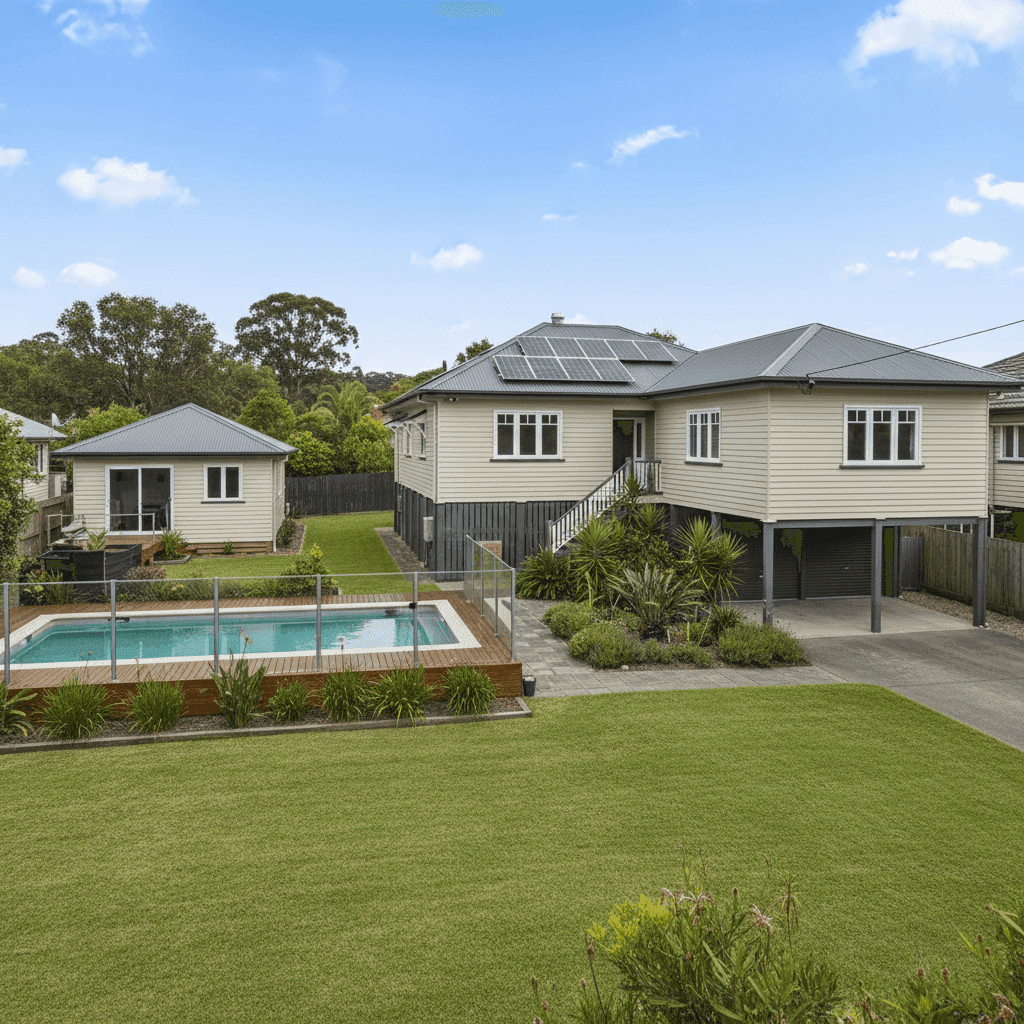
West Wollongong is a well-established residential suburb sitting just inland from the New South Wales coastline, offering a blend of leafy streets and easy access to Wollongong's CBD. For homeowners in the area, understanding what you should be paying for home and contents insurance is just as important as finding the right policy. This article breaks down a real quote for a five-bedroom free standing home in West Wollongong — and what the numbers actually mean for you.
---
Is This Quote Fair?
The short answer: yes — and then some. This quote came in at $1,146 per year (or $109 per month), covering both building and contents for a property insured at $854,000 for the building and $120,000 for contents. Our pricing model rates this as Cheap (Below Average) — meaning it sits well below what most comparable properties in the area are paying.
To put that in perspective, the suburb average for West Wollongong sits at $1,943 per year, and the median is $2,013. This quote lands $797 below the suburb average — a saving of roughly 41%. Even compared to the cheapest quarter of quotes in the suburb (the 25th percentile at $1,393/yr), this premium still undercuts the field.
For a property of this size and specification — five bedrooms, a pool, solar panels, ducted climate control, and a granny flat — a sub-$1,200 annual premium is genuinely competitive. Homeowners should feel confident this represents strong value in the current market.
---
How West Wollongong Compares
Zooming out beyond the suburb level tells an even more compelling story. According to CoverClub's West Wollongong insurance data, the local suburb average of $1,943/yr is already notably lower than broader benchmarks — and this quote sits well beneath even that.
Here's how the numbers stack up:
| Benchmark | Annual Premium |
|---|---|
| This Quote | $1,146 |
| Suburb Average (West Wollongong) | $1,943 |
| Suburb Median | $2,013 |
| Suburb 25th Percentile | $1,393 |
| LGA Average (Wollongong) | $2,530 |
| NSW State Average | $3,801 |
| NSW State Median | $3,410 |
| National Average | $2,965 |
| National Median | $2,716 |
West Wollongong itself is a relatively affordable suburb to insure compared to the NSW average — which, at $3,801, is more than double this quote. The gap between this property's premium and the state average is striking, and reflects a combination of favourable property characteristics and the suburb's generally lower risk profile.
It's worth noting the suburb sample size here is 12 quotes, which gives a reasonable snapshot of the local market without being a massive dataset — so individual results can vary depending on insurer, property specifics, and cover levels chosen.
---
Property Features That Affect Your Premium
Several characteristics of this property are worth understanding in the context of your insurance premium — some work in your favour, others add complexity.
Weatherboard Wood Exterior Timber weatherboard homes are common across older and newer NSW suburbs alike, but they do carry a higher fire risk than brick or rendered construction. Insurers typically price this in, so it's notable that this quote remains competitive despite the wall material.
Steel/Colorbond Roof Colorbond roofing is generally viewed favourably by insurers. It's durable, low-maintenance, and performs well in storms and high winds — all of which can reduce claims risk compared to terracotta or concrete tiles.
Elevated Foundation (At Least 1 Metre) This is a meaningful risk reducer. Homes elevated by at least one metre have significantly better protection against water ingress and flooding. In a coastal region like Wollongong, where storm surge and heavy rainfall events can occur, this elevation can translate directly into lower premiums.
Slab Foundation with Timber/Laminate Flooring A concrete slab foundation provides structural stability, while timber and laminate flooring — though susceptible to water damage — is generally straightforward to replace and assess for claims purposes.
Swimming Pool Pools add to the replacement cost of a property and introduce some liability considerations, but they're a common feature in NSW homes and most standard home and contents policies accommodate them without dramatic premium loading.
Solar Panels Solar panels are increasingly standard on Australian homes. They add to the insured value of the property and can be a claims item if damaged by hail or storms, but most modern policies include them under building cover. It's worth confirming your policy explicitly covers them.
Ducted Climate Control Ducted systems are a significant fixed asset within the home and contribute to the building sum insured. At $854,000, the building cover here appears to account for the full scope of the property's features.
Granny Flat The presence of a granny flat is an important factor. Separate dwellings on the same property need to be explicitly covered under your policy — either as part of the main building sum insured or as a separately noted structure. Always confirm with your insurer that the granny flat is included in your coverage.
New Construction (2025) A brand-new home carries some advantages: modern building standards, fresh materials, and no legacy maintenance issues. Newer builds are often more resilient and may attract lower premiums as a result.
---
Tips for Homeowners in West Wollongong
1. Confirm your granny flat is explicitly covered Don't assume your policy automatically extends to a secondary dwelling. Ask your insurer directly whether the granny flat is included in your building sum insured, and get it in writing. Some policies treat additional structures differently, which could leave you underinsured.
2. Review your sum insured annually With construction costs continuing to rise across NSW, the cost to rebuild your home can increase significantly year on year. A sum insured of $854,000 may be appropriate today, but it's worth reassessing each renewal to ensure you wouldn't be left short in the event of a total loss.
3. Check your solar panel coverage Solar systems are a significant investment and are vulnerable to storm and hail damage. Verify that your policy covers them under building insurance, and check whether there are any sub-limits that could affect a claim.
4. Don't overlook contents coverage At $120,000, the contents cover here is meaningful — but it's easy to underestimate the value of everything inside your home. Do a quick audit of your furniture, appliances, clothing, and valuables to make sure your contents sum is realistic. Underinsurance is one of the most common issues Australian homeowners face at claim time.
---
Compare Your Own Quote at CoverClub
Whether you're a West Wollongong local or researching home insurance across NSW, CoverClub makes it easy to see how your current premium stacks up. Get a quote today and find out if you're paying more than you need to — or if your current cover is genuinely competitive. With suburb-level benchmarking and real premium data, you'll have the context to make a confident decision.