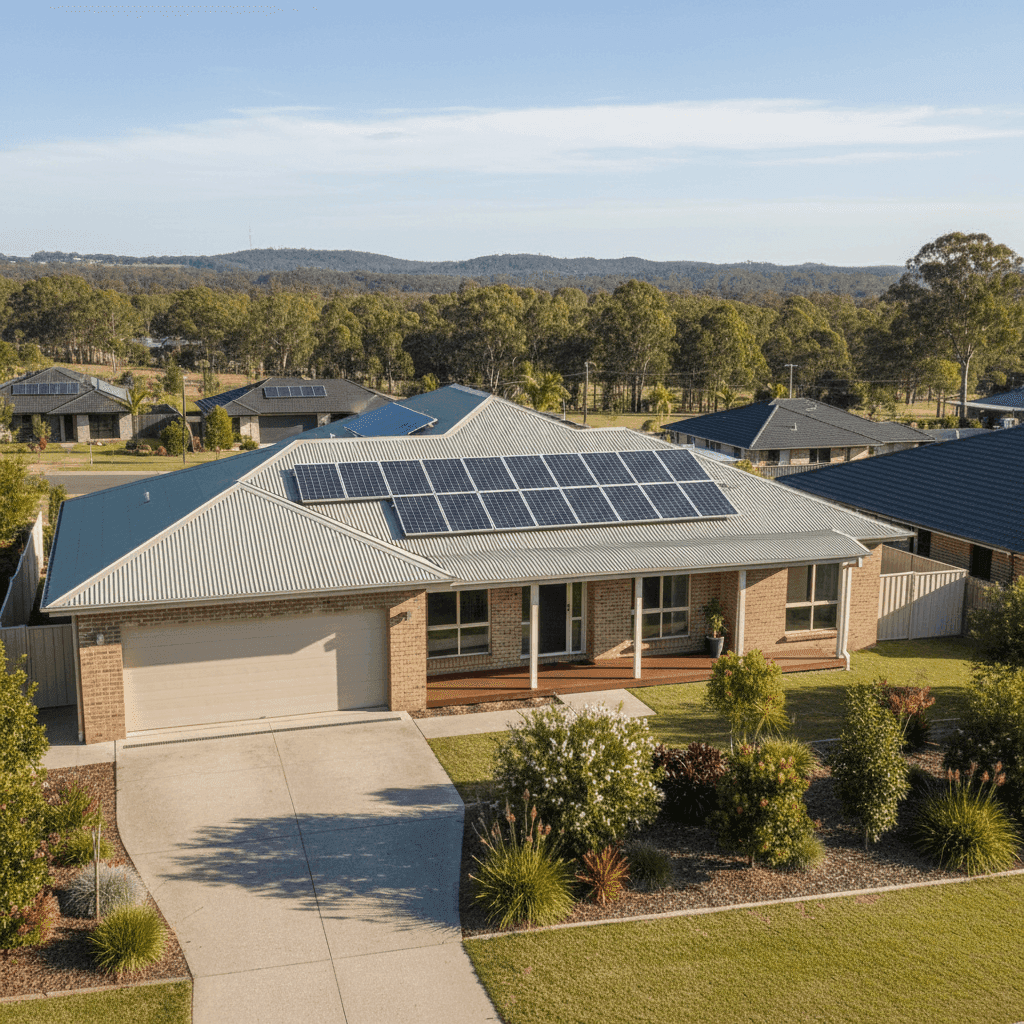
West Woombye is a quiet, leafy pocket of the Sunshine Coast hinterland — the kind of place where double brick homes sit comfortably on generous blocks and the pace of life is a little slower than the coast. But when it comes to home insurance, the premiums can be anything but relaxed. This article breaks down a real home and contents insurance quote for a four-bedroom free standing home in West Woombye (QLD 4559), rated Expensive, and helps you understand what's driving the cost — and what you can do about it.
---
Is This Quote Fair?
The quote in question comes in at $11,948 per year (or $1,165/month) for combined home and contents cover, with a building sum insured of $625,000 and contents valued at $101,000. The building excess is $3,000 and the contents excess $1,000.
To put it plainly: this quote is expensive — significantly so. Our price rating system has flagged it as Above Average, and the numbers back that up. The suburb average for West Woombye sits at $4,775 per year, meaning this quote is running at roughly 2.5 times what most locals are paying. Even at the 75th percentile — the upper end of the range for the area — comparable properties are being quoted around $5,814/yr. This quote blows well past that ceiling.
That said, context matters. The building sum insured of $625,000 is on the higher end, and the contents cover of $101,000 adds meaningful weight to the total. Higher insured values naturally push premiums up. But even accounting for these factors, the gap between this quote and the local benchmark is substantial enough to warrant shopping around.
---
How West Woombye Compares
Understanding where West Woombye sits in the broader insurance landscape is useful context for any homeowner in the area.
| Benchmark | Average Premium | Median Premium |
|---|---|---|
| West Woombye (4559) | $4,775/yr | $4,295/yr |
| Queensland | $4,547/yr | $3,931/yr |
| National | $2,965/yr | $2,716/yr |
| Sunshine Coast LGA | $4,608/yr | — |
A few things stand out here. West Woombye's average premium of $4,775 is slightly above the Queensland state average of $4,547, and notably above the national average of $2,965. This reflects the broader reality that Queensland homeowners — particularly those on or near the Sunshine Coast — tend to pay more for home insurance than the national norm. Factors like storm exposure, elevated rebuild costs in regional areas, and the general claims history of the state all contribute to this premium loading.
The Sunshine Coast LGA average of $4,608 is broadly in line with the suburb figure, suggesting West Woombye is fairly representative of the region rather than an outlier. Still, all of these figures sit well below the quote being analysed here, reinforcing the case for comparison shopping.
---
Property Features That Affect Your Premium
Several characteristics of this particular property are worth examining through an insurance lens.
Double Brick Construction Double brick is generally viewed favourably by insurers. It's durable, fire-resistant, and holds up well in storms — all of which can work in your favour when it comes to pricing. That said, it can also be more expensive to repair or rebuild, which may offset some of the benefit.
Steel/Colorbond Roof Colorbond roofing is a strong choice for Australian conditions. It's lightweight, resistant to corrosion, and performs well in high winds. Insurers typically regard it positively, and it's far less prone to hail damage than terracotta or concrete tiles.
Slab Foundation A concrete slab foundation is standard for homes of this era and construction type. It's generally considered low-risk from an insurance perspective, with fewer concerns around subsidence or moisture compared to older stumped or pier foundations.
Solar Panels The presence of solar panels adds a layer of complexity to home insurance. Panels need to be specifically covered under your policy — either as part of the building sum insured or as a listed item. It's worth confirming with your insurer that the $625,000 building sum insured adequately accounts for the replacement cost of the system, including inverters and installation.
Built in 1996 At nearly 30 years old, this home sits in a middle ground — past the point of being considered new, but not old enough to raise major concerns about ageing infrastructure. Insurers may factor in the age of electrical systems, plumbing, and roofing when assessing risk.
Ducted Climate Control Ducted air conditioning systems are a significant asset but also a potential liability. They can be costly to repair or replace, and damage from electrical faults or storms is a common claim. Ensure your sum insured reflects the full replacement value of the system.
No Pool, No Cyclone Risk Zone The absence of a pool removes a meaningful liability risk factor, and the property falling outside a designated cyclone risk area is a genuine premium advantage for a Queensland home. Many Sunshine Coast hinterland properties benefit from this compared to coastal counterparts.
---
Tips for Homeowners in West Woombye
1. Shop around — seriously A quote that's 2.5 times the suburb average is a clear signal to compare. Insurers use different risk models, and the variation in premiums for the same property can be dramatic. Use a comparison platform like CoverClub to see multiple quotes side by side before committing.
2. Review your sum insured carefully A building sum insured of $625,000 for a 214 sqm double brick home in West Woombye is on the higher end. It's worth cross-checking this figure against an independent building cost estimate or using an online calculator. Over-insuring doesn't pay out more at claim time, but it does push your premium up — sometimes significantly.
3. Consider a higher excess to reduce your premium The building excess on this quote is already $3,000, which is relatively high. However, if you're comfortable carrying more risk in exchange for a lower annual premium, some insurers will offer meaningful discounts for higher voluntary excess levels. Just ensure you can comfortably meet the excess if you need to claim.
4. Confirm your solar panels are properly covered Don't assume your solar system is automatically included in your building cover. Ask your insurer directly whether panels, inverters, and associated wiring are covered, what events are included (e.g., storm, hail, electrical fault), and whether the replacement value is adequate given current installation costs.
---
Compare Your Quote with CoverClub
Whether you're renewing your policy or shopping for the first time, it pays to know where your quote stands. CoverClub makes it easy to benchmark your premium against real data from your suburb, state, and across Australia. Get a quote today and find out if you're paying more than you should be.