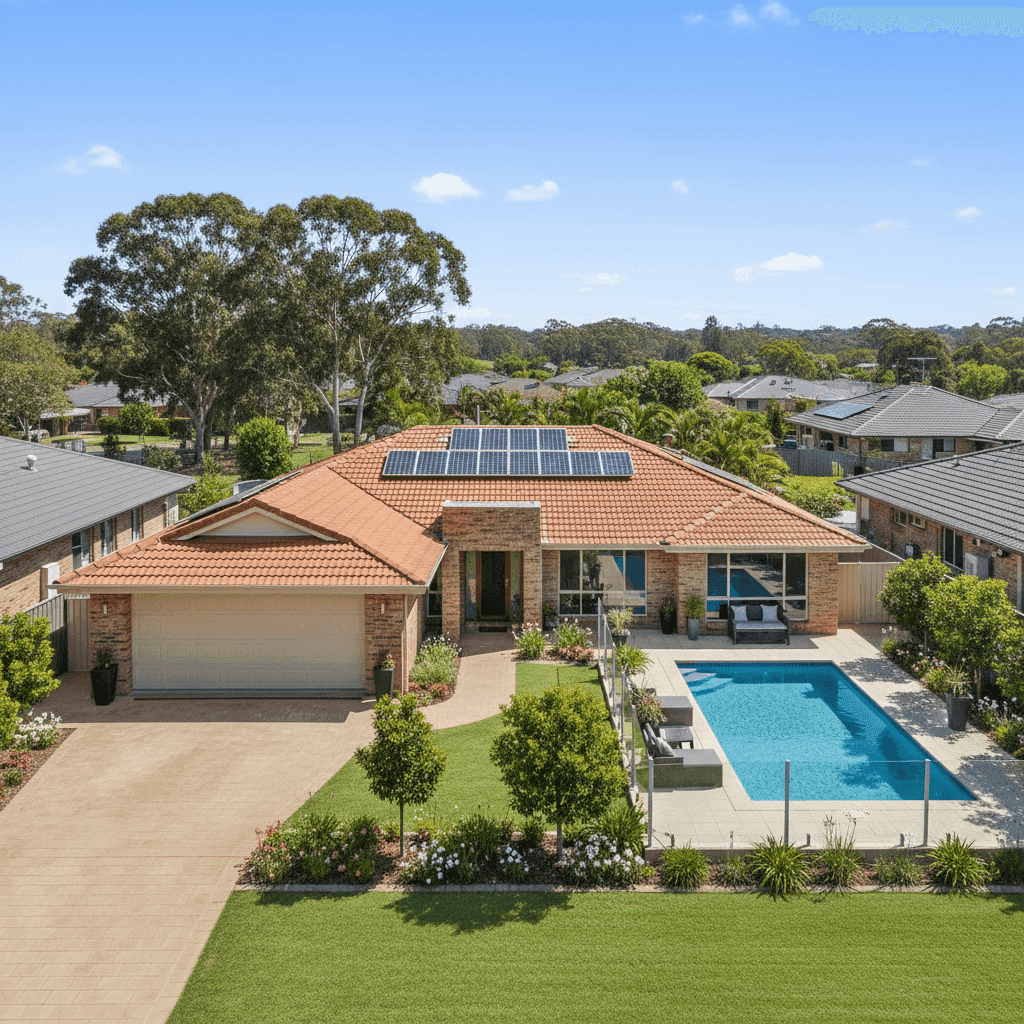
Westlake is a quiet, leafy suburb in Brisbane's western corridor, popular with families drawn to its parklands, good schools, and relatively spacious blocks. If you own a free standing home in postcode 4074, understanding what you should be paying for home and contents insurance — and why — can make a real difference to your household budget. This article breaks down a recent insurance quote for a 3-bedroom, 2-bathroom brick veneer home in Westlake and puts the numbers in context using suburb, state, and national data.
---
Is This Quote Fair?
The quote in question comes to $13,340 per year (or $1,278/month) for combined home and contents cover, with a building sum insured of $545,000 and contents valued at $50,000. Both the building and contents excess sit at $1,000.
Our price rating for this quote is FAIR — Around Average, which means it's broadly in line with what other homeowners in the area are paying. It's not a standout bargain, but it's not an outlier either. For a property with several premium-influencing features (more on those below), landing near the middle of the market is a reasonable outcome.
That said, "fair" doesn't mean you shouldn't shop around. Insurance pricing varies enormously between providers, and even a modest saving of 10–15% on a premium of this size would put hundreds of dollars back in your pocket each year.
---
How Westlake Compares
To put this quote in perspective, here's how it stacks up against Westlake suburb averages, Queensland state figures, and national benchmarks:
| Benchmark | Average Premium | Median Premium |
|---|---|---|
| Westlake (4074) | $104,788/yr | $10,201/yr |
| Queensland | $9,129/yr | $3,903/yr |
| National | $5,347/yr | $2,764/yr |
| Brisbane LGA | $16,277/yr | — |
A few things stand out here. The Westlake suburb average of $104,788 is extraordinarily high — almost certainly skewed by a small number of very high-value properties or unusual risk profiles in the dataset (the suburb sample size is just 32 quotes). The median of $10,201 is a far more representative figure for typical homeowners in the area, and at $13,340, this quote sits between the median and the 75th percentile ($21,586). That places it in the upper-middle range for the suburb — above average, but well within normal bounds.
Compared to the broader Brisbane LGA average of $16,277, this quote is actually below the city-wide benchmark, which is a positive sign. Queensland as a whole has higher premiums than the national average — the state median of $3,903 versus the national median of $2,764 reflects the elevated risk environment across much of Queensland, including flood-prone and cyclone-affected regions. Westlake, notably, is not in a cyclone risk area, which helps keep premiums more manageable than many other parts of the state.
---
Property Features That Affect Your Premium
Several characteristics of this property have a direct bearing on the insurance premium. Understanding them helps you assess whether the quote is appropriate for your situation.
Construction year (1985): Homes built in the mid-1980s fall into an interesting category for insurers. They're old enough that certain systems — plumbing, electrical wiring, roofing — may be approaching the end of their serviceable life, which can elevate risk. However, they predate some of the more problematic building materials used in the 1990s and early 2000s, such as Mr Fluffy-style loose-fill insulation or certain types of lightweight cladding.
Brick veneer walls and tiled roof: This is a solid, well-regarded construction type in Australia. Brick veneer offers good fire resistance and durability, while a tiled roof is generally more resilient than corrugated iron in hail events — though tiles can crack under impact. Together, these materials typically attract more favourable rates than timber-framed or sheet-metal alternatives.
Slab foundation: Concrete slab foundations are standard in Queensland and generally regarded as low-risk from an insurance perspective, provided there are no known subsidence or reactive soil issues in the area.
Swimming pool: A pool adds both to the replacement value of the property and, in some policies, to liability considerations. It's a meaningful contributor to the building sum insured and can nudge premiums upward.
Solar panels: Rooftop solar systems are increasingly common but can be a complicating factor for insurers. They add to the replacement cost of the home and may require specific coverage provisions. It's worth confirming with your insurer that your solar system is explicitly covered under your policy — not all standard policies include it automatically.
Ducted climate control: Ducted air conditioning is a significant fixed asset and contributes to the overall building replacement cost. At 139 sqm, this home is a modest size, but the combination of pool, solar, and ducted climate control means the effective replacement value is higher than the floor area alone might suggest.
Contents value ($50,000): This is on the lower end for a 3-bedroom home with standard fittings. It's worth doing a room-by-room audit of your belongings to ensure you're not underinsured — replacing furniture, appliances, clothing, and personal items can add up quickly.
---
Tips for Homeowners in Westlake
1. Review your sum insured regularly. Building costs in Queensland have risen sharply in recent years due to labour shortages and material price increases. A sum insured of $545,000 for a 139 sqm brick veneer home is reasonable, but it's worth cross-checking against a current building cost calculator to make sure you wouldn't be caught short in a total loss scenario.
2. Confirm your solar panels and pool are covered. Ask your insurer directly whether your rooftop solar system and pool are included in your building cover — and to what limit. Some policies treat these as standard inclusions; others require endorsements or have sub-limits that may not reflect full replacement costs.
3. Check for flood cover. While Westlake itself is not a high-risk flood zone, parts of Brisbane's western suburbs have experienced flooding in the past, particularly during La Niña events. Review your policy's flood definition carefully — some policies distinguish between "flood" (rising rivers) and "storm surge" or "rainwater runoff," and may only cover one.
4. Compare quotes at renewal time. Insurance loyalty rarely pays off. Premiums can vary by hundreds — sometimes thousands — of dollars between providers for equivalent cover. Even if you're happy with your current insurer, getting a comparison quote each year is a simple way to ensure you're not overpaying.
---
Compare Your Options with CoverClub
Whether you're reviewing an existing policy or shopping for cover for the first time, CoverClub makes it easy to see how your quote stacks up. Get a home insurance quote today and compare your options in minutes — no jargon, no pressure, just clear information to help you make a confident decision.