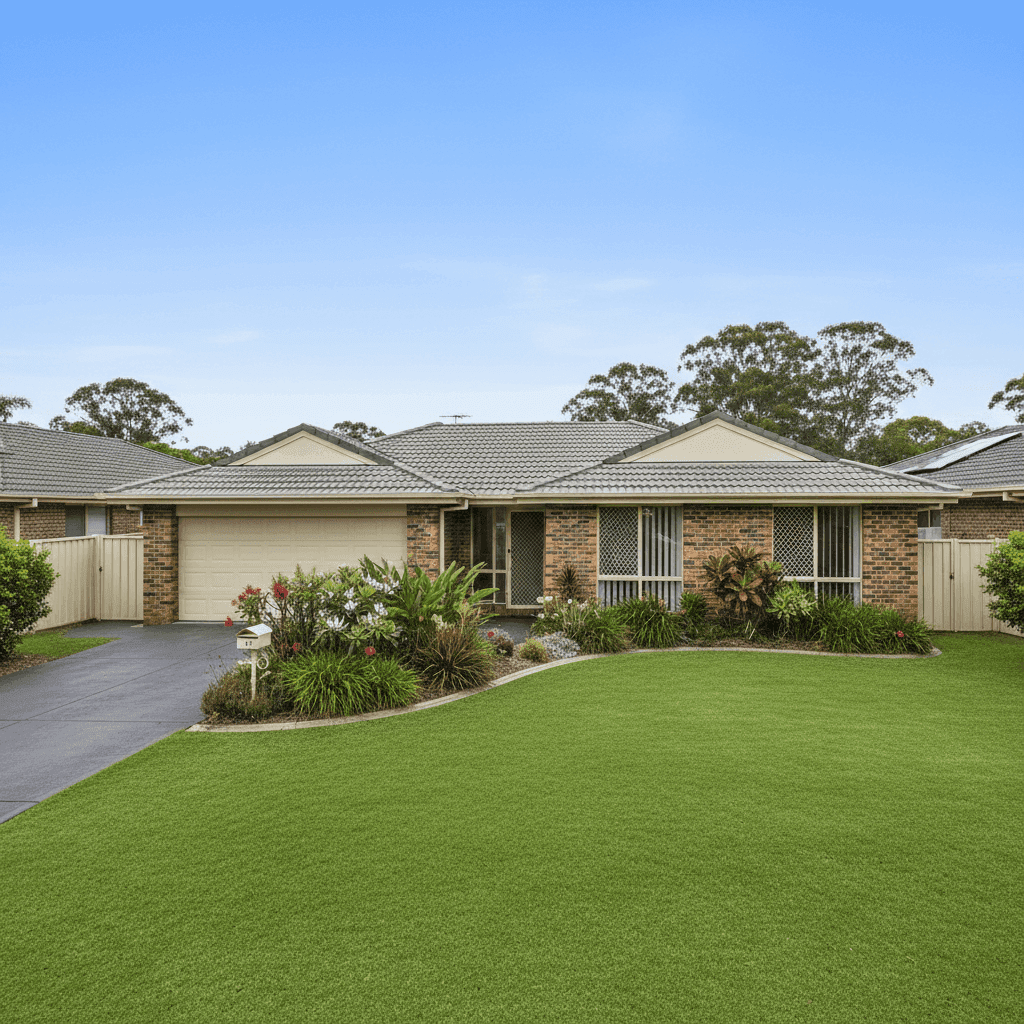
Westlake is a quiet, leafy suburb in Brisbane's western corridor — popular with families drawn to its established streetscapes, good schools, and easy access to the city. If you own a free standing home here, you'll know that home insurance is a non-negotiable part of protecting what's likely your most valuable asset. But how do you know whether the premium you're being quoted is genuinely competitive, or whether you're paying more than you should?
This article breaks down a real home and contents insurance quote for a 4-bedroom, 3-bathroom free standing home in Westlake (postcode 4074), compares it against suburb, state, and national benchmarks, and offers practical tips to help you get better value on your cover.
---
Is This Quote Fair?
The quote in question comes to $13,216 per year (or $1,267/month) for combined home and contents insurance, with a building sum insured of $702,000 and contents cover of $50,000. The building excess sits at $5,000, and the contents excess at $1,000.
Our price rating for this quote is FAIR — Around Average.
That rating reflects where this premium lands relative to comparable properties in the area. At $13,216 annually, it's comfortably above the suburb median of $10,201 but well within the suburb's 75th percentile of $21,586 — meaning roughly a quarter of similar properties in Westlake are quoted even higher. It's not the cheapest option on the market, but it's not an outlier either.
Given the relatively high building sum insured ($702,000 for a 214 sqm brick veneer home built in 1995), a "fair" rating is a reasonable outcome. Larger insured values naturally attract higher premiums, and the excess structure — particularly the $5,000 building excess — is doing some work to keep the annual cost from climbing further.
---
How Westlake Compares
To put this quote in proper context, it helps to look at the broader data. Here's how Westlake stacks up against Queensland and the national picture:
| Benchmark | Average Premium | Median Premium |
|---|---|---|
| Westlake (4074) | $104,788/yr | $10,201/yr |
| Brisbane LGA | $16,277/yr | — |
| Queensland | $9,129/yr | $3,903/yr |
| National | $5,347/yr | $2,764/yr |
A quick note on those suburb figures: the Westlake average of $104,788 is dramatically skewed by a small sample size (just 32 quotes) and likely reflects a handful of very high-value properties pulling the mean upward. The median of $10,201 is a far more reliable indicator of what most homeowners in the area are actually paying — and this quote, at $13,216, sits modestly above that midpoint.
Compared to the Queensland state average of $9,129 and the national average of $5,347, this premium is higher — but that's not surprising. Brisbane's western suburbs carry their own risk profile, and a well-appointed 4-bedroom home with a $702,000 rebuild value is simply a more expensive asset to insure than the average Queensland dwelling.
You can explore the full data for Westlake and surrounding postcodes on the CoverClub Westlake stats page.
---
Property Features That Affect Your Premium
Every insurer prices risk differently, but the characteristics of this particular property have a meaningful influence on what you'll pay. Here's what's at play:
Brick Veneer Construction Brick veneer walls are generally viewed favourably by insurers. They offer solid fire resistance and structural durability compared to lightweight cladding alternatives, which can translate to more competitive premiums.
Tiled Roof Concrete or terracotta tiles are considered a low-to-moderate risk roofing material. They're durable and perform well in most weather conditions — though they can be more costly to repair after hail or storm events than metal roofing.
Slab Foundation A concrete slab foundation is standard for homes of this era in Queensland and is generally well-regarded by insurers. It reduces the risk of subsidence and pest-related structural issues compared to older suspended timber floors.
Construction Year: 1995 At around 30 years old, this home is neither brand new nor particularly aged. Homes from the mid-1990s were built to reasonable standards but may have aging electrical, plumbing, and roofing systems that insurers factor into their risk assessment.
Building Size: 214 sqm A 214 sqm floor plan is above average for a Queensland home, and the $702,000 sum insured reflects the cost to fully rebuild a property of this size with standard fittings. Getting the sum insured right is critical — underinsurance is one of the most common and costly mistakes homeowners make.
No Pool, Solar, or Ducted Climate Control The absence of a pool, solar panels, and ducted air conditioning simplifies the risk profile slightly. Each of these features can add to both the rebuild cost and the complexity of a claim, so their absence may contribute to a more straightforward premium calculation.
---
Tips for Homeowners in Westlake
1. Review your sum insured regularly Construction costs in South East Queensland have risen significantly over recent years. If your building sum insured hasn't been updated in a few years, there's a real chance you're underinsured. Use a building cost calculator or speak with a quantity surveyor to check your rebuild estimate is still accurate.
2. Consider your excess strategically This quote carries a $5,000 building excess, which is on the higher side. While a higher excess does reduce your annual premium, it's worth asking yourself whether you could comfortably cover that amount out of pocket following a major event like a storm or fire. If not, it may be worth comparing quotes with a lower excess to find a better balance.
3. Bundle your home and contents cover This quote already combines home and contents insurance, which is a smart move. Many insurers offer discounts for bundling, and managing a single policy is far more convenient when it comes time to make a claim.
4. Shop around at renewal time Loyalty doesn't always pay in insurance. Insurers frequently offer better rates to new customers than they extend to existing ones. Make a habit of comparing quotes each year before your renewal date — even if you're happy with your current insurer, you might find a materially better deal elsewhere.
---
Ready to Compare?
Whether you're reviewing an existing policy or shopping for cover on a new property, comparing quotes is the single most effective way to make sure you're not overpaying. Get a home insurance quote through CoverClub and see how different insurers price your specific property — it takes just a few minutes and could save you hundreds of dollars a year.