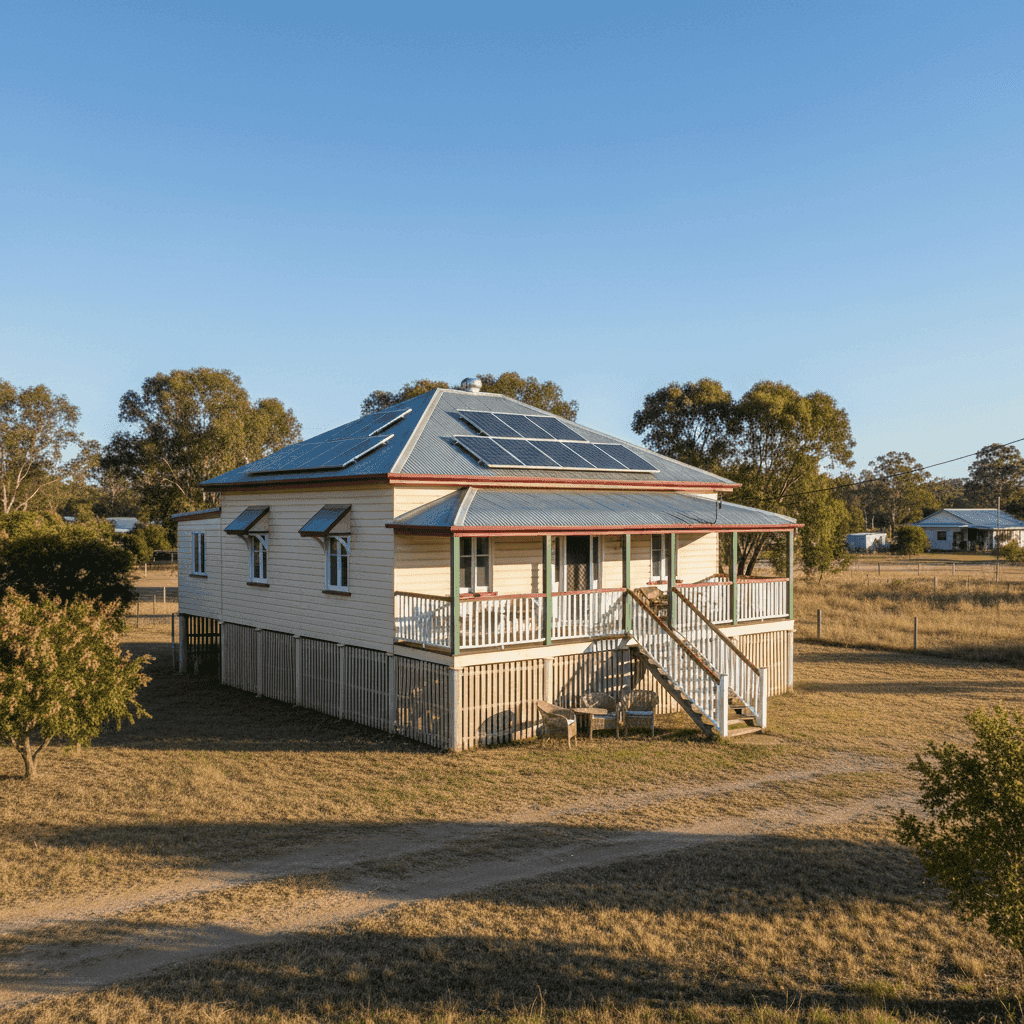
If you own a free standing home in Westwood, QLD 4702, you already know that Central Queensland comes with its own unique set of risks — and those risks are reflected directly in your insurance premium. This article breaks down a real home and contents insurance quote for a three-bedroom weatherboard property in Westwood, compares it against Queensland and national benchmarks, and offers practical tips to help you get better value on your cover.
---
Is This Quote Fair?
The annual premium for this property came in at $25,803 per year (or $2,473 per month), covering a building sum insured of $637,000 and contents valued at $50,000, each with a $1,000 excess.
Our price rating for this quote is Expensive — Above Average. That's a significant finding, and it deserves some unpacking.
To put it in perspective:
- The QLD state average premium is $9,129/yr, and the median sits at $3,903/yr
- The national average is $5,347/yr, with a national median of $2,764/yr
This quote is roughly 2.8× the Queensland average and nearly 4.8× the national average. Even accounting for the elevated risk profile of this property and its location, that's a substantial gap — and one worth investigating before simply accepting the figure at face value.
That said, it's important to understand why this premium is where it is before concluding it's unfair. Several property-specific and location-specific factors are doing a lot of heavy lifting here, as we'll explore below.
---
How Westwood Compares
Westwood is a small rural locality in the Rockhampton Region of Queensland. While suburb-level insurance data isn't available for this postcode at this time, we can draw meaningful conclusions from Queensland state-wide statistics and national benchmarks.
Queensland consistently records some of the highest home insurance premiums in the country — a reflection of the state's exposure to cyclones, flooding, storm surge, and extreme weather events. The QLD state average of $9,129/yr is already well above the national average of $5,347/yr, illustrating just how much geography matters when it comes to pricing.
Westwood sits in a designated cyclone risk area, which places it in a category of properties that insurers treat with particular caution. Combine that with the property's construction characteristics and you have a recipe for a premium that sits well above typical figures — even by Queensland standards.
You can explore more localised data as it becomes available on the Westwood suburb stats page, and compare against the national picture to better understand where your property sits.
---
Property Features That Affect Your Premium
Several characteristics of this property are likely contributing to the elevated premium. Here's what insurers are paying close attention to:
🌀 Cyclone Risk Area
This is arguably the single biggest driver of the premium. Properties in cyclone-declared zones attract significantly higher premiums because the potential for catastrophic structural damage is much greater. Insurers price this risk in — sometimes aggressively.
🏠 Weatherboard Timber Walls
Weatherboard construction, while charming and common in older Queensland homes, is considered higher risk than brick veneer or double brick. Timber is more susceptible to fire, termite damage, and wind-related damage during severe weather events — all of which factor into underwriting decisions.
📅 1970 Construction Year
A home built in 1970 is over 50 years old. Older homes often have ageing electrical wiring, plumbing, and structural elements that insurers view as higher risk. They may not meet current building codes designed to withstand modern weather events, which can push premiums higher.
🏗️ Stump Foundation (Elevated by at Least 1m)
Being elevated on stumps offers some flood protection, which is a genuine positive. However, elevated homes can be more vulnerable to wind uplift during cyclones and storms. Insurers weigh both sides of this equation.
⚡ Solar Panels
Solar panels are an insurable asset and add to the replacement cost of the property. They also carry their own risk profile — hail damage, storm damage, and electrical faults — which can nudge premiums upward.
❄️ Ducted Climate Control
Ducted systems are expensive to repair or replace and are considered a higher-value fixed asset within the home. Their inclusion in the sum insured contributes to a higher overall building valuation.
🪵 Timber & Laminate Flooring
Timber flooring, while not a major premium driver on its own, is more costly to replace than concrete or tile and can be damaged by water ingress — relevant given the storm and cyclone risk profile of the area.
---
Tips for Homeowners in Westwood
Given the elevated premium for this property, here are four practical steps worth considering:
1. Shop Around — Seriously
A premium of $25,803 is eye-catching, but it's not necessarily the market rate. Different insurers assess risk differently, and the spread between the cheapest and most expensive quotes for the same property can be enormous — especially in high-risk areas. Get a comparison quote through CoverClub to see what other insurers are offering for this property profile.
2. Review Your Sum Insured
Make sure your $637,000 building sum insured reflects the actual rebuild cost of your home — not its market value. In some cases, homeowners are over-insured, paying premiums on a figure that exceeds what it would genuinely cost to rebuild. A quantity surveyor or online rebuild calculator can help you arrive at an accurate figure.
3. Consider a Higher Excess
Both the building and contents excess are currently set at $1,000. Opting for a higher excess — say $2,000 or $2,500 — can meaningfully reduce your annual premium. Just make sure the excess is an amount you could comfortably cover out of pocket if you needed to make a claim.
4. Invest in Cyclone-Resilience Upgrades
Some insurers offer premium discounts for homes that have been upgraded to improve cyclone resistance — things like cyclone straps on the roof, reinforced doors and windows, or updated roofing. These improvements not only make your home safer but can demonstrate to insurers that your risk profile has improved.
---
Ready to Compare?
A premium this far above the Queensland and national averages is a strong signal to explore your options. Whether you're renewing your policy or buying cover for the first time, CoverClub makes it easy to compare home and contents insurance quotes tailored to your property.