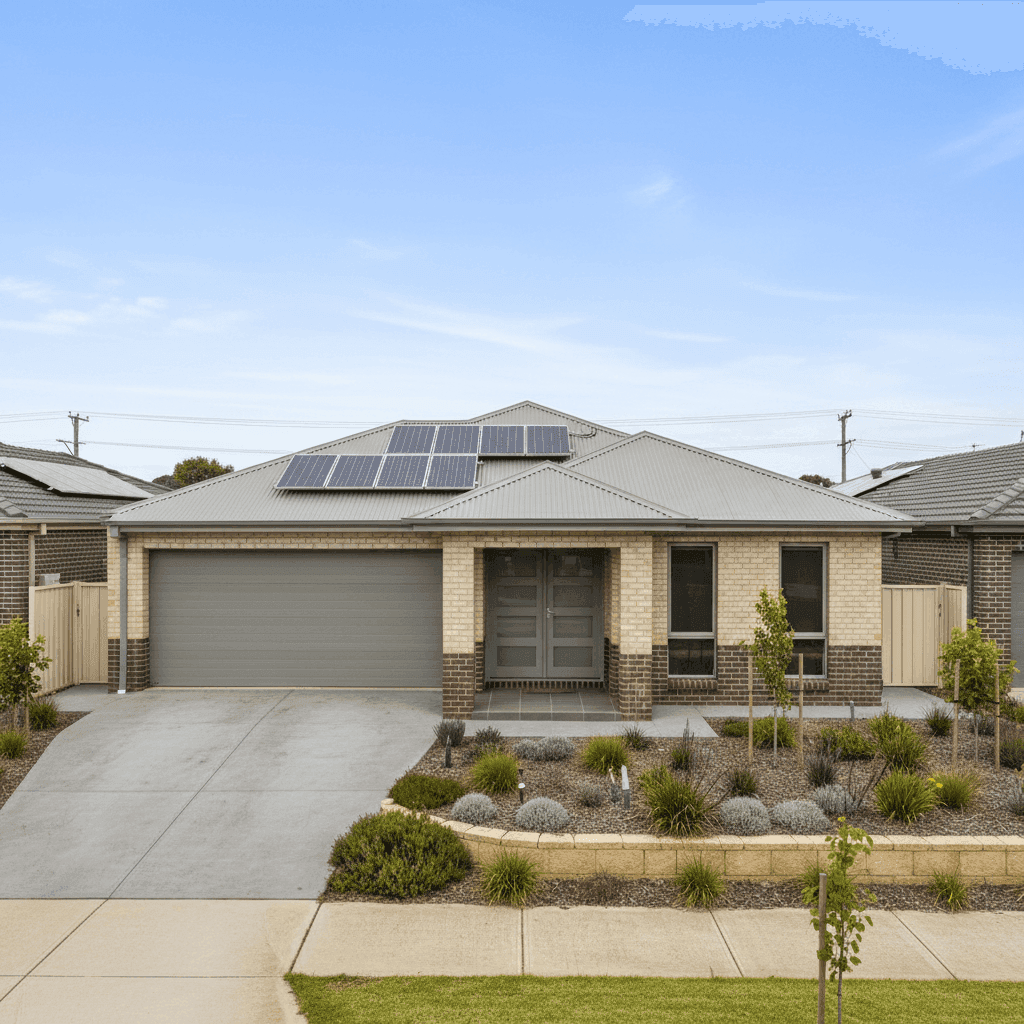
If you own a free standing home in White Hills, VIC 3550, you've likely noticed that home insurance premiums can vary enormously depending on your property's features, your insurer, and even your street. This article breaks down a real home and contents insurance quote for a three-bedroom, two-bathroom home in White Hills — and puts it under the microscope to help you understand whether it represents fair value.
---
Is This Quote Fair?
The quote in question comes in at $2,404 per year (or $235 per month) for combined home and contents cover, with a building sum insured of $568,200 and contents cover of $110,000. Both the building and contents excess are set at $2,000.
Our price rating for this quote is EXPENSIVE — above average for the White Hills area.
To put that in context: the suburb average premium for White Hills (3550) sits at just $1,358 per year, with a median of $1,230. This quote is roughly 77% above the suburb average and nearly double the median. Even at the 75th percentile — meaning three-quarters of comparable quotes come in cheaper — the benchmark is only $1,684/yr. That means this quote is above even the most expensive quarter of the local market.
That said, it's worth noting that the sum insured here is substantial. A building replacement value of $568,200 for a 139 sqm brick veneer home built in 2005 is on the higher end, and contents cover of $110,000 adds meaningful weight to the premium. Higher coverage limits naturally push premiums up, so the comparison isn't entirely apples-to-apples if other quotes in the suburb carry lower sums insured.
---
How White Hills Compares
Understanding where White Hills sits in the broader insurance landscape is useful context for any homeowner shopping around.
| Benchmark | Premium |
|---|---|
| White Hills suburb average | $1,358/yr |
| White Hills suburb median | $1,230/yr |
| Greater Bendigo LGA average | $2,278/yr |
| Victoria state average | $3,000/yr |
| Victoria state median | $2,718/yr |
| National average | $5,347/yr |
| National median | $2,764/yr |
Interestingly, this quote — while expensive relative to the suburb — actually sits below the Victorian state average of $3,000/yr and well below the national average of $5,347/yr. White Hills, as part of regional Victoria, benefits from generally lower risk profiles compared to coastal or flood-prone areas, which helps keep local premiums more competitive than many parts of the country.
When compared to the broader Victorian market, a $2,404 premium is fairly middle-of-the-road — but for White Hills specifically, it's a clear outlier on the expensive side. The Greater Bendigo LGA average of $2,278/yr also sits below this quote, reinforcing that there may be room to negotiate or switch insurers for a better deal.
---
Property Features That Affect Your Premium
Several characteristics of this property have a direct bearing on what insurers charge. Here's how the key features stack up:
Brick veneer construction is generally viewed favourably by insurers. It offers solid fire resistance and durability, which can help moderate premiums compared to timber-framed or weatherboard homes.
Steel/Colorbond roofing is another positive signal for insurers. Colorbond is lightweight, durable, and resistant to fire and corrosion — making it one of the more insurer-friendly roofing materials available in Australia.
Slab foundation is standard for homes of this era and is considered low-risk from an underwriting perspective. Unlike older homes with subfloor spaces, slab homes have fewer entry points for pests and less exposure to certain types of subsidence.
Tile flooring throughout the home is generally neutral from an insurance perspective — it's durable and not prone to water damage in the way carpet or timber floors can be.
Solar panels are worth flagging. While they're great for energy bills, solar panels add to the replacement cost of a home and can complicate roof repairs after storms or hail events. Some insurers include solar panels in building cover automatically; others require you to specify them. It's essential to confirm your policy explicitly covers your solar system.
Ducted climate control is another feature that adds to the overall replacement value of the home. Ducted systems are expensive to install and repair, and their inclusion in the sum insured is appropriate — but homeowners should verify their policy covers the system comprehensively, including mechanical breakdown if that's a priority.
The absence of a pool removes one common risk factor that can elevate premiums, particularly around liability coverage.
At 139 sqm, this is a modest-sized home for three bedrooms, which is fairly typical for regional Victoria. The 2005 construction year means the home is relatively modern, reducing the likelihood of ageing infrastructure claims.
---
Tips for Homeowners in White Hills
If you're a homeowner in White Hills looking to get better value from your home insurance, here are four practical steps worth taking:
- Shop around and compare quotes. The spread between the 25th percentile ($924/yr) and this quote ($2,404/yr) in White Hills is enormous. That gap represents real money — potentially over $1,400 per year — that could stay in your pocket by switching insurers. Use a comparison tool like CoverClub to benchmark your current premium quickly.
- Review your sum insured carefully. Over-insuring your home is a common and costly mistake. Make sure your building sum insured reflects the actual rebuild cost — not the market value — of your home. Tools like the Cordell Sum Sure calculator can help you arrive at a more accurate figure.
- Confirm solar panel coverage. With solar panels on the roof, double-check exactly what your policy covers. Some policies automatically include panels as part of the building; others treat them as a separate item. Gaps in coverage here can be costly after a hail event or storm.
- Consider a higher excess to reduce your premium. Both the building and contents excess on this policy are set at $2,000. If you're financially comfortable absorbing a higher out-of-pocket cost in the event of a claim, increasing your excess further could meaningfully reduce your annual premium.
---
Ready to Find a Better Deal?
Whether you're renewing your policy or shopping for cover for the first time, comparing quotes is the single most effective way to avoid overpaying. CoverClub makes it easy to see how your premium stacks up against real data from your suburb and across Victoria.