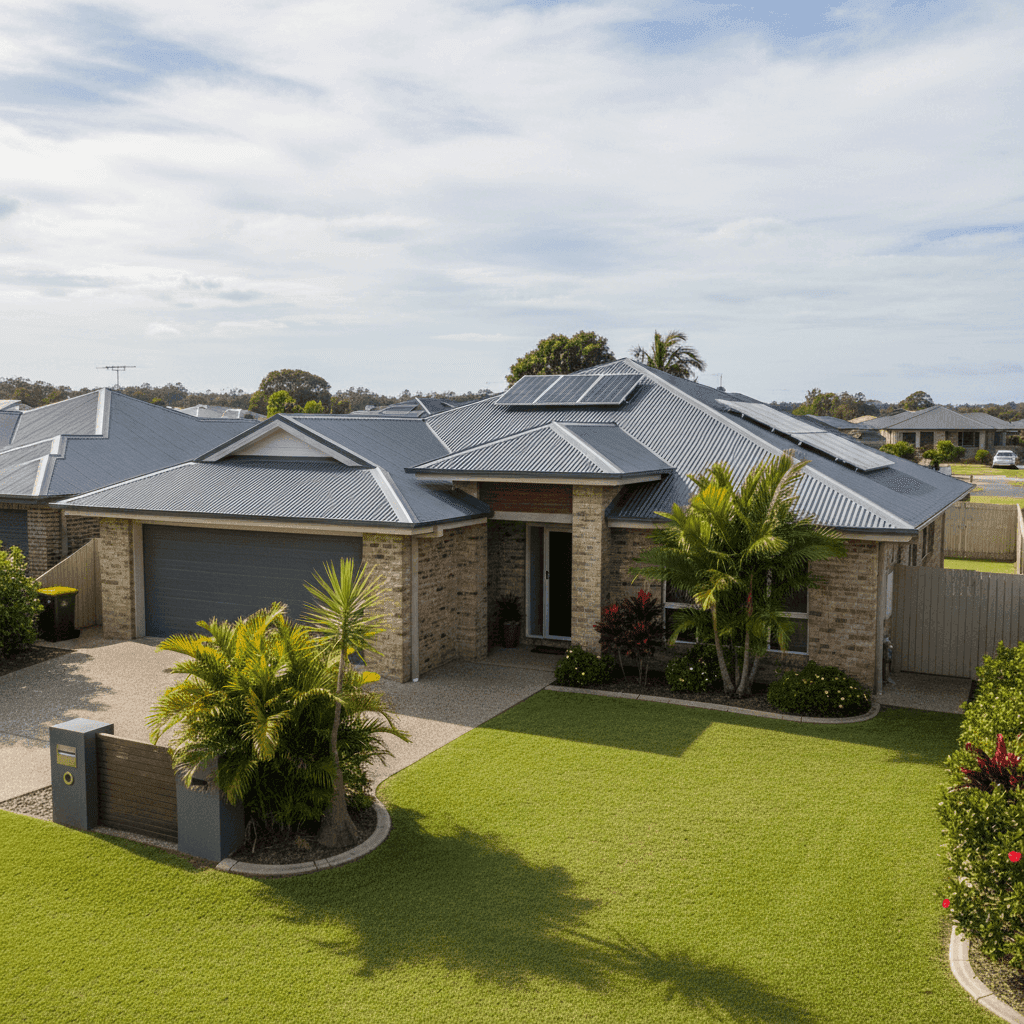
If you own a free standing home in White Rock, QLD 4306, you've probably noticed that home insurance can feel like a moving target — prices vary widely depending on your property's features, location, and the insurer you choose. This article breaks down a real home and contents insurance quote for a five-bedroom, two-bathroom free standing home in White Rock, compares it against local, state, and national benchmarks, and offers practical tips to help you get the best value on your cover.
---
Is This Quote Fair?
The quote in question comes to $2,019 per year (or $207 per month) for combined home and contents insurance, covering a building sum insured of $1,002,000 and contents valued at $50,000. The building excess is $3,000 and the contents excess is $1,000.
Our price rating for this quote is FAIR — Around Average, and the data backs that up. The suburb average premium for White Rock sits at $2,021 per year, meaning this quote lands almost exactly on the local benchmark. That's a reassuring sign that the homeowner isn't being significantly overcharged, though there is still room to potentially do better — more on that below.
It's worth noting that "fair" doesn't necessarily mean "the best available." With 25 quotes sampled in the White Rock area, there's a reasonable spread of pricing in the market, and shopping around could yield meaningful savings.
---
How White Rock Compares
One of the most striking findings when you look at the White Rock suburb insurance data is just how favourably it stacks up against broader Queensland and national figures.
| Benchmark | Average Premium | Median Premium |
|---|---|---|
| White Rock (suburb) | $2,021/yr | $1,953/yr |
| Scenic Rim LGA | $8,744/yr | — |
| Queensland (state) | $9,129/yr | $3,903/yr |
| National | $5,347/yr | $2,764/yr |
The gap between White Rock's suburb average ($2,021) and the Queensland state average ($9,129) is dramatic — White Rock homeowners are paying roughly 78% less than the state average. Even compared to the national average of $5,347, White Rock premiums look very competitive.
This disparity is largely explained by geography. Much of Queensland is exposed to significant natural hazard risks — cyclones in the far north, severe flooding in low-lying areas, and bushfire exposure in rural zones. White Rock, located in the Scenic Rim region west of Brisbane, sits outside the designated cyclone risk zone and benefits from a comparatively lower natural hazard profile than coastal or far-north Queensland properties.
It's also worth understanding the spread within White Rock itself. The 25th percentile premium sits at $1,675/yr, while the 75th percentile reaches $2,361/yr. That means a quarter of comparable properties in the suburb are insured for under $1,675 — suggesting that with the right insurer and policy structure, there's potential to reduce this premium further.
---
Property Features That Affect Your Premium
The specific characteristics of this property play a meaningful role in shaping the premium. Here's how each feature factors in:
Brick Veneer Walls & Colorbond Roof Brick veneer construction is generally viewed favourably by insurers — it's durable, fire-resistant, and relatively low maintenance. Combined with a steel/Colorbond roof, this home has a construction profile that typically attracts more competitive premiums than, say, weatherboard or fibrous cement cladding. Colorbond roofing in particular holds up well in storms and is resistant to corrosion, which reduces the likelihood of weather-related claims.
Slab Foundation A concrete slab foundation is another positive signal for insurers. Slabs are structurally sound and less susceptible to subsidence or pest-related damage compared to older subfloor construction types.
Timber/Laminate Flooring While timber and laminate floors add aesthetic value, they can be more costly to repair or replace after water damage events compared to tiles. This may contribute a modest uplift to the premium, though it's rarely a dominant factor.
Above-Average Fittings Quality The property is rated as having above-average fittings — think quality kitchen cabinetry, premium tapware, stone benchtops, and the like. Higher-spec interiors cost more to replace, which is reflected in the higher building sum insured of $1,002,000. This is entirely appropriate for a well-appointed five-bedroom home, but it does mean the premium will be higher than a comparable home with standard fittings.
Solar Panels Solar panels are increasingly common on Australian homes, but they do add complexity to an insurance policy. Panels are typically covered under the building sum insured, and their replacement cost should be factored into your total insured value. It's worth confirming with your insurer that solar panels are explicitly included in your policy and that the sum insured adequately accounts for their value.
Ducted Climate Control Ducted air conditioning systems are a significant asset — and a significant replacement cost. Like solar panels, these should be accounted for within your building sum insured to avoid being underinsured in the event of a total loss.
New Build (2026) A newly constructed home carries several insurance advantages: modern building codes, fresh materials, and no legacy maintenance issues. Newer homes tend to attract lower premiums and are less likely to generate claims related to ageing infrastructure.
---
Tips for Homeowners in White Rock
1. Review your sum insured regularly With a building sum insured of $1,002,000 and above-average fittings, it's critical to ensure this figure keeps pace with construction cost inflation. Building costs have risen sharply in recent years, and being underinsured — even by 10–15% — can have serious consequences at claim time. Use a building cost calculator annually to sense-check your coverage.
2. Consider raising your excess to lower your premium The building excess on this policy is $3,000, which is on the higher side. If you're comfortable absorbing a larger out-of-pocket cost in a claim scenario, increasing your excess further can reduce your annual premium. Conversely, the $1,000 contents excess is relatively modest — there may be room to adjust this depending on your financial position.
3. Bundle and compare Home and contents insurance is already bundled here, which typically delivers a discount over purchasing the two covers separately. However, it's still worth comparing quotes from multiple insurers at renewal time. The White Rock market shows a meaningful spread between the 25th and 75th percentile premiums, so switching insurers could realistically save $300–$400 per year without sacrificing coverage quality.
4. Document your contents and solar assets With $50,000 in contents cover and solar panels on the roof, maintaining an up-to-date home inventory is invaluable. Photograph or video your possessions, keep receipts for high-value items, and store this documentation securely in the cloud. This makes the claims process significantly smoother and helps ensure you're neither over- nor under-insured on contents.
---
Compare Your Options with CoverClub
Whether you're renewing your policy or shopping for the first time, comparing quotes is the single most effective way to ensure you're getting fair value. CoverClub makes it easy to see how your premium stacks up against local benchmarks and find competitive options tailored to your property. Get a home insurance quote today and see what the White Rock market has to offer.