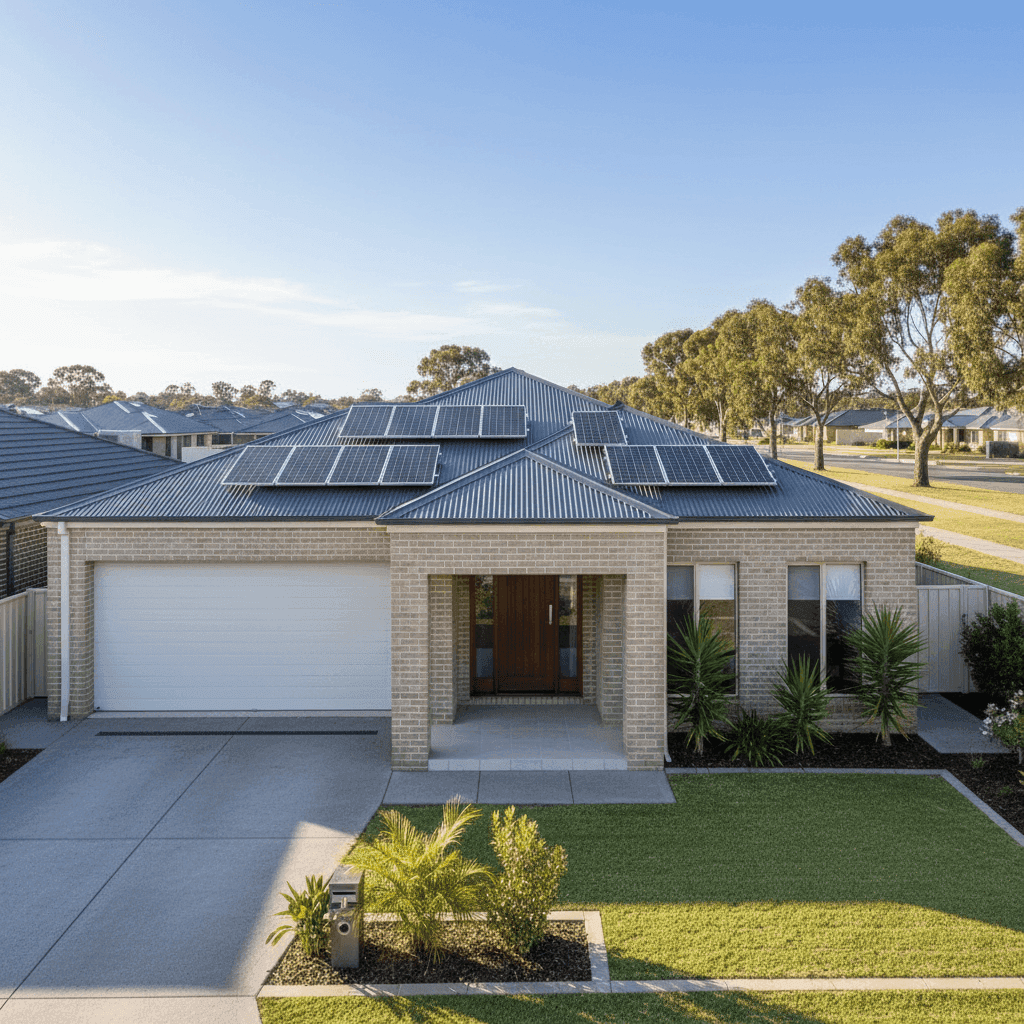
If you own a free standing home in White Rock, QLD 4306, you're probably curious about what a fair home insurance premium looks like — and whether the quote sitting in your inbox is worth accepting. This article breaks down a real home and contents insurance quote for a four-bedroom, three-bathroom brick veneer home in White Rock, comparing it against local, state, and national benchmarks to help you make a confident, informed decision.
---
Is This Quote Fair?
The annual premium for this property came in at $1,852 per year (or $182 per month), covering both building and contents with a building sum insured of $750,000 and contents valued at $50,000. Our price rating for this quote is CHEAP — below average — which is genuinely good news for the homeowner.
To put that in perspective: the Queensland state average for home and contents insurance sits at $4,547 per year, with a median of $3,931. At $1,852, this quote comes in at less than half the state average — a significant saving of roughly $2,695 annually compared to what the typical Queensland homeowner pays.
Even measured against the national average of $2,965 and a national median of $2,716, this quote is comfortably below both benchmarks. For a newly built, well-specified home, securing cover at this price point is a strong outcome.
The excess structure is worth noting: a $3,000 building excess and $1,000 contents excess are on the higher end of what's typical, and this likely contributes to keeping the premium lower. Higher excesses mean the insurer takes on less risk for smaller claims, which is reflected in the reduced annual cost. Homeowners should weigh whether they're comfortable covering that out-of-pocket amount in the event of a claim.
---
How White Rock Compares
White Rock is a suburb within the Scenic Rim Local Government Area (LGA), and this is where the numbers become particularly striking. The Scenic Rim LGA average premium is a remarkable $8,744 per year — nearly five times the premium quoted here, and almost double the Queensland state average.
For detailed suburb-level statistics for White Rock, it's worth noting that no suburb-specific comparison data was available for this analysis — meaning the figures above are drawn from broader LGA and state datasets. That said, the Scenic Rim LGA average strongly suggests that many properties in this region carry elevated risk profiles, potentially due to flood exposure, bushfire proximity, or other environmental factors that drive premiums up considerably.
The fact that this particular quote lands well below the LGA average is notable. It likely reflects the property's specific characteristics — more on those below — rather than any systematic discount applied to the area.
| Benchmark | Annual Premium |
|---|---|
| This Quote | $1,852 |
| National Median | $2,716 |
| National Average | $2,965 |
| QLD State Median | $3,931 |
| QLD State Average | $4,547 |
| Scenic Rim LGA Average | $8,744 |
---
Property Features That Affect Your Premium
Several characteristics of this property work in the homeowner's favour from an underwriting perspective:
Newly built construction (2025) Brand new homes are highly attractive to insurers. Modern building codes mandate higher standards for structural integrity, fire resistance, and weatherproofing. A home built in 2025 is unlikely to have the wear-related vulnerabilities that older properties carry, which translates directly into lower risk and lower premiums.
Brick veneer external walls Brick veneer is one of the most insurer-friendly wall materials in Australia. It offers solid fire resistance and durability, and is far less susceptible to wind and impact damage compared to lightweight cladding options. This alone can make a meaningful difference to how an insurer prices a property.
Steel/Colorbond roof Colorbond steel roofing is well-regarded for its longevity, resistance to corrosion, and performance in adverse weather. Unlike tile roofs, it doesn't crack or dislodge as easily in storms, reducing the likelihood of water ingress claims.
Slab foundation and tiled flooring A concrete slab foundation is structurally robust and eliminates the subfloor moisture and pest vulnerabilities associated with raised timber floors. Combined with tile flooring throughout, this home has a lower risk profile for water damage and related claims.
Solar panels The presence of solar panels adds modest complexity to a home insurance policy — panels need to be covered as part of the building sum insured, and some insurers apply specific conditions. It's worth confirming with your insurer that the solar system is explicitly included in your building cover and that the $750,000 sum insured accounts for their replacement value.
No pool, no cyclone risk zone The absence of a pool removes a common source of liability and property claims. Being outside a designated cyclone risk area also significantly reduces the premium loading that applies to many Queensland properties further north.
Ducted climate control Ducted air conditioning is a higher-value fitting that can increase the cost to rebuild or repair a home. Ensuring the sum insured adequately reflects this — along with all other fixtures — is important to avoid underinsurance.
---
Tips for Homeowners in White Rock
1. Review your sum insured annually Construction costs in Queensland have risen sharply in recent years. A $750,000 building sum insured may be appropriate today for a 214 sqm home, but it's worth reassessing each year at renewal to ensure it still reflects the true cost of rebuilding — not just the market value of the property.
2. Confirm solar panel coverage explicitly Ask your insurer to confirm in writing that your solar panels are covered under the building policy and at what value. Some policies include panels automatically; others require them to be listed separately. Don't assume — check.
3. Understand your flood and storm exposure Even though this quote is priced well, the Scenic Rim LGA's high average premium signals that the broader region has meaningful exposure to natural hazard events. Check your policy's definitions of flood, storm, and rainwater run-off carefully, and consider whether your specific location warrants any additional cover.
4. Compare quotes at renewal — every year A below-average premium today doesn't guarantee competitive pricing next year. Insurers adjust their risk models and pricing regularly, and loyalty doesn't always pay. Use a comparison platform like CoverClub to benchmark your renewal quote against the market before you commit.
---
Compare Your Own Quote at CoverClub
Whether you're a first-time buyer or a long-time homeowner in White Rock, understanding how your premium stacks up against the market is the first step to making sure you're not overpaying. Get a home insurance quote at CoverClub and see how your property compares against suburb, state, and national benchmarks — in minutes, for free.