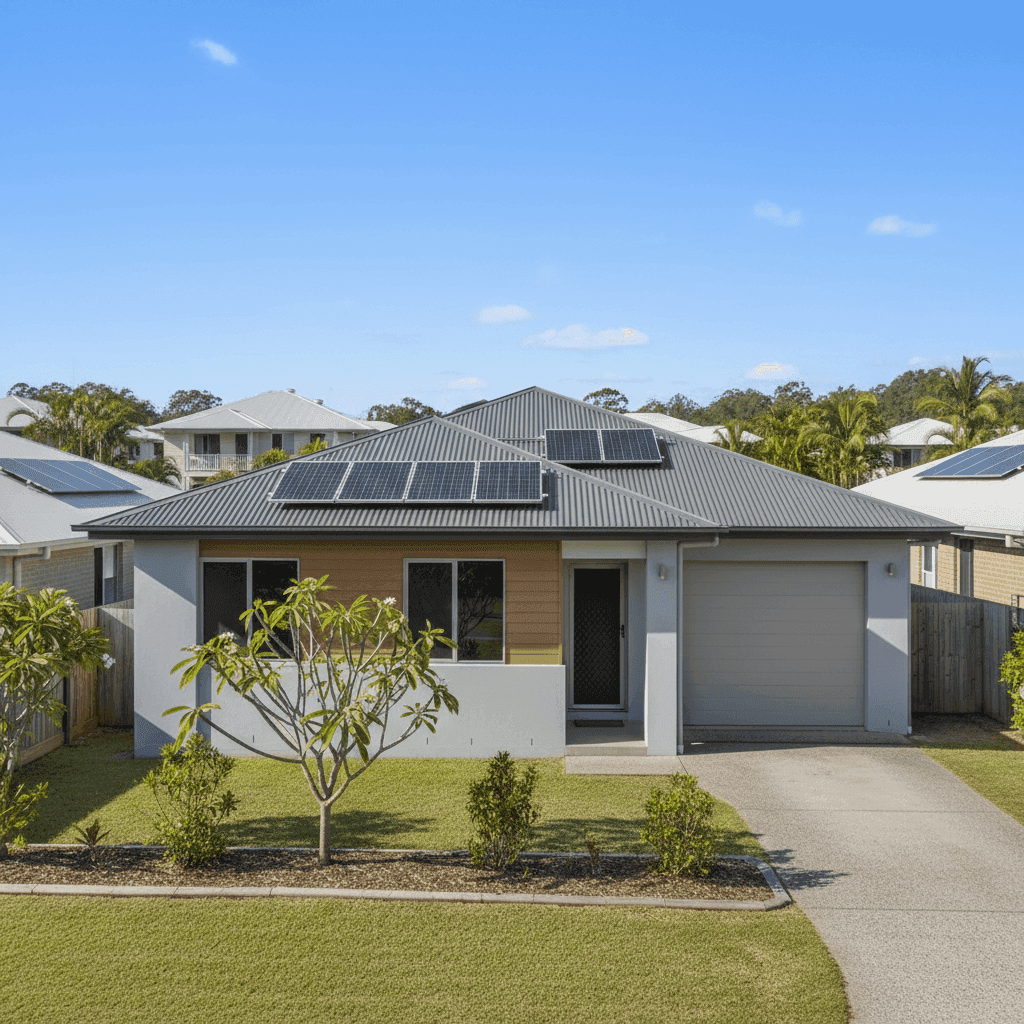
If you own a free standing home in White Rock, QLD 4868, you're probably well aware that home insurance in Far North Queensland can be an expensive exercise. Sitting on the outskirts of Cairns, White Rock is a suburb where cyclone risk, construction age, and local market conditions all play a significant role in what you'll pay to protect your biggest asset. This article breaks down a real building insurance quote for a three-bedroom, one-bathroom home in the area — and puts the numbers into context so you know exactly where you stand.
---
Is This Quote Fair?
The quote in question comes in at $1,621 per year (or roughly $158 per month) for building-only cover on a 160 sqm free standing home with a sum insured of $561,000. Our price rating for this quote is CHEAP — below average — and the data backs that up convincingly.
To put it plainly: this is an exceptionally competitive result for a property in this part of Queensland. When you consider that the suburb average in White Rock sits at $3,778/yr, this quote is less than half what most homeowners in the area are paying. Even the cheapest quarter of quotes in the suburb — the 25th percentile — comes in at $3,145/yr, which is still nearly double this figure.
For a cyclone-prone suburb in the Cairns LGA, landing a premium under $2,000 for building cover is a genuinely strong outcome. Whether you're a new buyer researching costs or an existing homeowner wondering if you're overpaying, this benchmark is worth keeping in mind.
---
How White Rock Compares
The pricing picture across different comparison levels tells an important story:
| Benchmark | Annual Premium |
|---|---|
| This Quote | $1,621 |
| White Rock Suburb Average | $3,778 |
| White Rock Suburb Median | $3,681 |
| White Rock 25th Percentile | $3,145 |
| White Rock 75th Percentile | $4,355 |
| QLD State Average | $4,547 |
| QLD State Median | $3,931 |
| National Average | $2,965 |
| National Median | $2,716 |
| Cairns LGA Average | $12,404 |
A few things stand out here. First, Queensland as a whole is already one of the most expensive states in the country for home insurance — the QLD state average of $4,547/yr is more than 50% higher than the national average of $2,965/yr. This reflects the outsized impact of natural hazard risk — particularly cyclones, flooding, and storm damage — across the state.
Second, and perhaps most striking, is the Cairns LGA average of $12,404/yr. This figure is heavily influenced by high-risk properties, older homes, and elevated sum insured values across the broader Cairns region. White Rock's suburb average of $3,778/yr is considerably more moderate, suggesting the local mix of properties is somewhat less exposed than the LGA as a whole. Still, it's a reminder of just how wide the range can be in this part of Australia.
For a broader view of how White Rock stacks up, you can explore the full White Rock suburb stats on CoverClub.
---
Property Features That Affect Your Premium
Several characteristics of this property are worth discussing in the context of insurance pricing.
Cyclone Risk Area This is the single biggest factor driving premiums in White Rock. Properties in designated cyclone risk zones attract significantly higher base rates from most insurers, as the likelihood and potential cost of wind and storm damage is materially greater. The fact that this quote still came in well below the suburb average suggests the insurer assessed the overall risk profile favourably.
Construction Year (1980) A home built in 1980 sits in an interesting middle ground. It predates modern cyclone-resistant building standards introduced in Queensland following Cyclone Tracy (1974) and subsequent code updates, which can make some insurers cautious. However, a slab foundation and Colorbond steel roof — both considered durable and relatively low-risk — help offset some of those concerns.
Steel/Colorbond Roof Colorbond roofing is generally viewed positively by insurers. It's resilient, low-maintenance, and performs well in high-wind events compared to older tile or fibrous cement alternatives. This is likely a contributing factor to the competitive premium achieved here.
Slab Foundation & Tile Flooring A concrete slab foundation is considered one of the more stable and insurer-friendly foundation types, particularly in Queensland's climate. Tiled flooring throughout also reduces the risk of water damage claims compared to timber or carpet — another subtle factor that can work in a homeowner's favour.
Solar Panels Solar panels are increasingly common on Australian rooftops, but they do add a layer of complexity to building insurance. Most policies cover panels as part of the building sum insured, but it's worth confirming this with your insurer — particularly in a cyclone zone where panels can become a liability in high winds. Ensure your $561,000 sum insured accounts for the replacement cost of the system.
Standard Fittings & No Pool Standard-quality fittings and the absence of a pool keep the risk profile straightforward. High-end fixtures, pools, and additional structures can all push premiums upward, so this property's relatively modest specification works in its favour.
---
Tips for Homeowners in White Rock
1. Review your sum insured regularly Building costs in Queensland have risen sharply in recent years. A sum insured of $561,000 for a 160 sqm home may be appropriate today, but it's worth recalculating your rebuild cost annually — especially given the elevated costs of construction in regional Far North Queensland. Underinsurance is a serious risk in the event of a total loss.
2. Confirm solar panel coverage If your policy covers the building, check whether your solar system is explicitly included and at what value. Some policies cap coverage for solar panels or treat them as a separate item. Given the cyclone risk in White Rock, this is a particularly important detail to clarify before storm season.
3. Don't auto-renew without comparing Even if your current premium feels reasonable, the home insurance market is competitive and prices shift year to year. A quote that's cheap today may not be the best deal at renewal. Set a reminder to compare quotes before your policy renews — it takes minutes and could save you hundreds.
4. Understand your excess This policy carries a $2,000 building excess. In practice, this means smaller claims — a broken fence, minor storm damage — may not be worth claiming if the repair cost is close to or below that threshold. Factor your excess into your decision-making around whether to lodge a claim, as claims history can affect future premiums.
---
Ready to Find Your Best Rate?
Whether you're insuring a home in White Rock for the first time or wondering if your current policy is competitive, comparing quotes is the smartest first step. CoverClub makes it easy to see what multiple insurers would charge for your specific property — in seconds.