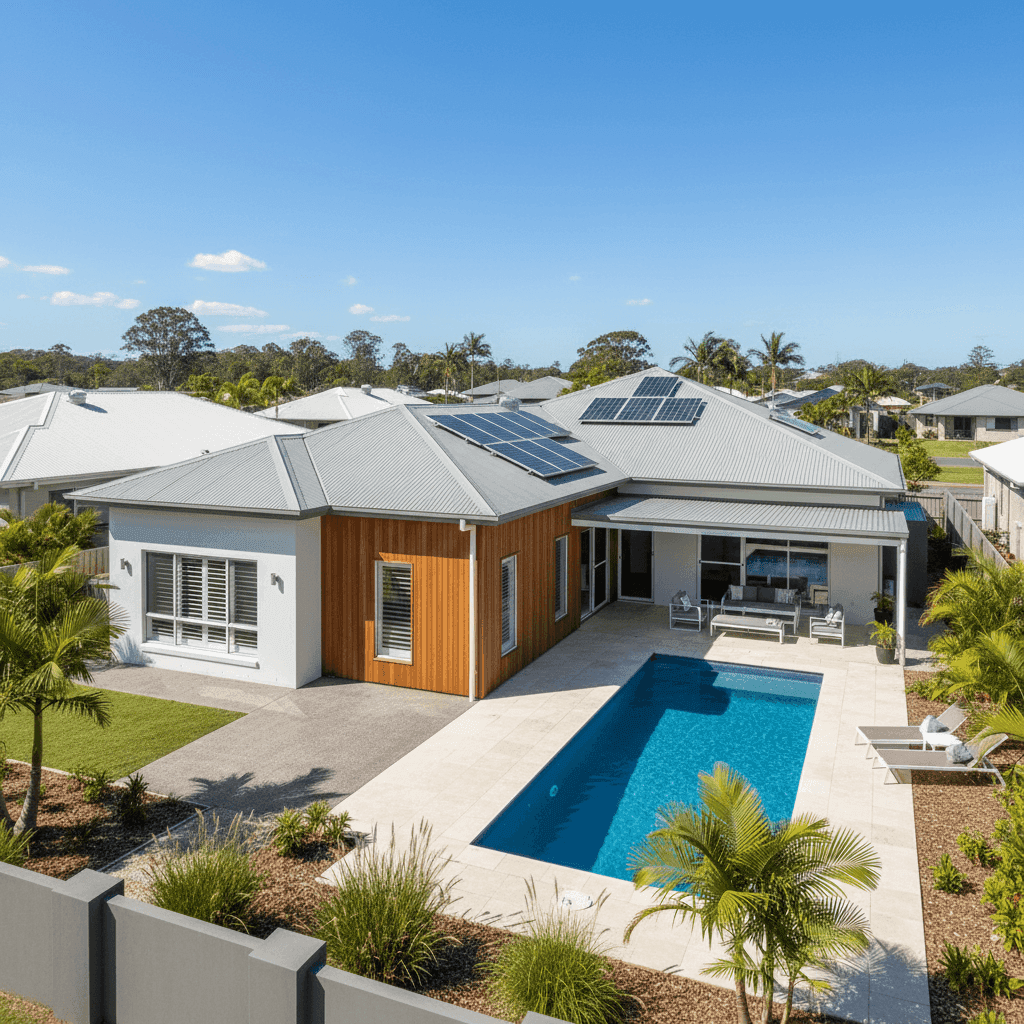
Situated on the southern outskirts of Cairns, White Rock is a quiet residential suburb in Queensland's Far North — and like much of the region, home insurance here comes with some unique pricing considerations. This article breaks down a real building insurance quote for a four-bedroom, free-standing home in White Rock (postcode 4868), examining how it stacks up against local, state, and national benchmarks, and what property features are likely driving the price.
---
Is This Quote Fair?
The annual premium for this property came in at $2,075 per year (or roughly $203 per month), covering the building only with a sum insured of $561,000 and a building excess of $3,000.
Our price rating for this quote is CHEAP — below average — and the data strongly backs that up.
Compared to the White Rock suburb average of $3,778 per year, this quote is saving the homeowner over $1,700 annually. It also sits well below the suburb's 25th percentile of $3,145 — meaning it's cheaper than at least 75% of comparable quotes collected in this area. That's a genuinely strong result.
Against the Queensland state average of $4,547 per year, the saving grows even larger — more than $2,470 per year. Queensland is one of the most expensive states in Australia for home insurance, largely due to cyclone exposure, flooding risk, and extreme weather events across the north of the state. Beating the state average by this margin is notable.
Even measured against the national average of $2,965 per year, this quote comes in around $890 cheaper — a meaningful difference when insurance costs are under pressure across the country.
---
How White Rock Compares
To put this quote in full context, here's how the numbers line up across different benchmarks:
| Benchmark | Annual Premium |
|---|---|
| This Quote | $2,075 |
| White Rock Suburb Average | $3,778 |
| White Rock Suburb Median | $3,681 |
| White Rock 25th Percentile | $3,145 |
| White Rock 75th Percentile | $4,355 |
| QLD State Average | $4,547 |
| QLD State Median | $3,931 |
| National Average | $2,965 |
| National Median | $2,716 |
| Cairns LGA Average | $12,404 |
That last figure deserves special attention. The Cairns LGA average of $12,404 per year reflects the extreme insurance costs faced by many properties in the broader Cairns region — particularly those with higher cyclone exposure, elevated flood risk, or older construction. White Rock's suburb average of $3,778 is dramatically lower than the LGA average, which suggests the suburb may attract more favourable risk assessments from some insurers. This quote, at $2,075, is even further below that LGA figure — making it an exceptionally competitive result for this part of Queensland.
It's worth noting the suburb sample size is 16 quotes, so while directionally useful, the local data should be interpreted with some caution. Premiums in this area can vary considerably depending on the insurer, the specific risk profile of the property, and the coverage options selected.
---
Property Features That Affect Your Premium
Several characteristics of this property are worth examining through an insurance lens:
Cyclone Risk Area White Rock falls within a designated cyclone risk zone, which is one of the most significant premium drivers in Far North Queensland. Insurers price cyclone exposure carefully, and properties in these areas often attract loadings that push premiums well above national norms. The fact that this quote remains competitive despite this designation is a positive sign.
Construction Era (1980) and Wall Type Built in 1980, this home is now over 40 years old. Older properties can sometimes attract higher premiums due to the cost of sourcing period-appropriate materials or the increased likelihood of wear-related claims. The wall construction is listed as "other" — a category that can include a range of materials, and insurers may assess these differently depending on their cyclone and storm resilience.
Steel/Colorbond Roof Colorbond roofing is generally viewed favourably by insurers in cyclone-prone regions. Steel roofing systems, when properly installed, can offer strong wind resistance compared to some tile alternatives — and this may be contributing positively to the premium outcome here.
Slab Foundation and Tiled Flooring A concrete slab foundation is a stable and widely accepted construction type in Queensland. Combined with tile flooring throughout, this property has a profile that insurers tend to find straightforward to assess and price.
Swimming Pool Pools add a modest liability and replacement cost consideration to a home insurance policy. While not a major premium driver, it's a factor insurers account for in their calculations.
Solar Panels Solar panels are increasingly common on Queensland homes, but they do add to the overall replacement cost of the building. The sum insured of $561,000 should ideally account for the cost of replacing the solar system in the event of a total loss — it's worth confirming this with your insurer.
Building Size and Sum Insured At 160 sqm, this is a mid-sized home. The sum insured of $561,000 translates to roughly $3,506 per sqm — a reasonable figure for a four-bedroom home with standard fittings in regional Queensland, though homeowners should periodically review this amount to ensure it reflects current construction costs.
---
Tips for Homeowners in White Rock
1. Don't assume your current insurer is competitive As this quote demonstrates, there can be enormous variation in premiums for similar properties in the same suburb. The gap between the cheapest and most expensive quotes in White Rock spans over $1,200 (between the 25th and 75th percentiles alone). Shopping around regularly — ideally at renewal time — can uncover significant savings.
2. Review your sum insured annually Construction costs in Queensland have risen considerably in recent years. A sum insured that was adequate two or three years ago may no longer cover a full rebuild today, especially with a pool and solar panels factored in. Underinsurance is a real risk — make sure your coverage keeps pace with current costs.
3. Understand your cyclone excess Many insurers apply a separate, higher excess specifically for cyclone-related claims in Far North Queensland. This is often distinct from the standard building excess (in this case, $3,000). Read your Product Disclosure Statement carefully so you're not caught off guard at claim time.
4. Check what "building only" actually covers This policy covers the building structure but not contents. If you have valuable items inside the home — furniture, appliances, electronics — a separate contents policy is worth considering. Some insurers offer discounts when you bundle building and contents cover together.
---
Compare Your Own Quote
Whether you're renewing soon or just curious about what you could be paying, it pays to compare. CoverClub makes it easy to see how your current premium stacks up against real quotes from across White Rock, Queensland, and Australia. Get a quote today and find out if you're getting a fair deal — or leaving money on the table.
For more local data, explore the White Rock suburb insurance stats, the Queensland state overview, or the national home insurance benchmarks.