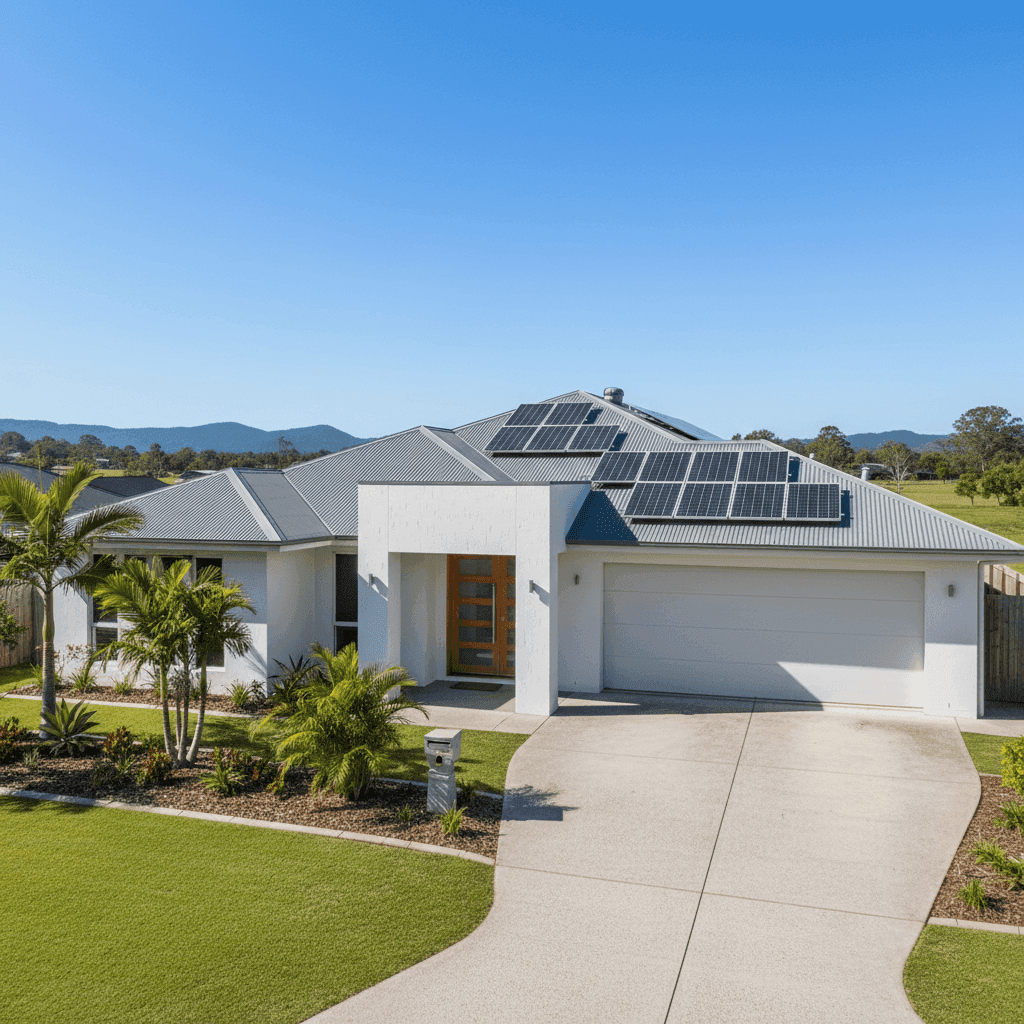
White Rock, a quiet residential suburb on the southern fringe of Cairns in Far North Queensland, is a popular choice for families looking for a bit more space without straying too far from the city. But living in this part of the world comes with its own insurance considerations — and understanding what drives your premium is the first step to making sure you're not overpaying.
This article breaks down a recent home and contents insurance quote for a four-bedroom, three-bathroom free-standing home in White Rock (postcode 4868), comparing it against local, state, and national benchmarks to help you decide whether the price stacks up.
---
Is This Quote Fair?
The quoted annual premium of $4,380 per year (or $420/month) covers both building and contents, with a building sum insured of $970,000 and contents valued at $50,000. The building excess sits at $2,000, with a separate $500 excess for contents claims.
Our price rating for this quote is Expensive — Above Average.
To put that in context: the suburb average premium for White Rock sits at $3,336 per year, and the median is $3,181 per year. This quote comes in roughly 31% above the suburb average and 38% above the median, placing it well into the upper range of what locals are paying.
That said, it's worth noting that the 75th percentile for White Rock is $4,284 per year — meaning this quote is just slightly above the most expensive quarter of comparable policies in the area. So while it's on the pricier side, it's not completely out of the ordinary for a well-appointed home with this level of coverage.
The higher-than-average premium is likely driven by a combination of factors specific to this property — more on those below.
---
How White Rock Compares
Understanding your premium in isolation doesn't tell the full story. Here's how White Rock stacks up against broader benchmarks:
| Benchmark | Average Premium | Median Premium |
|---|---|---|
| White Rock (4868) | $3,336/yr | $3,181/yr |
| Queensland (State) | $9,129/yr | $3,903/yr |
| National | $5,347/yr | $2,764/yr |
| Cairns LGA | $12,404/yr | — |
(Based on [White Rock suburb data](https://coverclub.com.au/stats/QLD/4868/white-rock) | [QLD state data](https://coverclub.com.au/stats/QLD) | [National data](https://coverclub.com.au/stats/national))
A few things stand out here. The Cairns LGA average of $12,404 per year is extraordinarily high — a reflection of the severe weather risks across the broader Cairns region, including tropical cyclones, flooding, and storm surge. White Rock's suburb average of $3,336 is significantly lower than the LGA average, which suggests that insurers view this particular pocket of Cairns as relatively more favourable than higher-risk coastal or low-lying areas nearby.
Interestingly, while Queensland's state average of $9,129 sounds alarming, the median of $3,903 tells a different story — a small number of very high-risk properties are pulling the average up considerably. This quote, at $4,380, sits just above the Queensland median, which is actually a reasonable outcome for a cyclone-risk suburb.
Compared to the national median of $2,764, this quote is higher — but that's expected given Far North Queensland's elevated natural hazard profile relative to most of the country.
---
Property Features That Affect Your Premium
Several characteristics of this property have a meaningful influence on what insurers charge. Here's what's at play:
Cyclone Risk Zone
This is the single biggest factor. White Rock falls within a designated cyclone risk area, which significantly increases the cost of building insurance across Far North Queensland. Insurers price in the likelihood of wind and storm damage, and properties in cyclone-prone regions will almost always attract higher premiums than comparable homes in southern states.
High Building Sum Insured
A building sum insured of $970,000 is substantial. This figure represents the cost to fully rebuild the home, not its market value — and with a 153 sqm concrete home featuring quality fittings, ducted climate control, and solar panels, a high rebuild cost is entirely justified. A larger sum insured means a larger potential payout for the insurer, which flows directly into the premium.
Concrete Walls and Steel/Colorbond Roof
On the positive side, concrete external walls and a steel/Colorbond roof are among the most cyclone-resistant construction materials available. Many insurers reward this type of construction with lower premiums compared to timber-framed or fibrous cement homes. This is one factor likely keeping this quote from being even higher.
Slab Foundation and Tile Flooring
A concrete slab foundation with tile flooring is practical and durable in Queensland's humid climate. These features reduce the risk of moisture-related damage and are generally viewed favourably by underwriters.
Solar Panels and Ducted Climate Control
Both solar panels and ducted air conditioning add to the replacement value of the home and can increase the sum insured required. Solar panels in particular can be damaged in severe weather events, and their inclusion in the policy is an important consideration for homeowners in cyclone zones.
---
Tips for Homeowners in White Rock
1. Shop Around — Especially for Cyclone-Zone Properties
Insurers price cyclone risk very differently from one another. The spread between the 25th percentile ($1,887/yr) and the 75th percentile ($4,284/yr) in White Rock alone shows just how much premiums can vary. Getting multiple quotes is the most effective way to find a competitive price without sacrificing cover.
2. Review Your Building Sum Insured Carefully
A sum insured of $970,000 is significant — make sure it accurately reflects your home's rebuild cost, not its market value. Overinsuring can inflate your premium unnecessarily, while underinsuring leaves you exposed. Use a building cost calculator or speak with a quantity surveyor if you're unsure.
3. Ask About Cyclone Excess Clauses
Many policies in North Queensland include a separate cyclone excess that can be substantially higher than the standard building excess. Make sure you understand exactly what you'd need to pay out of pocket in the event of a cyclone claim — this can sometimes be 1–2% of the sum insured.
4. Consider the Value of Your Contents Cover
With $50,000 in contents cover, it's worth doing a room-by-room audit every year or two to make sure this figure is still accurate. Contents are often underestimated, and with ducted climate control systems and other built-in appliances potentially falling into a grey area between building and contents, clarity here can save headaches at claim time.
---
Compare Your Home Insurance with CoverClub
Whether you're a new homeowner in White Rock or simply reviewing your existing policy, comparing quotes is one of the easiest ways to ensure you're getting value for money. At CoverClub, you can enter your property details and see how your premium stacks up against real data from your suburb, your state, and across Australia. It takes just a few minutes — and the savings can be well worth it.
Explore more White Rock insurance data or browse Queensland-wide trends to better understand the market before you buy.