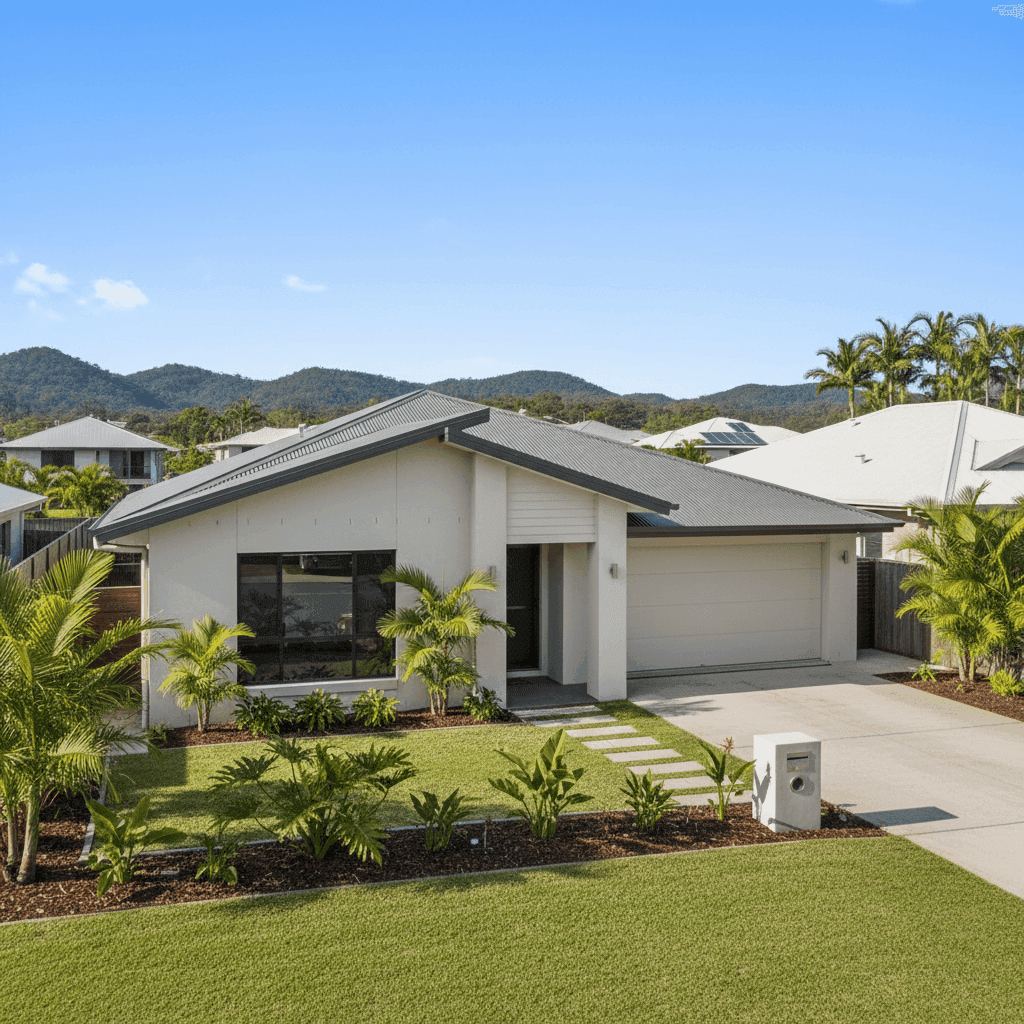
Sitting on the southern fringe of Cairns, White Rock is a quiet residential suburb in Far North Queensland that offers a relaxed lifestyle — but when it comes to home insurance, residents need to be prepared for premiums that reflect the region's unique risks. This article breaks down a recent building-only insurance quote for a four-bedroom, two-bathroom free standing home in White Rock (QLD 4868), compares it against local, state, and national benchmarks, and offers practical guidance for homeowners looking to get better value on their cover.
---
Is This Quote Fair?
The quote in question comes in at $5,896 per year (or $565/month) for building-only cover on a concrete-walled, steel Colorbond-roofed home built in 2005, with a sum insured of $603,000 and a $1,000 building excess.
Our price rating for this quote is EXPENSIVE — above average for the White Rock suburb.
To put that in perspective: the suburb average premium sits at $3,336/yr and the median at $3,181/yr. This quote lands well above the 75th percentile for the area ($4,284/yr), meaning it's pricier than at least three-quarters of comparable quotes we've seen for White Rock. That's a meaningful gap — roughly $2,560 more per year than the suburb median — and it warrants a closer look before accepting the price at face value.
That said, "expensive for the suburb" doesn't necessarily mean "overpriced in context." White Rock sits within the Cairns Local Government Area, where the average premium is a striking $12,404/yr — one of the highest in the country. Against that LGA backdrop, this quote is actually quite competitive. The Cairns region carries elevated cyclone risk, and insurers price accordingly.
---
How White Rock Compares
Understanding where your premium sits relative to broader benchmarks is essential for making an informed decision. Here's how this quote stacks up:
| Benchmark | Premium |
|---|---|
| This quote | $5,896/yr |
| White Rock suburb average | $3,336/yr |
| White Rock suburb median | $3,181/yr |
| White Rock 75th percentile | $4,284/yr |
| QLD state average | $9,129/yr |
| QLD state median | $3,903/yr |
| National average | $5,347/yr |
| National median | $2,764/yr |
| Cairns LGA average | $12,404/yr |
You can explore the full breakdown of White Rock insurance statistics, Queensland-wide data, and national home insurance averages on CoverClub.
A few things stand out here. First, Queensland's state average of $9,129/yr is dramatically higher than the national average of $5,347/yr — a reflection of the state's exposure to cyclones, flooding, and severe storms. Second, the national average of $5,347/yr is actually close to this quote, suggesting the premium isn't wildly out of step with what Australians are paying broadly. Third, the Cairns LGA average of $12,404/yr signals that many homeowners in this region are paying far more — possibly because they have older homes, higher sums insured, or properties with greater risk exposure.
So while this quote is above average for White Rock specifically, it sits below both the QLD state average and the Cairns LGA average. The picture is nuanced, and shopping around remains worthwhile.
---
Property Features That Affect Your Premium
Several characteristics of this property directly influence how insurers assess and price the risk:
Cyclone Risk Area This is arguably the single biggest driver of the premium. White Rock falls within a designated cyclone risk zone, and insurers apply significant loadings to properties in Far North Queensland to account for the potential cost of wind, rain, and storm surge damage. This alone can double or even triple premiums compared to properties in southern Queensland.
Concrete External Walls Concrete construction is generally viewed favourably by insurers — it's more resistant to fire and wind damage than timber weatherboard. However, it also contributes to a higher replacement cost, which flows through to the sum insured and, by extension, the premium.
Steel / Colorbond Roof Colorbond roofing is a solid choice for cyclone-prone areas. It's durable, lightweight, and performs well under high winds when properly installed. Insurers typically regard it positively compared to older roofing materials.
Slab Foundation & Tile Flooring A concrete slab foundation is considered low-risk and stable, particularly in Queensland's climate. Tiled flooring is similarly viewed as a durable, low-maintenance choice that reduces certain claims risks.
Ducted Climate Control The presence of ducted air conditioning adds to the insured value of the home. This system is factored into the $603,000 sum insured and contributes incrementally to the premium.
Building Size: 214 sqm At 214 square metres, this is a mid-to-large family home. Larger homes cost more to rebuild, which pushes the sum insured — and the premium — higher.
No Pool, No Solar Panels The absence of a pool and solar panels keeps the risk profile simpler and avoids the additional premiums those features can attract.
---
Tips for Homeowners in White Rock
1. Compare multiple insurers — not just at renewal The insurance market in cyclone-prone areas like Cairns can vary enormously between providers. Some insurers have a much stronger appetite for Far North Queensland risk than others, and their pricing reflects that. Get a comparison quote through CoverClub to see what the broader market looks like for your specific property.
2. Review your sum insured carefully A $603,000 sum insured is substantial. Make sure it accurately reflects the cost to rebuild your home — not its market value. Overinsuring can inflate your premium unnecessarily, while underinsuring leaves you exposed. Use a building cost calculator or speak with a quantity surveyor to validate the figure.
3. Consider a higher excess to reduce your premium At $1,000, the building excess on this policy is relatively standard. Opting for a higher voluntary excess (say, $2,000 or $2,500) can meaningfully reduce your annual premium — a worthwhile trade-off if you're unlikely to make small claims.
4. Ask about cyclone mitigation discounts Some insurers offer premium discounts for homes that meet certain cyclone-resilience standards — such as specific roof tie-down ratings or impact-resistant glazing. If your home has been upgraded or was built to a high cyclone rating, it's worth asking your insurer whether a discount applies.
---
Ready to Compare?
Whether this quote feels right or you suspect you could be paying less, the best move is always to compare. CoverClub makes it easy to see how your premium stacks up and find a policy that suits your needs and budget. Start your free comparison today — it takes just a few minutes and could save you hundreds of dollars a year.