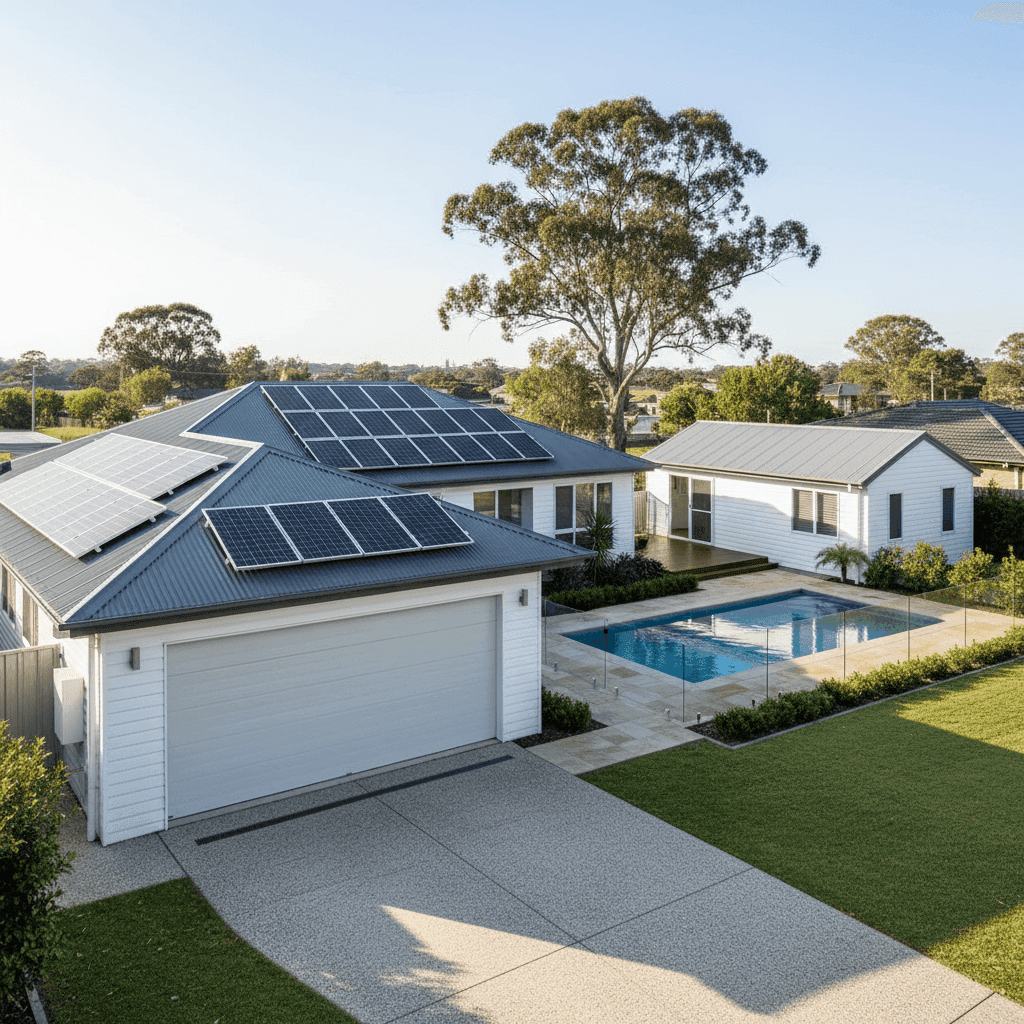
Whitebridge is a quiet, leafy suburb on the western shore of Lake Macquarie, sitting just south of Newcastle in New South Wales. It's a popular choice for families seeking a relaxed coastal lifestyle without straying too far from urban conveniences. But as property values in the area have climbed, so too has the cost of adequately insuring a home here — and for owners of larger, well-appointed properties, the premium can be a real eye-opener.
This article breaks down a recent Home and Contents insurance quote for a four-bedroom, three-bathroom free-standing home in Whitebridge, compares it against local, state, and national benchmarks, and offers practical guidance for homeowners looking to get the best value from their cover.
---
Is This Quote Fair?
The quote in question carries an annual premium of $8,133 (or $773/month), covering a building sum insured of $1,245,000 and contents valued at $96,000, each with a $1,000 excess.
Our price rating for this quote is Expensive (Above Average) — and the numbers back that up. Within Whitebridge (postcode 2290), the average annual premium sits at $3,905, with a median of $3,656. Even the 75th percentile — meaning 75% of quotes in the suburb are cheaper — comes in at just $4,483 per year. At $8,133, this quote is nearly double the suburb average and well above what most Whitebridge homeowners are paying.
That said, context matters. This is not a typical Whitebridge property. A 235 sqm home with above-average fittings, a pool, solar panels, ducted climate control, and a granny flat represents a significantly higher replacement cost and risk profile than the average home in the suburb. The $1,245,000 building sum insured alone places this property in a premium tier that naturally attracts higher insurance costs.
So while the quote is expensive relative to the suburb, it may be more reflective of the property's true replacement value than many cheaper quotes in the area.
---
How Whitebridge Compares
To put this quote in proper perspective, it helps to look at the broader picture. You can explore the full data on the Whitebridge suburb stats page, the NSW state stats page, and the national stats page.
| Benchmark | Average Premium | Median Premium |
|---|---|---|
| Whitebridge (2290) | $3,905/yr | $3,656/yr |
| New South Wales | $9,528/yr | $3,770/yr |
| Lake Macquarie LGA | $11,064/yr | — |
| National | $5,347/yr | $2,764/yr |
A few things stand out here. The NSW average of $9,528 is actually higher than this quote — but the NSW median of $3,770 tells a very different story. The large gap between the NSW average and median suggests the state's average is being pulled upward by a relatively small number of very high-value or high-risk properties (think flood-prone areas, bushfire zones, or prestige homes). The same dynamic plays out nationally.
Interestingly, the Lake Macquarie LGA average of $11,064 is the highest benchmark in this comparison, suggesting that some properties within the broader LGA carry substantial risk loadings — likely driven by flood and storm exposure in low-lying areas around the lake.
At $8,133, this quote sits below both the NSW and Lake Macquarie LGA averages, which provides some reassurance that the pricing, while elevated, is not out of step with what insurers are charging for comparable properties in the region.
---
Property Features That Affect Your Premium
Several characteristics of this property are likely contributing to the higher-than-average premium. Understanding these factors can help you have a more informed conversation with your insurer.
Building size and sum insured: At 235 sqm with a $1,245,000 building sum insured, this is a substantial home. Larger buildings cost more to rebuild, and insurers price accordingly. Above-average fittings — think stone benchtops, quality fixtures, and premium flooring — push rebuild costs even higher.
Vinyl cladding exterior: Vinyl cladding is generally considered lower maintenance than timber weatherboard, but some insurers may assess it differently for fire and impact resistance. It's worth confirming your insurer is comfortable with this construction type and that it's correctly noted on your policy.
Stump foundations: Homes built on stumps (common for 1960s construction in NSW) can be more susceptible to subfloor moisture issues and movement over time. Insurers may factor this into their risk assessment, particularly for older homes.
Swimming pool: Pools add liability exposure and increase the overall replacement value of the property. They also introduce additional maintenance obligations that can affect claims outcomes if not properly maintained.
Solar panels: Rooftop solar systems are increasingly common, but they add to the building's replacement value and can complicate roof repairs after storm or hail damage. Make sure your sum insured accounts for the full cost of replacing your solar system.
Granny flat: A secondary dwelling on the property adds significant replacement value and may also introduce additional liability considerations. Confirm with your insurer that the granny flat is explicitly covered under your policy, as some standard policies may have limitations here.
1960s construction: Older homes can attract higher premiums due to the cost of sourcing period-appropriate materials and the likelihood of discovering additional issues (such as asbestos or outdated wiring) during repairs.
---
Tips for Homeowners in Whitebridge
1. Review your sum insured carefully — but don't underinsure. It can be tempting to lower your building sum insured to reduce your premium, but underinsurance is one of the most common and costly mistakes homeowners make. Use a reputable building cost calculator or engage a quantity surveyor to confirm your figure is accurate. Given the above-average fittings and granny flat, $1,245,000 may well be justified.
2. Confirm your granny flat is fully covered. Not all home insurance policies automatically extend full cover to secondary dwellings. Read your Product Disclosure Statement (PDS) carefully and ask your insurer directly whether the granny flat is included in your building sum insured and covered for the same events as the main dwelling.
3. Shop around — premiums vary significantly between insurers. The difference between the cheapest and most expensive quotes for the same property can be thousands of dollars per year. Compare quotes at CoverClub to see what multiple insurers would charge for your specific property. Even if you stay with your current insurer, knowing the market rate gives you leverage to negotiate.
4. Ask about discounts for security and safety features. Many insurers offer premium discounts for properties with monitored alarms, deadbolts, or fire suppression systems. If you've invested in home security or safety upgrades, make sure your insurer knows about them.
---
Ready to Find a Better Deal?
Whether this quote seems reasonable for your situation or you suspect you're paying too much, the best way to know for certain is to compare. At CoverClub, we make it easy to see how your premium stacks up and find competitive quotes tailored to your property. Get a quote today and take the guesswork out of home insurance.