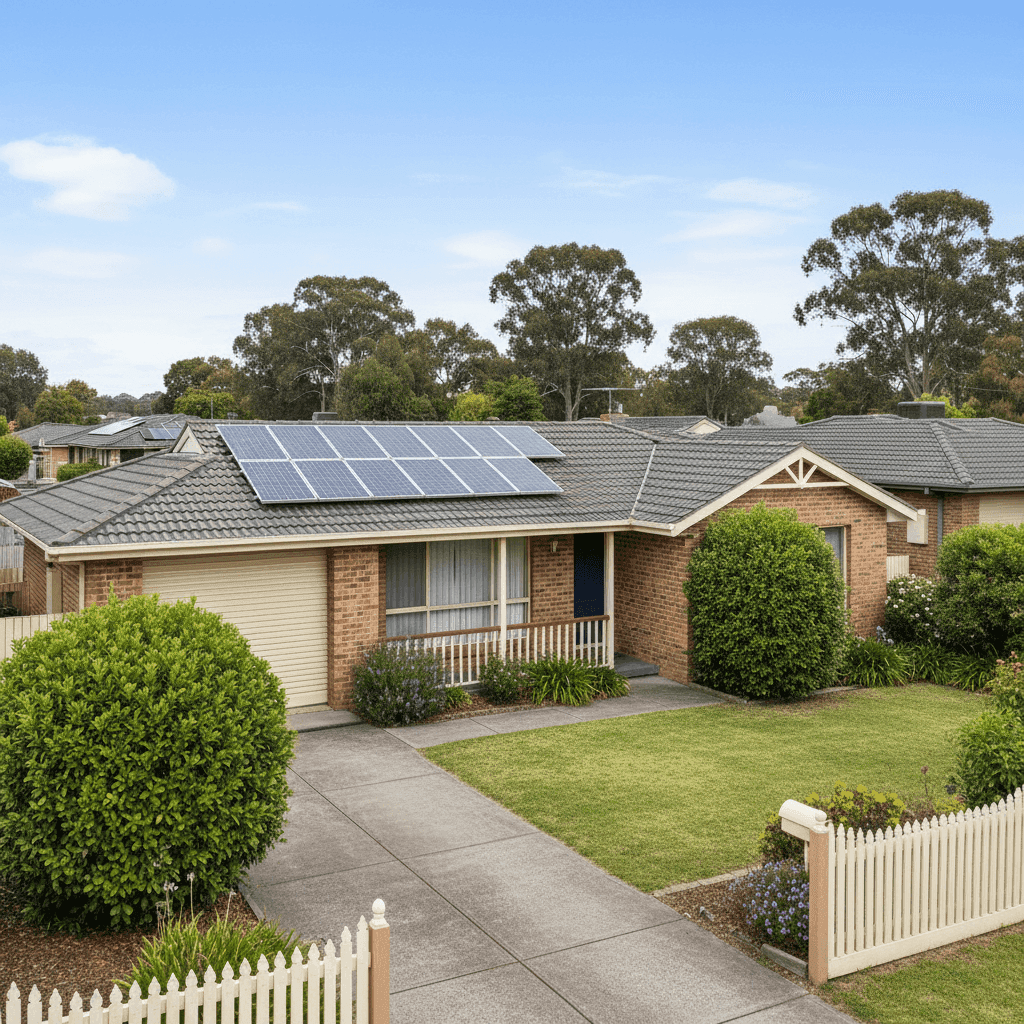
Whittington is a quiet residential suburb on the southern fringe of Geelong, Victoria — and like many established neighbourhoods in the region, it's home to a mix of solid brick veneer houses built across several decades. This article takes a close look at a real home and contents insurance quote for a three-bedroom, two-bathroom free standing home in Whittington (postcode 3219), comparing it against local, state, and national benchmarks to help you understand whether the price stacks up.
---
Is This Quote Fair?
The quote in question comes in at $1,539 per year (or $161/month) for combined home and contents cover, with a building sum insured of $500,000 and contents valued at $94,000. The building excess is $3,000 and the contents excess is $1,000.
Our price rating for this quote is Expensive (Above Average).
To put that in context: the suburb average premium in Whittington sits at $1,118 per year, and the median is $1,201 per year — meaning this quote is roughly $421 above the suburb average and $338 above the median. It also sits above the suburb's 75th percentile of $1,501/yr, placing it in the more expensive tier of quotes seen locally.
That said, "expensive" is relative. Compared to the broader Victorian average of $3,000/yr and the national average of $5,347/yr, this quote is actually quite competitive in the bigger picture. The higher-than-local price may reflect the specific insurer's pricing model, the relatively high building sum insured, or the inclusion of contents cover — all of which can push a premium upward.
It's worth noting that the suburb sample used for comparison is based on 38 quotes collected for Whittington, which is a reasonable dataset but not enormous. Individual quotes can vary significantly depending on the insurer, chosen excesses, and the level of cover selected.
---
How Whittington Compares
Understanding where your suburb sits relative to broader benchmarks is a useful exercise when evaluating any insurance quote.
| Benchmark | Average Premium | Median Premium |
|---|---|---|
| Whittington (3219) | $1,118/yr | $1,201/yr |
| Greater Geelong (LGA) | $1,754/yr | — |
| Victoria | $3,000/yr | $2,718/yr |
| National | $5,347/yr | $2,764/yr |
Whittington comes in well below both the Victorian state average and the national average, which is encouraging for local homeowners. The suburb's relatively modest premiums likely reflect a lower exposure to extreme weather events — Whittington is not in a cyclone risk zone, and while coastal proximity can introduce some wind and flood considerations, it doesn't carry the same risk profile as, say, Far North Queensland or bushfire-prone alpine regions.
The Greater Geelong LGA average of $1,754/yr is notably higher than the Whittington suburb average, suggesting that some pockets of Geelong carry more risk or attract pricier quotes than Whittington specifically. This is a good reminder that suburb-level data is more meaningful than broad LGA or state figures when assessing your own quote.
---
Property Features That Affect Your Premium
Several characteristics of this particular property have a direct bearing on the insurance premium:
Brick Veneer Walls & Tile Roof Brick veneer construction is generally viewed favourably by insurers. It offers solid fire resistance and structural durability compared to weatherboard or lightweight cladding. Tiled roofs are similarly regarded as a lower-risk choice, being non-combustible and long-lasting when well maintained. Together, these features tend to attract more competitive premiums.
Slab Foundation A concrete slab foundation is common in homes of this era and is generally considered stable and low-maintenance. It eliminates the risk of subfloor issues like rot or pest damage that can affect homes on stumps or piers, which insurers take into account.
Construction Year: 1988 At around 36 years old, this home sits in a middle ground — old enough that some systems (plumbing, electrical wiring, roofing) may be approaching end-of-life, but not so old as to be considered heritage or high-risk. Insurers may factor in the age of the building when pricing, particularly around escape-of-water or storm damage claims.
Solar Panels The presence of solar panels adds a modest layer of complexity to the insurance picture. Panels need to be covered for accidental damage, storm damage, and potential liability if they malfunction. Most home and contents policies include solar panels under the building sum insured, but it's worth confirming this with your insurer — and ensuring the $500,000 building sum insured accounts for their replacement value.
Carpet Flooring & Standard Fittings Standard fittings and carpet flooring are fairly neutral risk factors. They won't significantly inflate a premium, though carpet can be more susceptible to water damage claims than hard flooring — something to keep in mind when assessing your contents cover.
No Pool, No Ducted Climate Control The absence of a pool removes a common liability risk, and no ducted climate control means one less mechanical system that could fail and trigger a claim. Both factors work in favour of a leaner premium.
---
Tips for Homeowners in Whittington
1. Review your building sum insured carefully A sum insured of $500,000 for a 139 sqm home in Whittington is on the higher end. While it's always better to be adequately covered than underinsured, overinsuring your building can unnecessarily inflate your premium. Use a building replacement cost calculator to check whether your sum insured reflects actual rebuild costs — not market value.
2. Consider increasing your excess to reduce your premium The $3,000 building excess on this policy is already relatively high, but if you're financially comfortable absorbing a larger out-of-pocket cost in the event of a claim, some insurers will offer a meaningful premium discount in return. Even moving from a $1,000 to a $2,000 excess on contents could make a difference.
3. Shop around — especially given the above-average rating With this quote rated as expensive relative to the suburb, there's a real opportunity to save by comparing alternatives. Get a quote through CoverClub to see how other insurers price the same property and cover level. Even a $200–$300 annual saving compounds significantly over time.
4. Confirm your solar panels are correctly listed Make sure your insurer knows the panels are installed and that they're included under your building cover. Some policies require them to be specifically listed, and an undisclosed system could complicate a future claim.
---
Compare Your Options with CoverClub
Whether you're renewing your policy or shopping for the first time, it pays to compare. CoverClub makes it easy to benchmark your quote against real data from your suburb and beyond. Start a quote today at CoverClub and find out whether you're getting a fair deal — or whether there's a better option waiting for you.