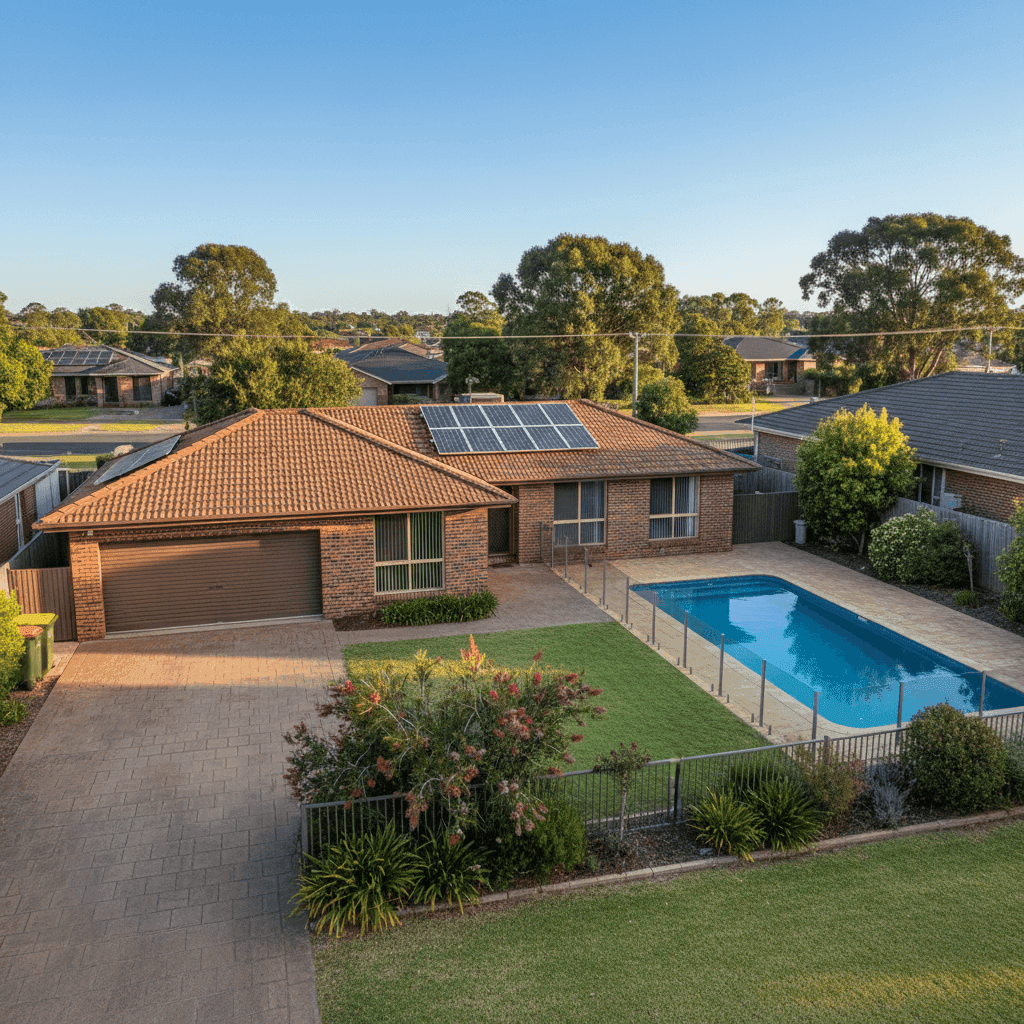
Wilberforce is a quiet semi-rural suburb nestled in the Hawkesbury region of New South Wales, sitting roughly 60 kilometres north-west of Sydney's CBD. It's the kind of place where older homes on generous blocks are the norm — and that character is reflected in the property we're looking at today: a three-bedroom, single-bathroom free standing home built in 1975, featuring brick veneer walls, a tiled roof, and a stump foundation. With a pool, solar panels, and ducted climate control also in the mix, there's plenty for an insurer to consider when pricing a policy.
This article breaks down a recent Home and Contents insurance quote for this property — with a building sum insured of $455,000 and contents covered at $30,000 — and puts the annual premium of $1,786 into context against what other homeowners in Wilberforce, across NSW, and nationally are paying.
---
Is This Quote Fair?
In short: yes — and then some. This quote has been rated CHEAP, meaning it sits well below the average for the area. At $1,786 per year (or roughly $171 per month), this is a genuinely competitive result for a home and contents policy with a $1,000 excess on both building and contents.
To put that in perspective, the suburb average premium in Wilberforce is $4,200 per year, and the median sits at $3,249. Even the 25th percentile — meaning the cheapest quarter of quotes in the area — comes in at $2,691 per year. This quote comfortably undercuts all of those benchmarks, landing significantly below even the most affordable tier of local pricing.
For homeowners who haven't reviewed their policy in a while, this kind of comparison is a useful reminder: the market varies enormously, and there's real money to be saved by shopping around.
---
How Wilberforce Compares
Wilberforce sits in an interesting position when you zoom out to the broader insurance landscape. Here's how the numbers stack up:
| Benchmark | Annual Premium |
|---|---|
| This quote | $1,786 |
| Wilberforce 25th percentile | $2,691 |
| Wilberforce median | $3,249 |
| Wilberforce average | $4,200 |
| National median | $2,764 |
| National average | $5,347 |
| NSW median | $3,770 |
| NSW average | $9,528 |
| LGA (Hawkesbury) average | $11,842 |
A few things stand out here. First, the NSW state average of $9,528 is extraordinarily high — driven largely by flood-prone and high-risk postcodes across the state that inflate the mean considerably. The NSW median of $3,770 is a more representative figure for typical homeowners.
Second, the LGA average of $11,842 signals that the broader Hawkesbury region carries significant insurance risk — almost certainly due to flood exposure along the Hawkesbury River and its tributaries. Wilberforce itself is no stranger to flooding, which makes a quote this low particularly noteworthy.
You can explore more local data on the Wilberforce insurance stats page, or compare it against NSW-wide trends and national benchmarks.
---
Property Features That Affect Your Premium
Every property tells its own story when it comes to insurance pricing. Here's how the key features of this home are likely influencing the quote:
Brick veneer walls and tiled roof are generally viewed favourably by insurers. Brick veneer offers solid fire resistance and structural durability, while concrete or terracotta tiles are among the more resilient roofing materials — less susceptible to wind damage compared to corrugated iron or older fibrous cement sheeting. These two features alone can meaningfully reduce a premium.
Stump foundations, common in homes of this era and region, can be a mixed bag. On the positive side, stumps allow airflow beneath the home and can reduce moisture-related damage. However, they may require periodic inspection and maintenance, and some insurers factor this into their assessment of structural risk.
Construction year (1975) means the home is now 50 years old. Older homes can attract higher premiums due to ageing electrical wiring, plumbing, and roofing materials — though a well-maintained 1970s brick home is often considered more robust than many modern lightweight constructions.
The swimming pool adds liability exposure to the policy. Pools are a known risk factor for third-party injury claims, and insurers typically account for this in their pricing. It's worth confirming your policy includes adequate liability cover.
Solar panels are increasingly common and most insurers now cover them as part of the building sum insured — but it's worth double-checking that the $455,000 building cover adequately accounts for the replacement cost of the panels themselves.
Ducted climate control is a high-value fixed installation that should be captured within the building sum insured. Given the cost of replacing a full ducted system, homeowners should ensure their coverage reflects current replacement values.
---
Tips for Homeowners in Wilberforce
1. Review your flood cover carefully. The Hawkesbury-Nepean Valley has a well-documented history of significant flooding events, and Wilberforce is within the broader flood-affected corridor. Under Australian insurance law, standard home policies must include flood cover unless you explicitly opt out — but the definition of "flood" can vary. Read the Product Disclosure Statement (PDS) closely and confirm exactly what's covered.
2. Check your building sum insured reflects true rebuild costs. With a 130 sqm home, the $455,000 building sum insured works out to roughly $3,500 per square metre — which is broadly in line with current construction costs in regional NSW, particularly for a brick veneer build. However, costs have risen sharply in recent years. Use a building cost calculator or speak with a quantity surveyor to make sure you're not underinsured.
3. Don't overlook your pool and solar panels in your policy review. Both features add value and risk to your property. Confirm your insurer explicitly covers the solar panel system under the building definition, and that your liability cover (usually $20 million or more with most major insurers) is adequate given the presence of a pool.
4. Consider paying annually rather than monthly. The monthly premium for this policy is $171, which totals $2,052 over 12 months — compared to the annual premium of $1,786. That's a difference of $266 per year simply for the convenience of monthly payments. If cash flow allows, paying upfront is almost always the better financial decision.
---
Compare Your Own Quote
Whether you're a homeowner in Wilberforce or anywhere else in Australia, it pays to know where your premium sits relative to the market. CoverClub makes it easy to see how your current policy stacks up — and to find better value if it doesn't.
Get a home insurance quote now at CoverClub and find out if you're paying too much.