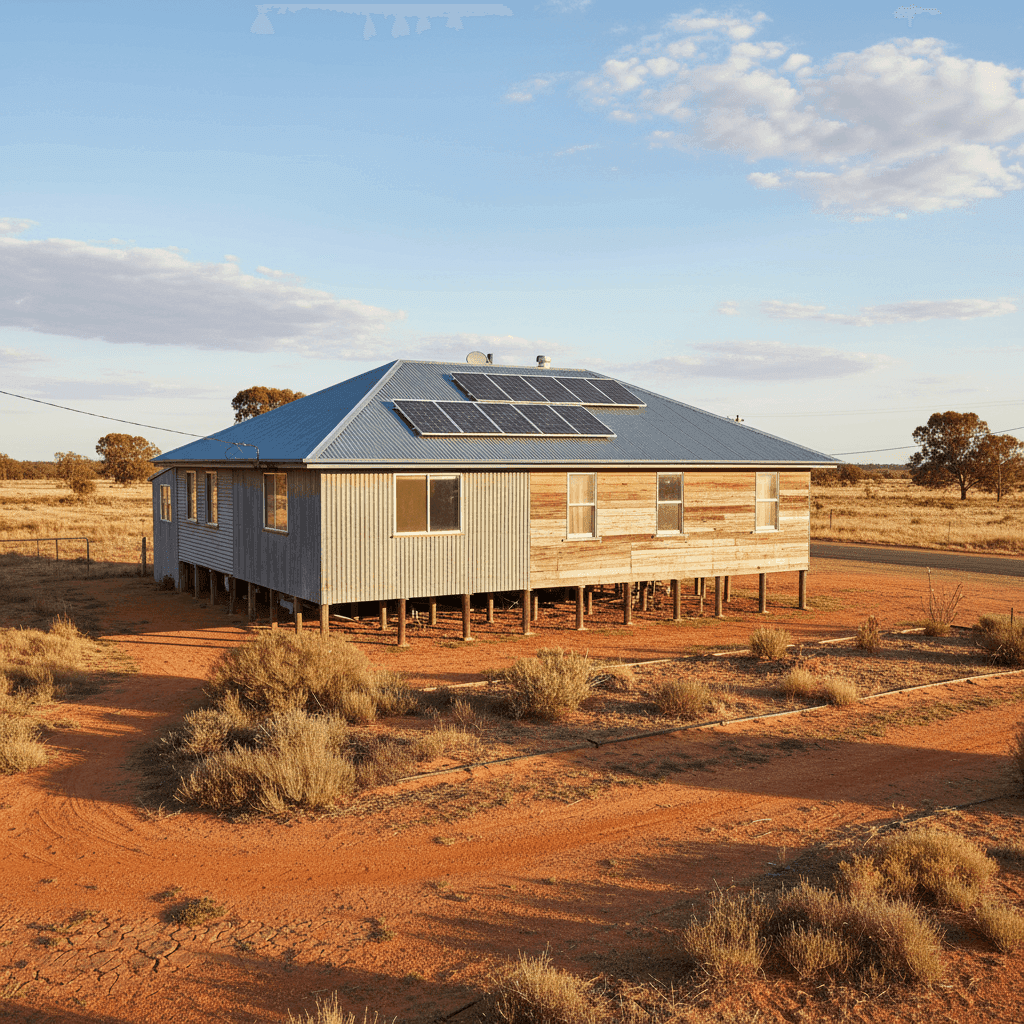
Wilcannia is a small outback town in far-western New South Wales, sitting on the banks of the Darling River roughly 200 kilometres east of Broken Hill. It's a region with a rich history, a tight-knit community, and a housing stock that reflects its age and remoteness. If you own a free standing home out here, understanding what you should be paying for home and contents insurance — and why — can save you a significant amount of money each year.
This article breaks down a recent home and contents insurance quote for a three-bedroom, one-bathroom free standing home in Wilcannia, and compares it against local, state, and national benchmarks to help you understand whether you're getting a fair deal.
---
Is This Quote Fair?
The quote in question comes in at $2,367 per year (or $226 per month) for combined home and contents cover, with a building sum insured of $400,000 and contents valued at $20,000. Both the building and contents excess are set at $2,000.
Our price rating for this quote is CHEAP — below average for the Wilcannia area. That's genuinely good news for the homeowner.
To put it in context: the suburb's median premium sits at $3,314 per year, meaning this quote comes in roughly $947 below the local median — a saving of around 29%. Even compared to the suburb's 25th percentile (the cheapest quarter of quotes) of $2,800 per year, this quote still undercuts the field. In other words, this is among the most competitively priced policies we've seen quoted for this postcode.
It's worth noting that the Wilcannia suburb average sits considerably higher at $5,881 per year — heavily skewed by some very expensive outlier quotes in a small sample of 11. When averages are pulled up by extremes like this, the median becomes a more reliable benchmark, and against that measure, this quote looks very strong indeed.
---
How Wilcannia Compares
Zooming out, the picture becomes even more interesting. Here's how Wilcannia stacks up against broader benchmarks:
| Benchmark | Average | Median |
|---|---|---|
| Wilcannia (2836) | $5,881/yr | $3,314/yr |
| LGA (Unincorporated NSW) | $4,060/yr | — |
| NSW State | $9,528/yr | $3,770/yr |
| National | $5,347/yr | $2,764/yr |
The NSW state average of $9,528 per year is eye-wateringly high — a reflection of the elevated risk profiles found in coastal, flood-prone, and bushfire-affected areas across the state. Wilcannia's median of $3,314 is actually well below the NSW median of $3,770, suggesting that despite its remote location, the suburb doesn't attract the same extreme premiums seen in many parts of the state.
Compared to the national median of $2,764 per year, Wilcannia sits modestly above average — which is understandable given the added complexities of insuring property in a remote regional area, including limited access to tradespeople and longer rebuild timelines.
At $2,367, this particular quote actually sits below the national median, which is a remarkable outcome for a remote NSW property.
---
Property Features That Affect Your Premium
Several characteristics of this property are worth examining, as they directly influence what insurers charge.
Construction era (1981): Homes built in the early 1980s are common across regional Australia. While they're well past the point of being considered "new," they're generally not so old as to trigger the same concerns as pre-war or early post-war construction. That said, insurers will factor in the age of plumbing, wiring, and roofing materials when assessing risk.
Steel/Colorbond roof: This is generally viewed favourably by insurers. Colorbond is durable, fire-resistant, and low-maintenance — all qualities that reduce the likelihood of weather-related claims. In a region like far-western NSW, where extreme heat and dust storms are common, a metal roof is a practical and insurance-friendly choice.
Stump foundation: Homes on stumps (also called pier or post foundations) are common in older Australian homes. While they allow for good airflow and are well-suited to certain soil types, they can be more vulnerable to movement and pest damage. Insurers may price this in slightly, though it's rarely a major loading factor on its own.
Timber/laminate flooring: Timber floors are a classic feature of older Australian homes. From an insurance perspective, they can be costly to repair or replace if damaged by water or fire, which may influence the contents or building valuation.
Solar panels: The presence of solar panels adds value to the property and is something your insurer needs to know about. Most standard home policies cover rooftop solar systems as part of the building, but it's always worth confirming this with your insurer — particularly regarding storm, hail, or fire damage.
Ducted climate control: A ducted system is a significant fixed asset. Replacement costs for ducted air conditioning can run into the tens of thousands of dollars, so ensuring your building sum insured accounts for this is important.
Building size (130 sqm): At 130 square metres, this is a modest-sized home. Rebuild costs in remote areas like Wilcannia can be higher per square metre than in metro areas due to transport and labour costs, so the $400,000 sum insured appears reasonable for this context.
---
Tips for Homeowners in Wilcannia
1. Don't underinsure — especially in remote areas Rebuild costs in remote NSW can be significantly higher than in cities due to the cost of transporting materials and sourcing qualified tradespeople. Make sure your building sum insured reflects true replacement value, not just market value. Consider using an independent building estimator if you're unsure.
2. Confirm your solar panels are covered Solar panel systems are increasingly common but not always automatically covered under every policy. Check your Product Disclosure Statement (PDS) to confirm your panels are included under the building cover and that the coverage extends to accidental damage, storm, and fire.
3. Review your excess carefully This policy carries a $2,000 excess on both building and contents. A higher excess typically lowers your premium, but it also means you'll need to cover more out of pocket when making a claim. Make sure this level is genuinely affordable for you in an emergency situation.
4. Compare quotes regularly With only 11 quotes in our Wilcannia sample, the spread between the cheapest and most expensive is enormous — from well under $3,000 to nearly $6,000 per year. This kind of variation means shopping around can make a very real difference. Insurers assess remote properties differently, and a quote that's expensive from one provider may be very reasonable from another.
---
Find the Best Home Insurance for Your Wilcannia Property
Whether you're a long-term Wilcannia resident or you've recently purchased in the area, it pays to make sure your home and contents cover is both adequate and competitively priced. The quote analysed here is an excellent benchmark — but your property's specific features, claims history, and chosen insurer will all influence what you're offered.
Compare home insurance quotes for your Wilcannia property at CoverClub and see how your current premium stacks up in seconds.