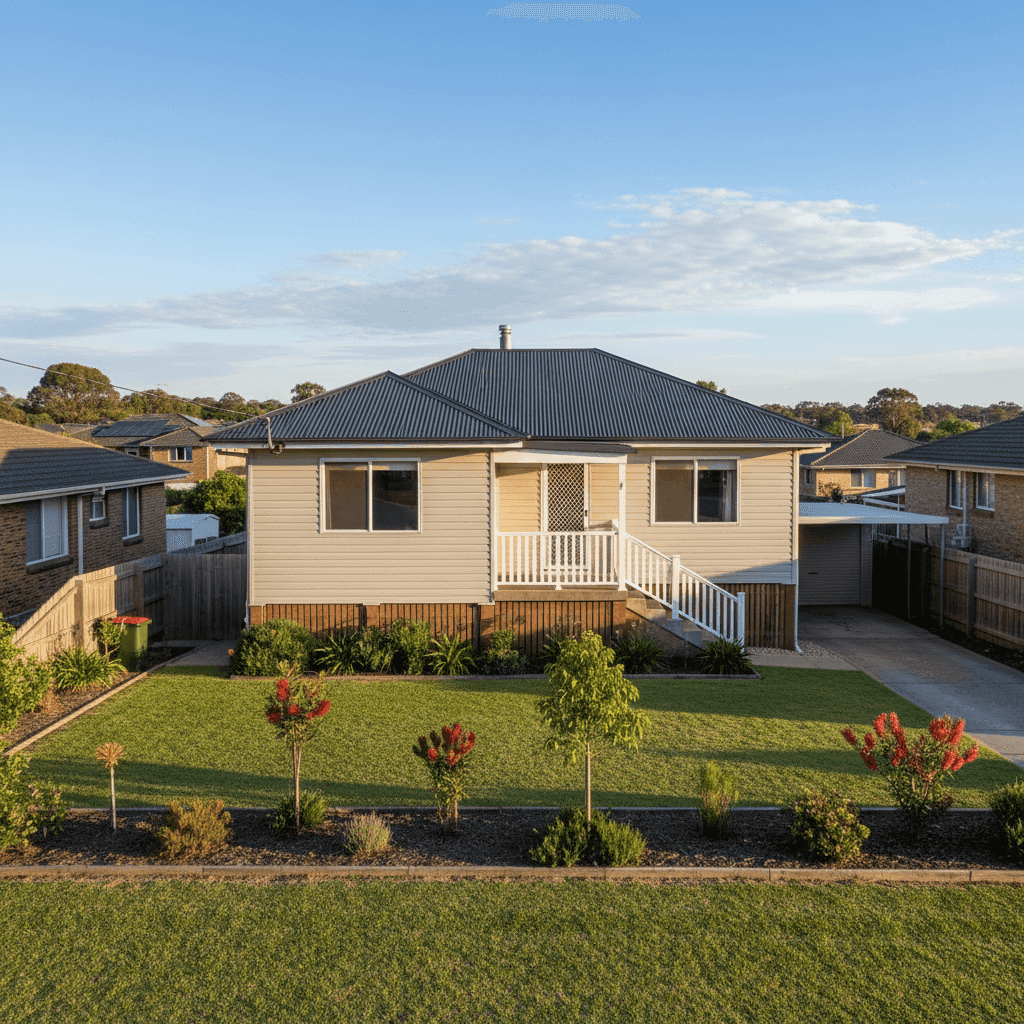
If you own a free standing home in Williamtown, NSW 2318, you're probably curious about whether you're paying a fair price for your home and contents insurance. Williamtown is a small coastal locality in the Port Stephens local government area, sitting close to Newcastle and the shores of Port Stephens. It's a relaxed area with a mix of older and newer homes — but like anywhere in Australia, the cost of insuring your property can vary quite a bit depending on who you ask.
In this article, we analyse a real home and contents insurance quote for a 2-bedroom free standing home in Williamtown, breaking down the premium, comparing it to local and national benchmarks, and offering some practical tips for homeowners in the area.
---
Is This Quote Fair?
The quote in question comes in at $1,586 per year (or $154/month) for combined home and contents cover, with a building sum insured of $288,000 and contents valued at $20,000. The building excess is $2,000 and the contents excess is $1,000.
Our price rating for this quote is FAIR — Around Average.
That assessment holds up well when you look at the numbers. Within the Williamtown suburb itself, the average annual premium sits at $2,134, with a median of $2,187. This quote lands noticeably below both figures, which is a positive sign. It also falls between the suburb's 25th percentile ($1,422/yr) and 75th percentile ($2,710/yr), placing it comfortably in the middle of the local market.
So while it's not the cheapest quote available in the area, it's well within a reasonable range — and considerably more affordable than what many Williamtown homeowners are currently paying. For a property of this size and specification, the pricing looks sensible.
---
How Williamtown Compares
To put this quote in broader context, it's worth zooming out to the state and national picture.
| Benchmark | Average Premium |
|---|---|
| Williamtown (suburb) | $2,134/yr |
| Port Stephens (LGA) | $3,473/yr |
| NSW (state) | $3,801/yr |
| Australia (national) | $2,965/yr |
At $1,586/yr, this quote sits well below every benchmark in the table — including the national average of $2,965 and the NSW state average of $3,801. That's a meaningful difference. NSW homeowners on average pay more than double what this quote costs, which reflects the elevated risk profile of many parts of the state, particularly those exposed to bushfire, flood, and severe storm events.
Interestingly, Port Stephens as an LGA has a notably higher average ($3,473/yr) than Williamtown's suburb-level average ($2,134/yr). This suggests that risk and pricing can vary significantly even within the same local government area — a good reminder that suburb-level data is more meaningful than LGA-wide figures when assessing your own premium.
You can explore more detailed pricing data for this postcode at the Williamtown insurance stats page, or compare across the state on the NSW insurance stats page. For a broader view, the national insurance stats page gives a useful Australia-wide perspective.
---
Property Features That Affect Your Premium
Every home is different, and insurers price risk based on the specific characteristics of your property. Here's how the features of this particular home are likely influencing the premium:
Vinyl cladding exterior walls Vinyl cladding is generally considered a moderate-risk wall material by insurers. It's not as fire-resistant as brick veneer, but it performs reasonably well in most weather conditions and is relatively straightforward to repair or replace. This is unlikely to attract a significant loading on the premium.
Steel/Colorbond roof A Colorbond steel roof is one of the more insurer-friendly roofing options available. It's durable, low-maintenance, and performs well in high-wind and hail events. Homes with metal roofing often attract more competitive premiums than those with tiles, which can crack or dislodge more easily.
Stump foundation Homes on stumps (also known as raised or pier foundations) can be a mixed bag for insurers. On the positive side, they tend to be less susceptible to some forms of water ingress. However, they can be more exposed to underfloor damage and may require additional consideration in high-wind zones. In Williamtown's context — which is not classified as a cyclone risk area — this is unlikely to be a major premium driver.
Timber/laminate flooring Timber and laminate floors are common in homes of this era and construction type. They're generally straightforward to value and replace, which keeps contents and building repair estimates relatively predictable.
Built in 1998 At around 27 years old, this home is mature but not ancient. Properties from the late 1990s were typically built to reasonable standards, though they may lack some of the energy efficiency and construction improvements seen in newer builds. Insurers generally don't penalise homes of this age heavily, though older properties can attract slightly higher premiums if maintenance concerns are flagged.
105 sqm building size At 105 square metres, this is a compact home, which is reflected in the $288,000 building sum insured. Smaller homes typically cost less to rebuild, which helps keep premiums down.
---
Tips for Homeowners in Williamtown
1. Review your sum insured regularly Construction costs in Australia have risen sharply over recent years. It's worth revisiting your building sum insured annually to make sure it reflects current rebuild costs — not what it cost to build your home in 1998. Being underinsured at claim time can leave you significantly out of pocket.
2. Consider your excess settings carefully This quote carries a $2,000 building excess and a $1,000 contents excess. Opting for a higher excess is one of the most effective ways to reduce your premium, but make sure you can comfortably cover that amount if you need to make a claim. If cash flow is tight, a lower excess (even at a slightly higher premium) may be the smarter choice.
3. Don't overlook contents cover A $20,000 contents sum insured is relatively modest. Take stock of what's actually in your home — furniture, appliances, clothing, electronics, and valuables — and make sure your contents cover reflects reality. Many Australians are surprised to find they're significantly underinsured when they actually sit down and add it all up.
4. Compare quotes before renewing Even if you're happy with your current insurer, it pays to shop around at renewal time. The insurance market is competitive, and premiums can shift substantially from year to year. Getting a fresh quote through CoverClub takes just a few minutes and could save you hundreds of dollars annually.
---
Find a Better Deal with CoverClub
Whether you're a first-time buyer or a long-time Williamtown resident, making sure your home insurance is both adequate and competitively priced is one of the smartest financial moves you can make. CoverClub makes it easy to compare home and contents insurance quotes from a range of Australian insurers — all in one place.
Get a home insurance quote today and see how your current premium stacks up.