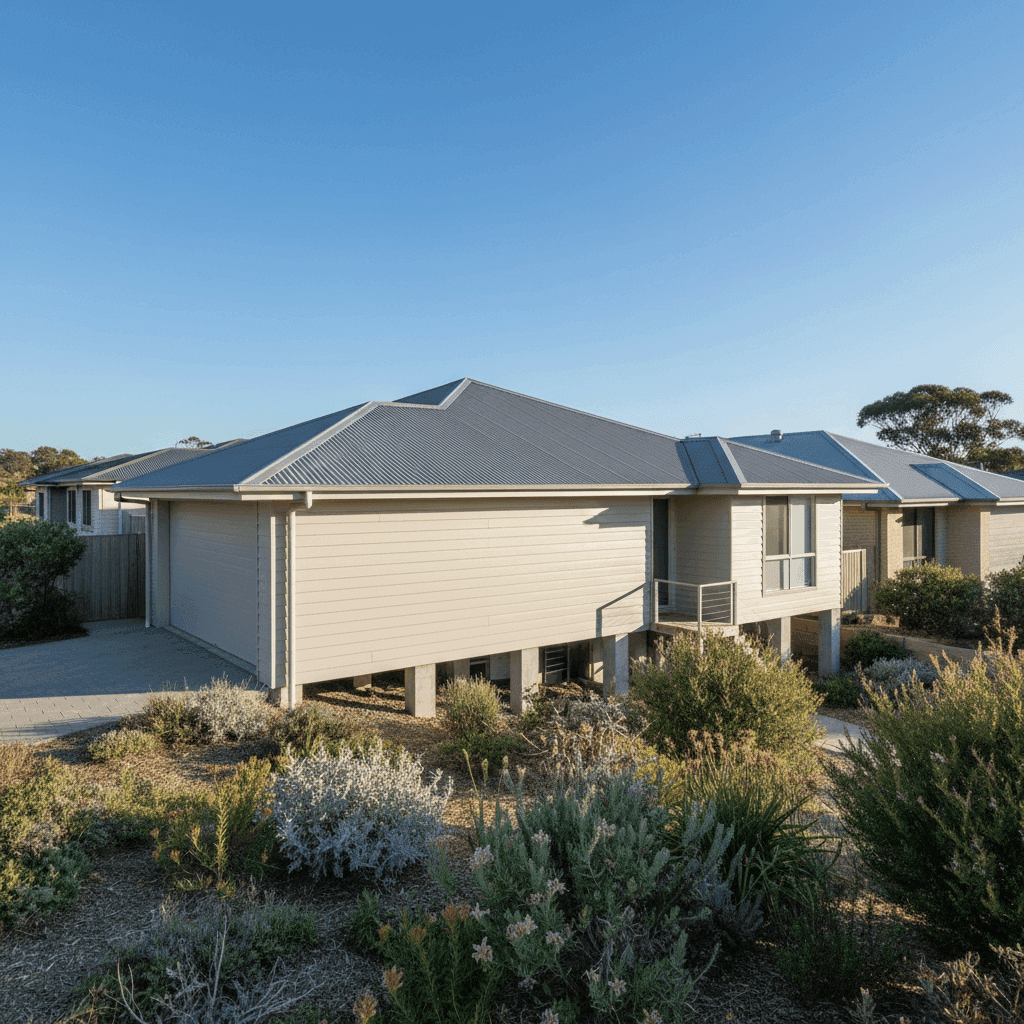
If you own a free standing home in Williamtown, NSW 2318, you might be wondering whether you're paying a fair price for your home and contents insurance — or whether there's a better deal waiting to be found. To help answer that question, we've taken a close look at a real insurance quote for a two-bedroom property in this suburb and compared it against local, state-wide, and national benchmarks.
---
Is This Quote Fair?
The quote in question comes in at $1,586 per year (or roughly $154 per month) for combined home and contents cover. The building is insured for $270,000, with $20,000 in contents cover. The building excess sits at $2,000 and the contents excess at $1,000.
Our price rating for this quote is FAIR — around average for the Williamtown area.
That assessment holds up when you look at the numbers. The suburb average premium is $2,134/yr and the median is $2,187/yr, meaning this quote comes in noticeably below both figures. It sits between the 25th percentile ($1,422/yr) and the 75th percentile ($2,710/yr), placing it in the middle of the market — not the cheapest available, but well within a reasonable range for the coverage provided.
In short, the homeowner isn't being overcharged, but there may still be room to sharpen the price with a bit of comparison shopping.
---
How Williamtown Compares
One of the more striking findings from this analysis is just how affordable Williamtown premiums tend to be relative to broader benchmarks. Here's how the numbers stack up:
| Benchmark | Average Premium |
|---|---|
| Williamtown (suburb average) | $2,134/yr |
| Port Stephens LGA average | $3,473/yr |
| NSW state average | $3,801/yr |
| National average | $2,965/yr |
The suburb average of $2,134 is 43% below the NSW state average of $3,801, and 28% below the national average of $2,965. Even the Port Stephens LGA average of $3,473 is significantly higher than what Williamtown homeowners typically pay, suggesting that properties within this specific suburb carry a relatively lower risk profile in the eyes of insurers.
For more detailed suburb-level data, visit the Williamtown insurance stats page. You can also explore NSW-wide home insurance statistics or compare against national home insurance averages.
It's worth noting that the suburb sample size used in this analysis is 13 quotes — a reasonably small dataset. While the figures are directionally useful, premiums can vary considerably depending on the individual property, insurer, and level of cover chosen.
---
Property Features That Affect Your Premium
Every property is different, and insurers assess a range of building characteristics when calculating your premium. Here's how the features of this particular home likely influence its pricing:
Vinyl Cladding Exterior
Vinyl cladding is a relatively common external wall material in homes built during the late 1990s. While it's lightweight and low-maintenance, some insurers view it as slightly higher risk than brick or weatherboard in certain scenarios — particularly around fire spread. That said, it's a well-understood material and generally doesn't attract significant premium loading.
Steel / Colorbond Roof
A Colorbond steel roof is generally viewed favourably by insurers. It's durable, fire-resistant, and holds up well in storm conditions — all of which can contribute to lower premiums compared to older roofing materials like terracotta tiles or asbestos sheeting.
Stump Foundation
Homes on stumps (also known as pier foundations) are common in coastal and semi-rural NSW. This construction style can be more vulnerable to certain types of damage — particularly flooding or storm surge — so insurers may factor this into their risk assessment. However, stumped homes also allow for better airflow beneath the floor, which can reduce moisture-related damage over time.
Timber / Laminate Flooring
Timber and laminate floors are susceptible to water damage, which can be a consideration in areas prone to storms or flooding. Homeowners should ensure their policy includes adequate flood and water damage cover.
Construction Year: 1998
A home built in 1998 is relatively modern in insurance terms. It would have been constructed under building codes that introduced improved standards for cyclone resistance and fire safety, which can work in the homeowner's favour when it comes to pricing.
Standard Fittings, No Pool or Solar
Standard-quality fittings keep the contents and building replacement value straightforward to assess. The absence of a pool, solar panels, or ducted climate control also simplifies the risk profile — fewer high-value or high-maintenance systems mean fewer potential claims.
---
Tips for Homeowners in Williamtown
Whether you're reviewing an existing policy or shopping for a new one, here are four practical steps to make sure you're getting the best value:
- Review your sum insured regularly. Building costs have risen significantly in recent years. A sum insured of $270,000 for a 105 sqm home may be adequate today, but it's worth recalculating your rebuild cost annually — especially given ongoing inflation in construction materials and labour.
- Consider your excess carefully. This policy carries a $2,000 building excess and a $1,000 contents excess. Opting for a higher excess is a common way to reduce your annual premium, but make sure the excess is an amount you could comfortably pay out of pocket in the event of a claim.
- Check your flood and storm cover. Williamtown is located near the Hunter River estuary and Port Stephens, making storm and flood cover particularly relevant. Read your Product Disclosure Statement (PDS) carefully to confirm what's included — flood cover is not always standard.
- Compare quotes before renewing. Insurers often offer better rates to new customers than to existing ones. Even if your current premium feels reasonable, running a comparison at renewal time is one of the simplest ways to save money without reducing your cover.
---
Ready to Compare Home Insurance in Williamtown?
Whether you're a first-time buyer or a long-time homeowner, it pays to shop around. CoverClub makes it easy to compare home and contents insurance quotes from a range of Australian insurers — all in one place.