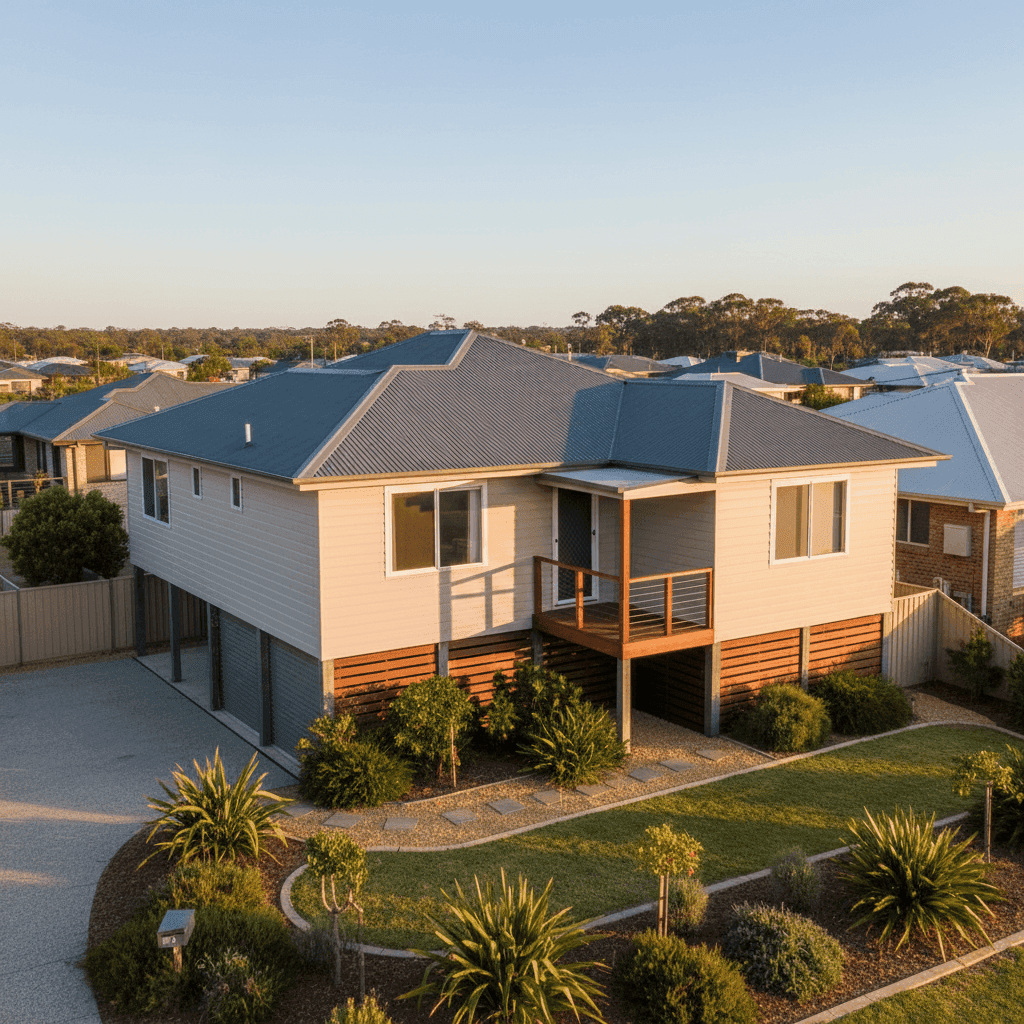
If you own a free standing home in Williamtown, NSW 2318, you've probably wondered whether you're paying a fair price for your home insurance — or leaving money on the table. This article breaks down a real home and contents insurance quote for a two-bedroom property in the area, compares it against local, state, and national benchmarks, and highlights the key factors that shape what you pay.
---
Is This Quote Fair?
The quote in question comes in at $1,586 per year (or roughly $154 per month) for combined home and contents cover, with a building sum insured of $280,000 and contents valued at $20,000. The building excess is $2,000, and the contents excess sits at $1,000.
Our price rating for this quote is FAIR — Around Average.
That label is worth unpacking. "Fair" doesn't mean you're getting a bargain, but it does mean you're not being gouged either. Based on suburb-level data for Williamtown (postcode 2318), the average premium in this area sits at $2,134 per year, with a median of $2,187. This quote lands comfortably below both figures — a positive sign.
The 25th percentile for the suburb is $1,422/yr, meaning roughly a quarter of comparable quotes come in cheaper. At $1,586, this policy is sitting just above that lower quartile, which is a reasonably competitive position. The 75th percentile reaches $2,710/yr, so there's significant headroom above this quote before things start looking expensive.
In short: this is a solid, mid-range result for Williamtown — not the cheapest available, but well below what many homeowners in the area are paying.
---
How Williamtown Compares
To put this quote in its proper context, it helps to zoom out and look at the broader insurance landscape.
| Benchmark | Average Premium |
|---|---|
| Williamtown (2318) suburb average | $2,134/yr |
| Port Stephens LGA average | $3,473/yr |
| NSW state average | $3,801/yr |
| National average | $2,965/yr |
The figures paint an interesting picture. Williamtown's suburb average of $2,134 is notably lower than the NSW state average of $3,801 — less than 60 cents in the dollar compared to the typical New South Wales homeowner. Even against the national average of $2,965, Williamtown comes out ahead.
Interestingly, the Port Stephens LGA average of $3,473 is considerably higher than the Williamtown suburb figure, suggesting that other parts of the local government area — potentially those with greater flood, storm surge, or bushfire exposure — are pulling that LGA number upward. Williamtown itself appears to be a relatively more insurable pocket within the broader region.
For this particular quote at $1,586, the savings compared to the NSW average alone are substantial — potentially over $2,200 per year. That's real money.
> Note: The suburb sample size for Williamtown is 13 quotes, which is a reasonably small dataset. Treat these averages as directional rather than definitive.
---
Property Features That Affect Your Premium
Every insurer prices risk differently, but certain property characteristics consistently influence what you'll pay. Here's how this home's features stack up:
Vinyl cladding external walls Vinyl cladding is generally viewed favourably by insurers compared to older materials like weatherboard or fibro (fibrous cement). It's resistant to rot, doesn't require painting, and holds up reasonably well in moderate weather conditions. That said, it can be more vulnerable to impact damage and extreme heat than brick veneer — something worth keeping in mind.
Steel/Colorbond roof A Colorbond steel roof is one of the better roof types from an insurance perspective. It's durable, fire-resistant, and performs well in high-wind events. Insurers tend to price Colorbond-roofed homes more competitively than those with terracotta tiles or older corrugated iron.
Stump foundations Homes on stumps (also called pier or post foundations) can attract slightly higher premiums than slab-on-ground homes due to the potential for subfloor moisture issues, pest damage, and the cost of re-stumping. However, they also offer better performance in minor flood events, since water can pass beneath the structure.
Timber/laminate flooring Timber and laminate floors are susceptible to water damage and can be costly to repair or replace, which can influence contents and building claim costs. Insurers factor this into their pricing.
Construction year: 1998 A home built in 1998 is relatively modern by Australian standards and would have been constructed under more stringent building codes than homes from earlier decades. This generally works in your favour from a risk assessment standpoint.
No pool, no solar panels, no ducted climate control The absence of a swimming pool removes a significant liability risk. No solar panels means one less potential source of electrical faults or roof penetration issues. Without ducted climate control, there's no large mechanical system to fail or cause water damage. Collectively, these absences keep the risk profile lean.
---
Tips for Homeowners in Williamtown
1. Review your sum insured annually Building costs have risen sharply across Australia in recent years. A sum insured of $280,000 for a 105 sqm home may be adequate today, but it's worth recalculating your rebuild cost each year — ideally using an independent building cost estimator — to make sure you're not underinsured.
2. Consider raising your excess to lower your premium With a $2,000 building excess already in place, you may have already made this trade-off. But if cashflow allows, some insurers offer meaningfully lower premiums in exchange for higher excesses. Run the numbers to see if it makes sense for your situation.
3. Check what's included in your contents cover At $20,000, your contents sum insured is on the modest side. Take a few minutes to walk through your home and mentally tally up the replacement cost of furniture, appliances, clothing, and valuables. Many Australians significantly underestimate their contents value — and discover the gap only when they need to make a claim.
4. Compare quotes before your renewal date Home insurance is a competitive market, and loyalty doesn't always pay. Set a reminder to shop around at least 30 days before your policy renews. Even a small amount of comparison shopping could save you hundreds of dollars a year — particularly given how much variation exists within the Port Stephens LGA.
---
Find a Better Deal with CoverClub
Whether you're happy with your current policy or suspect you could be paying less, it always pays to compare. CoverClub makes it easy to benchmark your home insurance against real quotes from across the market. Get a quote today and see how your premium stacks up — you might be surprised by what's available.