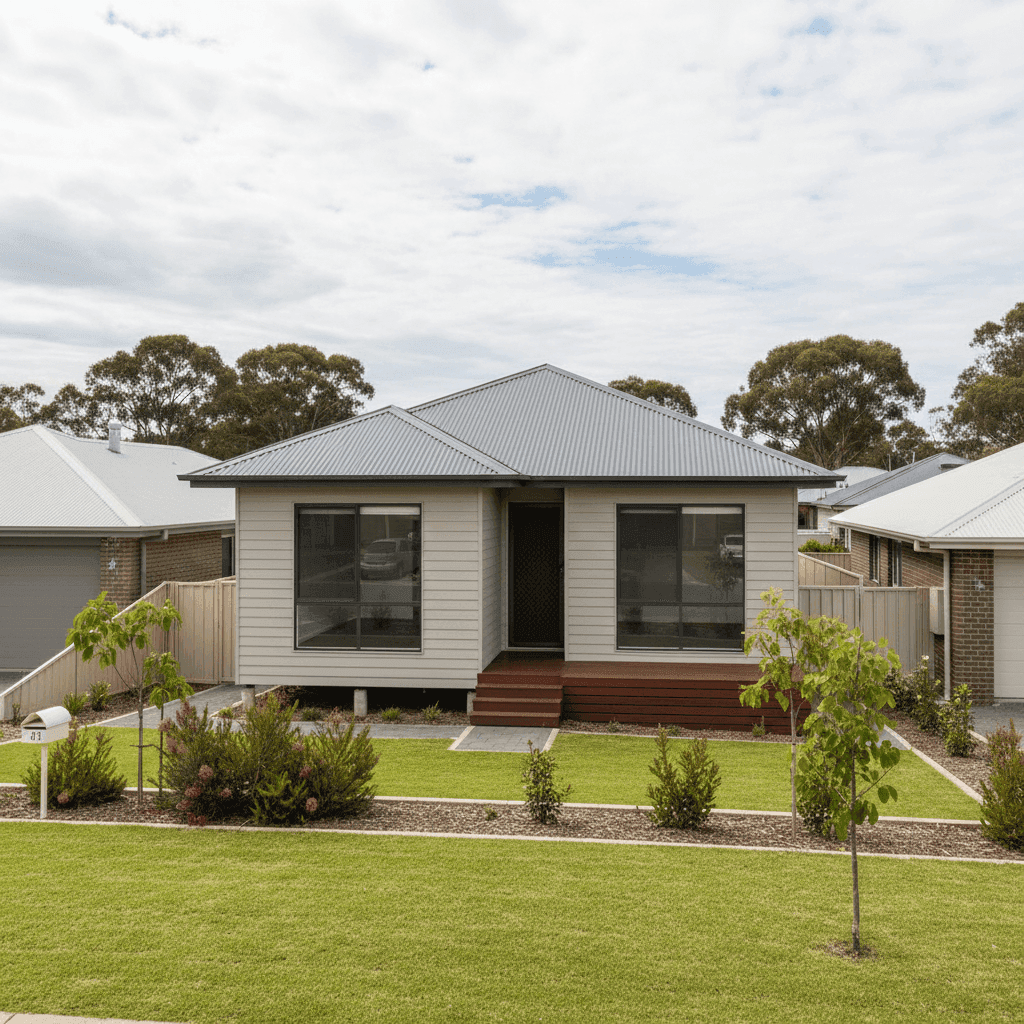
If you own a free standing home in Williamtown, NSW 2318, you're probably curious about whether you're paying a fair price for home insurance — or leaving money on the table. Williamtown is a small community in the Port Stephens local government area, nestled near the shores of Port Stephens and adjacent to RAAF Base Williamtown. It's a unique location with its own set of risk factors that insurers take into account when pricing cover. In this article, we break down a real home and contents insurance quote for a two-bedroom free standing home in the suburb, and compare it against local, state, and national benchmarks.
---
Is This Quote Fair?
The quote in question comes in at $1,596 per year (or $156/month) for combined home and contents cover, with a building sum insured of $318,000 and contents valued at $20,000. The building excess is $2,000 and the contents excess is $1,000.
Our price rating for this quote is FAIR — Around Average.
That assessment holds up well under scrutiny. The premium sits above the suburb's 25th percentile ($1,422/yr) but comfortably below the suburb average ($2,134/yr) and median ($2,187/yr). In other words, roughly half of comparable properties in Williamtown are paying more than this quote, and a meaningful portion are paying significantly more — the 75th percentile sits at $2,710/yr. So while this isn't the cheapest quote on the market, it's a reasonable outcome for the property's characteristics and location.
When you zoom out to the broader context, the value becomes even clearer. The NSW state average for home insurance is $3,801/yr, and the national average sits at $2,965/yr. This quote is well under both benchmarks, which is encouraging for the homeowner.
---
How Williamtown Compares
Understanding how Williamtown stacks up against wider benchmarks helps put any individual quote into perspective.
| Benchmark | Premium |
|---|---|
| This Quote | $1,596/yr |
| Williamtown Suburb Average | $2,134/yr |
| Williamtown Suburb Median | $2,187/yr |
| Port Stephens LGA Average | $3,116/yr |
| NSW State Average | $3,801/yr |
| NSW State Median | $3,410/yr |
| National Average | $2,965/yr |
| National Median | $2,716/yr |
The data tells an interesting story. Williamtown's suburb average ($2,134/yr) is notably lower than the Port Stephens LGA average ($3,116/yr), which in turn is lower than the NSW state average. This suggests that while the broader Hunter region and NSW as a whole face elevated insurance costs, Williamtown itself sits in a relatively more affordable pocket — at least based on the sample of quotes available.
It's worth noting that the suburb sample size here is 13 quotes, so these figures should be treated as indicative rather than definitive. That said, the directional trend is consistent: this quote is performing well relative to both local and state norms.
You can explore the full breakdown of insurance pricing for this postcode at our Williamtown suburb stats page, or compare across the state on our NSW insurance stats page. For a broader view, our national stats page shows how premiums vary right across Australia.
---
Property Features That Affect Your Premium
Every property is different, and insurers assess a range of building characteristics when calculating your premium. Here's how the features of this particular home likely influence its pricing:
Vinyl Cladding Exterior Vinyl cladding is a relatively common external wall material in Australian homes built in the 1990s. From an insurance perspective, it's generally viewed as a moderate-risk material — it's not as fire-resistant as brick veneer, but it's also lightweight and less prone to certain structural issues. Some insurers may apply a small loading for cladding homes, though this varies significantly between providers.
Steel/Colorbond Roof A Colorbond steel roof is widely regarded as one of the more insurer-friendly roofing materials in Australia. It's durable, fire-resistant, and performs well in high-wind conditions. This is likely a positive factor in keeping the premium competitive.
Stump Foundation Homes on stumps (also known as pier or post foundations) are common in NSW, particularly in older builds and coastal/flood-prone areas. This construction style can be a double-edged sword for insurance — it can reduce flood damage risk by elevating the floor level, but stumps themselves may require maintenance and can be a focus for insurers assessing structural integrity.
Timber/Laminate Flooring Timber and laminate floors are susceptible to water damage, which can be a consideration for contents and building claims alike. This may have a modest upward influence on the premium.
Ducted Climate Control The presence of ducted climate control adds to the replacement value of the home and is reflected in the building sum insured. It's a meaningful inclusion in the $318,000 building cover figure.
1998 Construction Year At around 26 years old, this home is neither brand new nor particularly aged. Homes of this era are generally well-understood by insurers, and construction standards from the late 1990s are reasonably robust. There's unlikely to be a significant age-related loading applied.
No Pool, No Solar Panels The absence of a pool and solar panels simplifies the risk profile slightly. Both features can add complexity and cost to a home insurance policy, so their absence may contribute to a cleaner, more straightforward premium.
---
Tips for Homeowners in Williamtown
Whether you're reviewing your current policy or shopping around for the first time, here are some practical steps worth considering:
1. Review your building sum insured regularly Construction costs have risen sharply across Australia in recent years. A sum insured of $318,000 for a 105 sqm home in Williamtown may be appropriate today, but it's worth recalculating your rebuild cost annually — particularly given the rising cost of labour and materials in the Hunter region. Underinsurance is one of the most common and costly mistakes homeowners make.
2. Compare quotes before renewing Insurance loyalty rarely pays off. Insurers frequently offer better pricing to new customers than to existing ones, so it's worth getting at least two or three competing quotes before your policy renews each year. A difference of several hundred dollars per year is common, as the spread in Williamtown's data clearly shows.
3. Consider your excess levels strategically This policy carries a $2,000 building excess and a $1,000 contents excess. Higher excesses generally translate to lower premiums, but make sure the excess is genuinely affordable if you need to make a claim. Review whether adjusting your excess could meaningfully shift your annual premium.
4. Check for PFAS-related considerations in your area Williamtown is located near RAAF Base Williamtown, an area that has been subject to PFAS (per- and poly-fluoroalkyl substances) contamination investigations. While this primarily affects land and water rather than building insurance directly, it's worth staying informed about how this may affect property values and any related insurance implications in the area.
---
Ready to Compare?
Whether this quote looks like a great deal or you think you could do better, the smartest move is to compare. At CoverClub, we make it easy to see what multiple insurers would charge for your specific property — no obligation, no hassle. Get a home insurance quote now and find out if you're getting the best deal available for your Williamtown home.