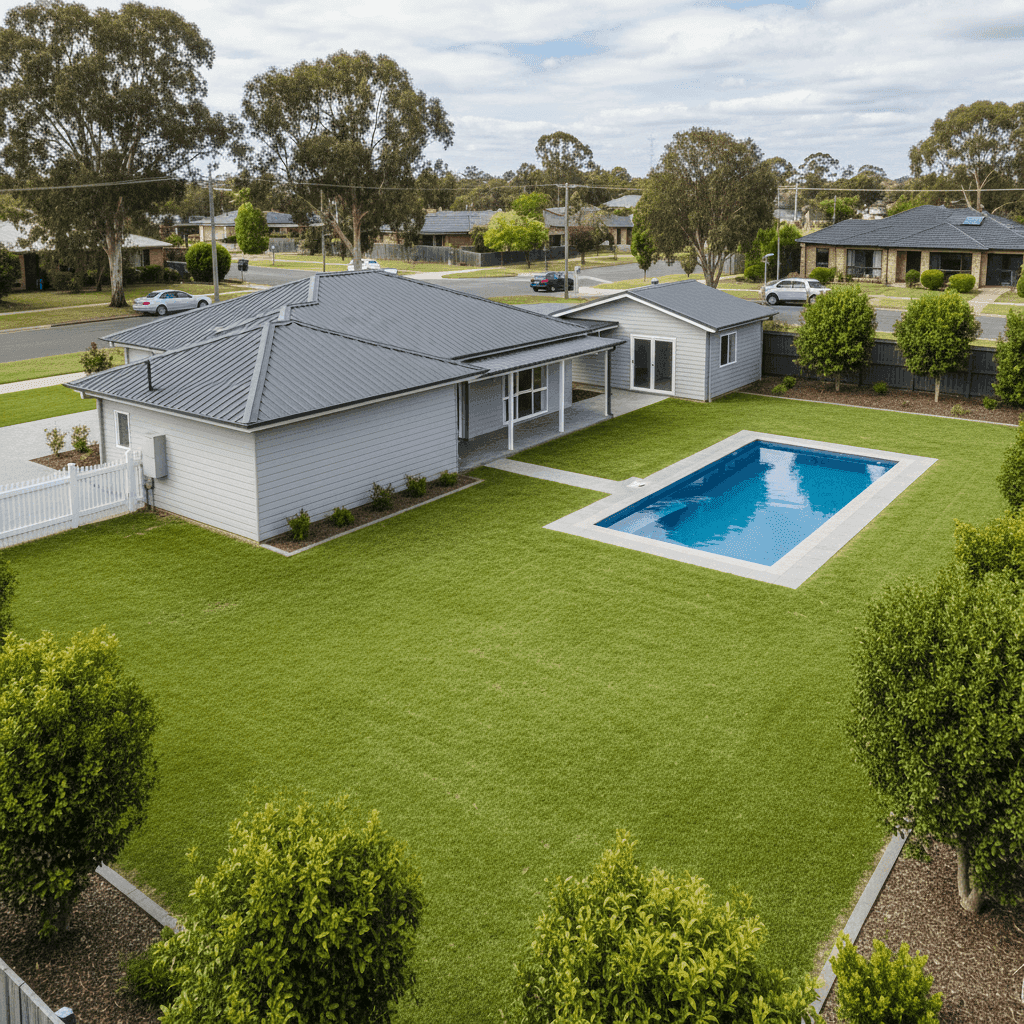
Willmot is a quiet residential suburb in Sydney's west, sitting within the City of Blacktown. Like much of Western Sydney, it's a predominantly owner-occupied area filled with established homes on generous blocks — exactly the kind of property this article examines. We're breaking down a real home and contents insurance quote for a four-bedroom, free-standing home in Willmot (postcode 2770), helping you understand what's driving the premium and whether it represents fair value.
---
Is This Quote Fair?
The annual premium for this property came in at $2,814 per year (or $275/month), covering a building sum insured of $532,000 and contents valued at $50,000. Both the building and contents excess are set at $1,000.
Our price rating for this quote is Expensive — above average for the area. That's not a snap judgement; it's based on comparing this premium against a sample of 16 quotes from the same suburb. The Willmot suburb average sits at $1,912/year, with a median of $1,822/year. This quote lands well above the 75th percentile of $2,367/year, meaning it's more expensive than roughly three-quarters of comparable quotes in the postcode.
That said, "expensive" doesn't automatically mean "wrong." Several features of this particular property — which we'll cover below — justify a higher-than-average premium. The key question for any homeowner is whether the price reflects genuine risk, or whether there's room to shop around.
---
How Willmot Compares
To put this quote in perspective, it helps to zoom out and look at the broader picture.
| Benchmark | Average Premium | Median Premium |
|---|---|---|
| Willmot (2770) | $1,912/yr | $1,822/yr |
| Blacktown LGA | $2,242/yr | — |
| NSW | $9,528/yr | $3,770/yr |
| National | $5,347/yr | $2,764/yr |
A few things stand out here. First, the NSW state average of $9,528/year is heavily skewed by high-risk and high-value properties — coastal homes, flood-prone areas, and prestige suburbs push that figure up considerably. The NSW median of $3,770/year is a more reliable benchmark, and this quote sits comfortably below it.
At the national level, the average is $5,347/year, again inflated by catastrophe-prone regions like Far North Queensland and coastal flood zones. The national median of $2,764/year is almost identical to this quote, suggesting that on a broader Australian scale, $2,814/year is roughly in line with what many homeowners pay.
Within the Willmot suburb specifically, however, this quote is on the pricier end. The Blacktown LGA average of $2,242/year also undercuts this premium, reinforcing the "above average" rating at a local level.
---
Property Features That Affect Your Premium
Insurance pricing is never one-size-fits-all. Insurers assess a combination of property characteristics, location risk factors, and cover levels to arrive at a premium. Here's how the specifics of this property play into the final figure.
Age and Construction
Built in 1960, this home is over 60 years old. Older properties typically attract higher premiums because ageing wiring, plumbing, and structural components carry a greater risk of failure or damage. The vinyl cladding exterior walls are worth noting — while durable and low-maintenance, some insurers view cladding differently to brick veneer, particularly when assessing fire spread risk.
The steel/Colorbond roof is actually a positive from an insurance perspective. Colorbond is highly regarded for its durability, resistance to fire embers, and longevity — it's one of the more insurer-friendly roofing materials available.
Foundation and Flooring
This property sits on stumps (also known as a pier-and-beam or raised foundation), which is common in older Australian homes. Stump foundations can be susceptible to movement, moisture, and termite activity over time, all of which can influence an insurer's risk assessment. The timber and laminate flooring is consistent with this era of construction and is straightforward to cover.
Pool and Granny Flat
The presence of a swimming pool adds liability exposure — pools are a known risk factor for injury claims, and their equipment (pumps, filters, surrounds) adds to the replacement cost. The granny flat is another significant factor; a secondary dwelling on the same property increases the overall insurable value and complexity of the policy, which typically flows through to a higher premium.
Ducted Climate Control
Ducted air conditioning is a higher-value fixture than split systems and contributes meaningfully to the building's replacement cost. At 205 sqm, this is a well-sized home, and the combination of ducted climate control and a granny flat helps explain why the $532,000 building sum insured — and the premium — sits where it does.
No Cyclone Risk
Willmot is not in a cyclone risk area, which is a meaningful saving compared to properties in Northern Australia. This keeps the premium lower than it might otherwise be for a property with similar features in a higher-risk climate zone.
---
Tips for Homeowners in Willmot
If you're looking to make sure you're getting the best value on your home insurance, here are four practical steps worth taking.
1. Compare quotes before renewing Loyalty doesn't always pay in insurance. Premiums can vary significantly between insurers for the same property and cover level. Use a comparison tool like CoverClub to benchmark your renewal quote against the market before automatically paying up.
2. Review your sum insured carefully Make sure your building sum insured reflects the actual cost to rebuild — not the market value of the property. Underinsurance is a common problem, particularly in older homes where construction costs have risen sharply. At the same time, being significantly over-insured will inflate your premium unnecessarily.
3. Maintain your stump foundation Older stump foundations benefit from regular inspections. Addressing issues like timber rot, subsidence, or pest damage early can prevent costly claims down the track — and some insurers may look more favourably on well-maintained properties when it comes to renewal pricing.
4. Ask about bundling discounts If you hold other insurance policies (car, landlord, life), check whether your insurer offers a multi-policy discount. Bundling home and contents cover — as this policy does — is already a common way to reduce the per-policy cost, but additional savings may be available.
---
Ready to Compare?
Whether you're a first-time buyer or a long-term Willmot resident, it always pays to shop around. CoverClub makes it easy to compare home and contents insurance quotes in one place, so you can see exactly where your premium sits relative to your neighbours and the broader market. Get a quote today and make sure you're not paying more than you need to.