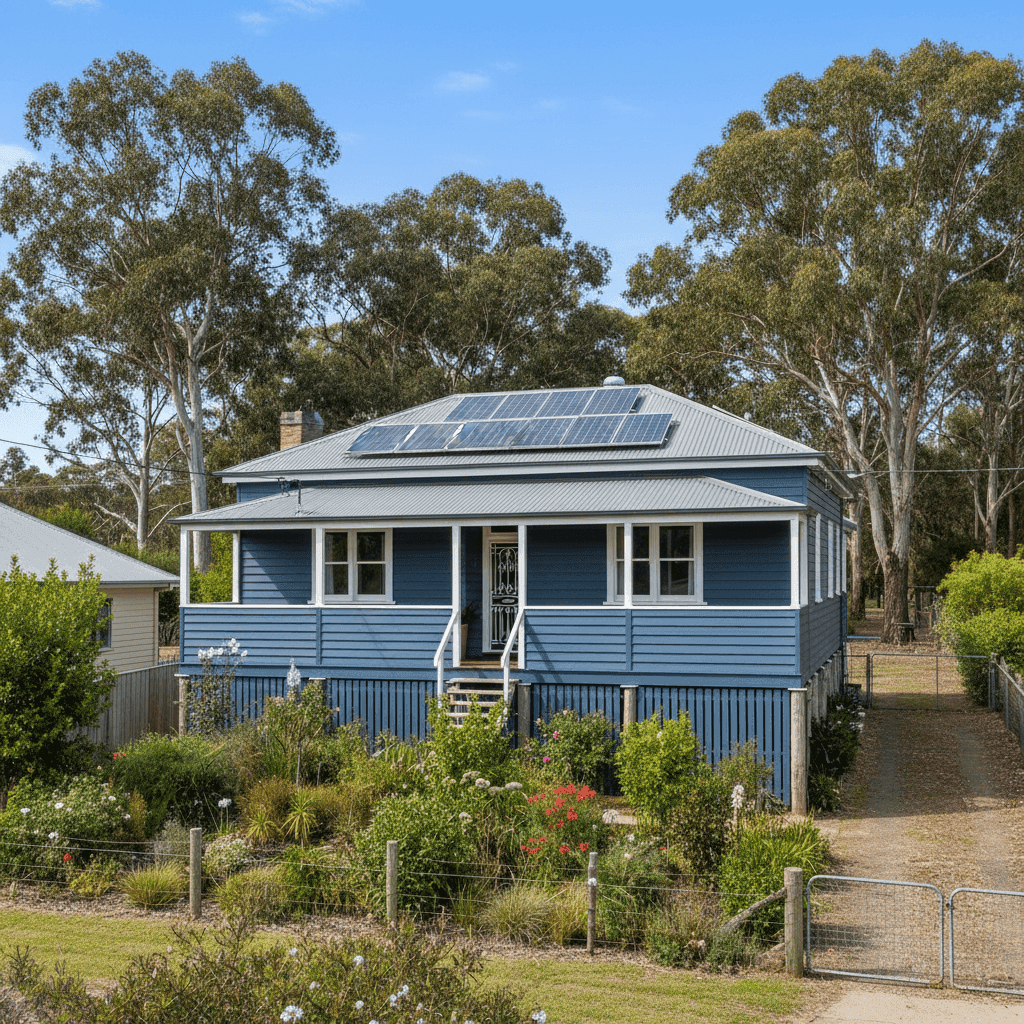
Winchelsea is a quiet country town in Victoria's Surf Coast hinterland, sitting along the Barwon River about an hour's drive south-west of Melbourne. It's the kind of place where classic weatherboard homes on stumped foundations still line the streets — a charming snapshot of regional Victoria's architectural heritage. But charm doesn't come cheap when it comes to insuring these older properties, and understanding what's driving your premium is the first step to making sure you're not overpaying.
This article breaks down a real home and contents insurance quote for a 4-bedroom, 1-bathroom free-standing home in Winchelsea (postcode 3241), compares it against local, state, and national benchmarks, and offers practical tips to help you get better value on your cover.
---
Is This Quote Fair?
The quote in question comes in at $3,020 per year (or $293/month) for combined home and contents cover, with a building sum insured of $800,000 and contents valued at $149,000. Both the building and contents excesses are set at $1,000.
Our price rating for this quote is Expensive — Above Average, and the data backs that up.
When compared against the Winchelsea suburb average of $1,407/year, this quote is more than twice the local average. Even against the suburb's 75th percentile — meaning 75% of comparable quotes come in below $1,600/year — this premium still sits nearly double that threshold.
That said, context matters. The sum insured here is $800,000 for the building alone, which is on the higher end and will naturally push the premium up. Contents cover of $149,000 also adds meaningful cost. If you're comparing this quote to neighbours with lower insured values, the gap may be partly explained by the coverage amounts rather than the insurer's pricing alone.
Still, a premium this far above the suburb median warrants scrutiny — and shopping around is strongly advisable.
---
How Winchelsea Compares
To put this quote in proper perspective, here's how the numbers stack up across different benchmarks:
| Benchmark | Average Premium | Median Premium |
|---|---|---|
| Winchelsea (3241) | $1,407/yr | $1,323/yr |
| LGA: Colac Otway | $2,576/yr | — |
| Victoria | $3,000/yr | $2,718/yr |
| National | $5,347/yr | $2,764/yr |
(Based on a sample of 44 quotes in the Winchelsea suburb.)
A few things stand out here. First, Winchelsea's local premiums are notably lower than the Victorian state average — suggesting the suburb is considered relatively low-risk by insurers in general. The LGA average for Colac Otway ($2,576/yr) is higher than the suburb average, indicating that some surrounding areas carry more risk (likely flood or bushfire-prone zones within the same council area).
At the state level, Victoria's average premium of $3,000/year means this particular quote is actually right in line with the broader Victorian market — it's the suburb-level comparison that makes it look expensive. Nationally, Australia's average sits at $5,347/year, driven upward by high-risk regions in Queensland and Western Australia, so this quote is well below that figure.
The takeaway: this quote is expensive for Winchelsea specifically, but not out of step with Victorian norms — particularly given the relatively high sum insured.
---
Property Features That Affect Your Premium
Several characteristics of this property are likely influencing the cost of cover:
Weatherboard timber construction is one of the most significant factors. Weatherboard homes are considered higher risk by insurers because timber is more susceptible to fire, rot, and storm damage than brick veneer or double-brick alternatives. Many older weatherboard homes also have maintenance quirks that can complicate claims.
Construction year: 1950 adds another layer of complexity. Homes built before modern building codes were introduced may have older wiring, plumbing, and structural elements that increase the likelihood — and cost — of claims. Insurers typically price older homes at a higher rate to account for these unknowns.
Stumped foundation is common for homes of this era and style, and while it offers good ventilation and some flood resilience, it can also be a concern for insurers if the stumps are original timber and showing signs of movement or deterioration.
Solar panels are a positive inclusion — many insurers cover solar panels under building insurance, but their presence does increase the replacement cost of the structure, which is factored into the building sum insured.
Ducted climate control similarly adds to the overall rebuild cost and contents value, contributing to a higher premium.
Elevated less than 1 metre is a relatively minor risk modifier, but it does confirm the property sits above natural ground level — typical for stumped homes — which can offer some protection in minor flood or storm surge events.
On the positive side, the steel/Colorbond roof is viewed favourably by insurers. Colorbond roofing is durable, fire-resistant, and less prone to storm damage than terracotta or concrete tiles, which can help moderate the premium.
---
Tips for Homeowners in Winchelsea
1. Review your building sum insured carefully An $800,000 building sum insured is substantial for a 214 sqm home in a regional Victorian town. Make sure this figure reflects the actual cost to rebuild — not the market value of the property. Overinsuring can lead to unnecessarily high premiums, while underinsuring leaves you exposed. Use a professional building cost estimator or ask your insurer how they calculated the figure.
2. Shop around and compare multiple quotes Given that this premium is more than double the suburb median, it's well worth getting competing quotes. Different insurers assess risk differently, particularly for older weatherboard homes — and the variation in pricing can be dramatic. Use CoverClub's free quote comparison tool to see what other insurers are offering for your property.
3. Consider your excess settings Both the building and contents excesses are set at $1,000. Opting for a higher voluntary excess — say $2,000 or $2,500 — can meaningfully reduce your annual premium. Just make sure the excess amount is something you could comfortably cover out of pocket if you needed to make a claim.
4. Maintain your weatherboard exterior Insurers may scrutinise the condition of older weatherboard homes at claim time. Keeping the exterior well-painted and sealed, ensuring gutters are clear, and addressing any signs of rot or pest damage not only protects your home but also demonstrates responsible ownership — which can support your claim if you ever need to make one.
---
Compare Your Options with CoverClub
Whether you're renewing your existing policy or shopping for the first time, it pays to compare. CoverClub makes it easy to see how your premium stacks up against what others in Winchelsea and across Victoria are paying — and to find a policy that gives you the right cover at a fair price. Get a quote today and see how much you could save.