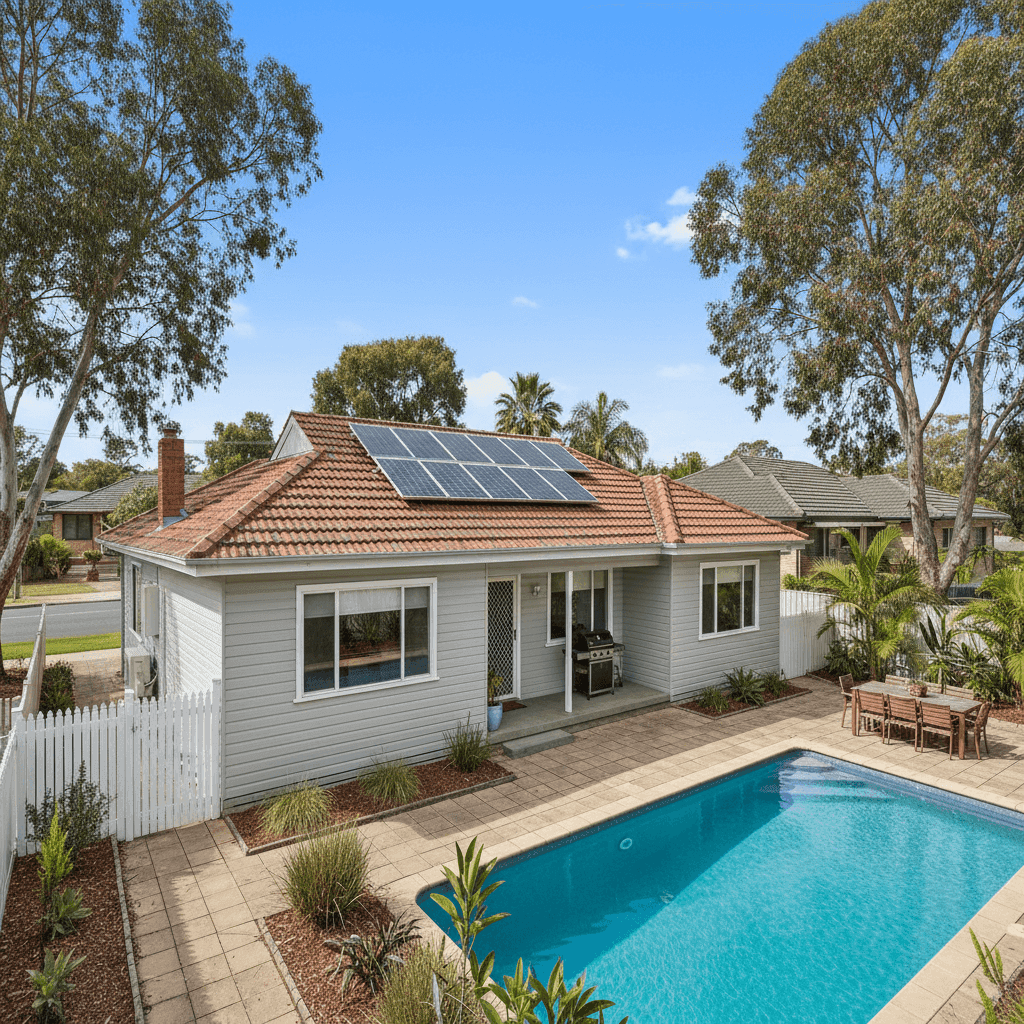
If you own a free standing home in Windale, NSW 2306, you already know the suburb offers a relaxed lifestyle on the southern shores of Lake Macquarie — but what does it cost to properly protect your property? We recently analysed a home and contents insurance quote for a five-bedroom, three-bathroom home in the area, and the results are worth unpacking. Whether you're shopping around for the first time or reviewing your current policy, understanding how your premium is calculated can save you hundreds of dollars a year.
---
Is This Quote Fair?
The quote in question came in at $6,269 per year (or $594 per month) for combined home and contents cover, with a building sum insured of $640,000 and contents valued at $50,000. Both the building and contents excess are set at $1,000.
Our price rating for this quote? Cheap — below average. That's genuinely good news for the homeowner.
To put it in context: the NSW state average premium sits at $9,528 per year, meaning this quote comes in roughly 34% below what the average NSW homeowner pays. Even against the national average of $5,347, this quote is competitive — though it does sit above the national figure, the higher building sum insured and the property's additional features (more on those shortly) more than justify the difference.
For a property of this size, age, and specification, a sub-$6,300 annual premium represents solid value. Homeowners in this bracket are getting meaningful coverage without being penalised excessively for the property's characteristics.
---
How Windale Compares
Drilling into the numbers reveals just how varied home insurance costs can be — even within a single state.
| Benchmark | Annual Premium |
|---|---|
| This Quote | $6,269 |
| LGA Average (Lake Macquarie) | $11,064 |
| NSW State Average | $9,528 |
| NSW State Median | $3,770 |
| National Average | $5,347 |
| National Median | $2,764 |
The standout figure here is the Lake Macquarie LGA average of $11,064 — this quote comes in at just over half that amount, which is a remarkable outcome. The LGA average is elevated by a range of factors across the broader Lake Macquarie area, including flood-prone pockets, older housing stock, and properties with high replacement values near the waterfront.
It's also worth noting that while the NSW and national medians are lower than this quote, medians reflect the midpoint of all policies — including smaller homes, units, and properties with minimal contents cover. For a 286 sqm, five-bedroom home with above-average fittings, a pool, solar panels, and ducted climate control, this quote is genuinely competitive.
You can explore more local data on the Windale suburb stats page or review broader NSW insurance trends for additional context.
---
Property Features That Affect Your Premium
Several characteristics of this property have a direct bearing on the premium calculated. Here's how the key features stack up:
Age and Construction (1953, Hardiplank/Hardiflex Walls, Tile Roof)
Built in 1953, this home is over 70 years old — a factor insurers scrutinise carefully. Older homes can carry higher risks related to ageing plumbing, electrical wiring, and structural wear. However, the use of Hardiplank Hardiflex cladding (a fibre cement product) is viewed favourably by many insurers. It's resistant to fire, rot, and impact — a meaningful upgrade over original timber weatherboard that many homes of this era still carry.
The tile roof is another positive signal. Tiles are durable, fire-resistant, and generally less prone to storm damage than corrugated iron or older fibrous cement sheeting, which helps moderate the premium.
Stumped Foundation
The property sits on stumps, which is common for homes of this era in NSW. While this foundation type allows for good underfloor ventilation and some flexibility in uneven terrain, it can be a flag for insurers in areas with reactive soils or termite activity. It's worth ensuring your policy clearly covers the subfloor structure.
Pool, Solar Panels, and Ducted Climate Control
These three features add both value and complexity to the risk profile. A swimming pool increases liability exposure and adds to the replacement cost of the property. Solar panels represent a significant capital asset on the roof — typically valued between $8,000 and $20,000 for a residential system — and need to be explicitly covered under the building sum insured. Ducted climate control systems are expensive to repair or replace and should be factored into your building sum insured calculations.
The building sum insured of $640,000 for a 286 sqm home equates to roughly $2,238 per sqm — a reasonable figure for a home with above-average fittings, though homeowners should periodically reassess this to account for rising construction costs.
Above-Average Fittings
The property is rated as having above-average fittings quality, which typically means higher-spec kitchens, bathrooms, and fixtures. This raises the cost to rebuild or repair, and insurers price accordingly. It's one reason why a blanket "average" sum insured can leave well-appointed homes dangerously underinsured.
---
Tips for Homeowners in Windale
Getting a competitive premium is only part of the equation. Here are four practical steps to make sure you're both well-covered and not overpaying:
- Review your building sum insured annually. Construction costs in NSW have risen sharply in recent years. The cost to rebuild a 286 sqm home with above-average finishes could easily exceed $640,000 in today's market. Use a quantity surveyor or your insurer's rebuild calculator to verify your sum insured each renewal.
- Confirm solar panels and pool equipment are explicitly covered. Not all policies automatically include solar panel systems or pool pumps and filtration equipment under building cover. Check your Product Disclosure Statement (PDS) carefully, and ask your insurer to confirm in writing if you're unsure.
- Ask about discounts for security and safety features. Homes with monitored alarms, deadbolts, and fire detection systems often attract premium discounts. If you've upgraded your home's security since your last renewal, let your insurer know — it could reduce your premium.
- Compare at renewal, not just at sign-up. The insurance market shifts constantly. A quote that was competitive two years ago may no longer be the best available. Using a comparison platform like CoverClub at each renewal ensures you're not paying a loyalty tax for staying with the same provider.
---
Ready to Compare?
Whether you're a Windale homeowner reviewing your existing cover or exploring options for the first time, comparing quotes is the single most effective way to ensure you're getting fair value. Get a home insurance quote through CoverClub and see how your current premium stacks up against the market — it takes just a few minutes and could save you significantly.