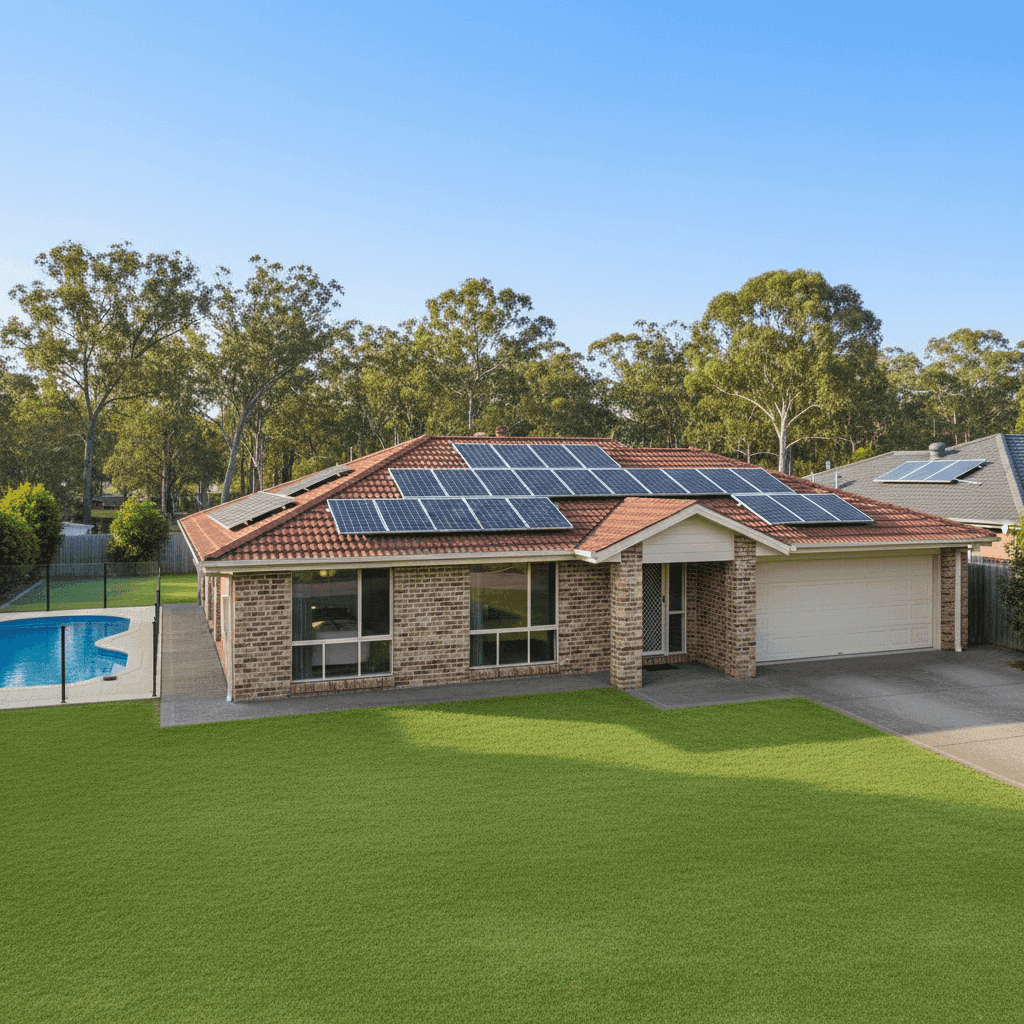
If you own a free standing home in Windaroo, QLD 4207, you're probably wondering whether what you're paying for home insurance is fair — or whether you're leaving money on the table. This article breaks down a real home and contents insurance quote for a 4-bedroom, 2-bathroom brick veneer property in Windaroo, comparing it against local, state, and national benchmarks so you can see exactly where it sits in the market.
---
Is This Quote Fair?
The quote in question comes in at $1,920 per year (or roughly $196/month) for combined home and contents cover, with a building sum insured of $600,000 and contents valued at $60,000. The building excess is $3,000 and the contents excess is $1,000.
Our price rating for this quote? Cheap — below average. That's genuinely good news for the homeowner.
To put that in perspective, the average home insurance premium across Windaroo sits at $3,926 per year, meaning this quote is roughly 51% below the suburb average. Even compared to the suburb's 25th percentile — the point at which only one in four quotes come in cheaper — the suburb benchmark is $2,657/yr. This quote still undercuts that figure by a meaningful margin, placing it firmly in the most competitive tier of pricing available in the area.
For a property with a pool, solar panels, and a relatively generous building sum insured, securing cover at this price point is a strong outcome.
---
How Windaroo Compares
Understanding how Windaroo fits into the broader insurance landscape helps contextualise just how competitive this quote really is. You can explore the full data on the Windaroo suburb stats page.
| Benchmark | Premium |
|---|---|
| This quote | $1,920/yr |
| Windaroo suburb average | $3,926/yr |
| Windaroo suburb median | $3,587/yr |
| QLD state average | $9,129/yr |
| QLD state median | $3,903/yr |
| Gold Coast LGA average | $8,161/yr |
| National average | $5,347/yr |
| National median | $2,764/yr |
A few things stand out here. First, Queensland's state average of $9,129/yr is extraordinarily high — more than double the national average of $5,347/yr. This is largely driven by the state's exposure to extreme weather events, including cyclones in the far north, flooding across inland and coastal regions, and storm damage throughout South East Queensland. You can dig into the full QLD insurance stats here or browse national averages for further context.
The Gold Coast LGA average of $8,161/yr also reflects the elevated risk profile of the broader region — coastal proximity, storm surge exposure, and high property values all push premiums up. Windaroo, sitting in the southern Gold Coast corridor, benefits from being slightly further inland and less exposed to some of the coastal risk factors that drive premiums skyward in beachside suburbs.
At $1,920/yr, this quote sits well below every single benchmark in the table above — including the national median of $2,764/yr.
---
Property Features That Affect Your Premium
Several characteristics of this property influence how insurers assess and price the risk.
Brick veneer construction is generally viewed favourably by insurers. It offers solid structural integrity and reasonable resistance to fire and impact compared to lighter cladding materials. Combined with a tiled roof, which tends to outperform Colorbond or corrugated iron in terms of longevity and insurer perception, the construction profile of this home is a positive risk signal.
The slab foundation is standard for Queensland homes of this era and doesn't typically attract loading from insurers — though it's worth noting that slab homes can be more vulnerable to certain types of ground movement in specific soil conditions.
The 1989 construction year places this home in a cohort that is mature but not excessively aged. Homes from this era may have older plumbing and electrical systems, which can be a factor in claims for water damage or fire. Keeping these systems well-maintained is important both for safety and for ensuring claims aren't disputed on maintenance grounds.
The swimming pool is a feature that some insurers factor into liability assessments. Pool-related liability — particularly if a third party is injured on your property — is typically covered under the legal liability component of a home insurance policy, but it's worth confirming the specifics with your insurer.
Solar panels are increasingly common on Queensland rooftops, and most standard home insurance policies will cover them as a fixed fixture of the building. However, coverage terms vary — some policies cover panels for accidental damage and storm, while others may exclude certain scenarios. Always check the Product Disclosure Statement (PDS) to confirm.
The 139 sqm building size is modest for a 4-bedroom home, which may partly explain the competitive premium. A smaller footprint generally means a lower rebuild cost, even if the sum insured is set at $600,000 to account for construction costs, site clearance, and professional fees.
---
Tips for Homeowners in Windaroo
1. Review your sum insured regularly Building costs in South East Queensland have risen significantly over recent years. A sum insured set even two or three years ago may no longer reflect the true cost to rebuild your home. Use a building cost calculator or speak to a quantity surveyor to make sure you're not underinsured.
2. Confirm your solar panels are covered Check your policy's PDS to verify that your solar system is explicitly covered for storm damage, hail, and accidental breakage. Some policies treat panels as contents rather than building fixtures, which can affect how — and whether — a claim is paid.
3. Understand your pool liability obligations Queensland has strict pool safety regulations, and maintaining a compliant pool fence and safety certificate is not just a legal requirement — it can also support your position in the event of a liability claim. Non-compliance could complicate a claim outcome.
4. Consider the trade-off on your excess The building excess on this policy is $3,000, which is on the higher side. A higher excess typically reduces your premium, but make sure you're comfortable covering that amount out of pocket in the event of a claim. If cash flow is a concern, it may be worth pricing a lower excess to see how it affects the annual cost.
---
Compare Home Insurance Quotes in Windaroo
Whether you're renewing your existing policy or shopping around for the first time, it pays to compare. Premiums in Windaroo — and across Queensland — can vary dramatically between insurers for the same property. The quote analysed here is a strong result, but the only way to know if you're getting the best deal is to see what else is available.
Get a home insurance quote at CoverClub and find out how your property compares in minutes.