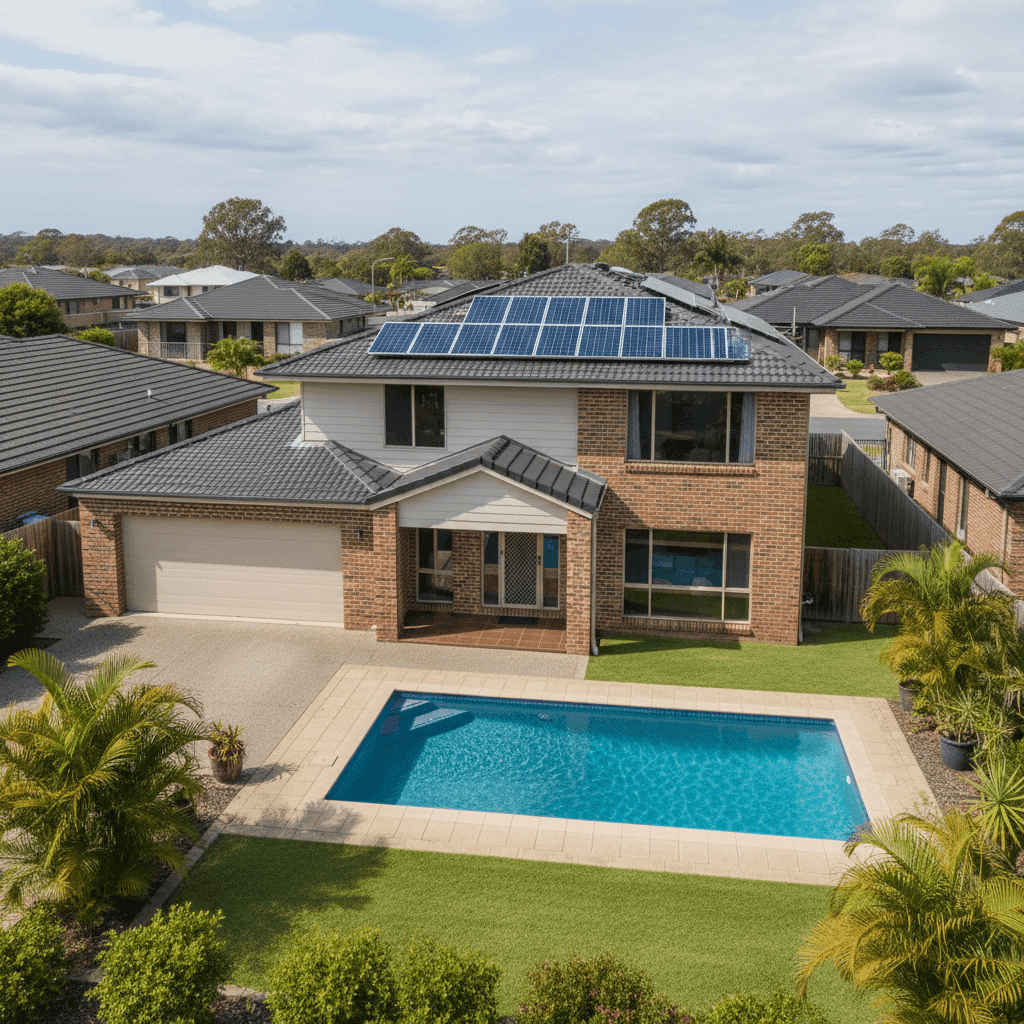
Windaroo is a quiet residential suburb in Brisbane's southern corridor, sitting within the Gold Coast LGA and offering the kind of relaxed lifestyle that draws families to South East Queensland. If you own a free-standing home here — or you're thinking of buying one — understanding what home and contents insurance should cost is an important part of protecting your investment. This article breaks down a real quote for a 3-bedroom, 2-bathroom brick veneer home in Windaroo (postcode 4207), compares it against state and national benchmarks, and offers practical tips to help you get the best value cover.
---
Is This Quote Fair?
The annual premium for this property came in at $2,634 per year (or $258 per month), covering both building (sum insured: $770,000) and contents ($200,000). CoverClub's pricing engine rates this as CHEAP — below average — which is genuinely good news for the homeowner.
To put that in perspective: the Queensland state average sits at $4,547 per year, and the state median is $3,931. That means this quote is roughly 42% below the QLD average and about 33% below the state median. Even against the national average of $2,965 and national median of $2,716, this premium holds up well — coming in below both figures.
For a home insured to $770,000 with $200,000 in contents cover, paying $2,634 annually represents strong value. Of course, a lower premium always warrants a careful read of the policy's terms — particularly around the excess structure, which we'll touch on shortly.
---
How Windaroo Compares
While suburb-level data isn't available for Windaroo specifically, we can draw meaningful comparisons using broader datasets. You can explore available Windaroo insurance stats here.
| Benchmark | Annual Premium |
|---|---|
| This Quote | $2,634 |
| National Median | $2,716 |
| National Average | $2,965 |
| QLD State Median | $3,931 |
| QLD State Average | $4,547 |
| Gold Coast LGA Average | $5,494 |
The Gold Coast LGA figure is particularly striking — at $5,494 per year, the local government area average is more than double this quote. The Gold Coast encompasses a wide range of properties, from coastal beachfront homes exposed to storm surge and cyclone-adjacent risk, to high-value hinterland estates. Windaroo, sitting further inland and at a more modest elevation, benefits from a comparatively lower risk profile than many of its LGA neighbours. This geographic advantage clearly plays a role in keeping premiums competitive.
Queensland as a whole carries elevated insurance costs due to its exposure to extreme weather events — cyclones in the north, flooding in river catchments, and severe storms across the southeast. The fact that this Windaroo property sits well below both the state average and the LGA average suggests the suburb's risk characteristics are working in the homeowner's favour.
---
Property Features That Affect Your Premium
Several characteristics of this property influence how insurers price the risk:
Brick Veneer Construction
Brick veneer walls are generally well-regarded by insurers. While not as robust as double brick, brick veneer offers good fire resistance and structural durability compared to lightweight cladding or weatherboard. This tends to attract more favourable underwriting treatment.
Tiled Roof
Terracotta or concrete tile roofs are a standard choice across Queensland and are considered relatively low-risk by insurers — they're durable, fire-resistant, and widely understood by assessors. A tile roof in reasonable condition is unlikely to attract a loading on your premium.
Slab Foundation
A concrete slab foundation is the most common construction type in Queensland and is generally viewed neutrally by insurers. It doesn't carry the same subsidence concerns as some pier-and-beam foundations, which can be a positive factor.
Built in 1985
At around 40 years old, this home is old enough that insurers may factor in the age of plumbing, electrical systems, and roofing materials. That said, 1985-era homes are extremely common across Queensland's suburbs and well within the comfort zone of most insurers — particularly if the property has been maintained or updated over the years.
Swimming Pool
A pool adds to the replacement cost of the property and is factored into the building sum insured. It can also introduce liability considerations under some policies. Make sure your policy explicitly covers pool infrastructure, including pumps, filtration equipment, and fencing.
Solar Panels
Solar panels are an increasingly common feature on Queensland homes, but they're not automatically covered under all building policies. It's worth confirming with your insurer whether your panels — including inverters and mounting hardware — are included in your sum insured or require a separate endorsement.
Standard Fittings
With standard-quality fittings throughout, this home avoids the premium loadings that can come with high-end fixtures, imported tiles, or custom joinery. Standard fittings are straightforward to value and replace, which keeps the sum insured — and therefore the premium — more predictable.
No Cyclone Risk
Windaroo falls outside designated cyclone risk zones, which is a meaningful factor in Queensland. Properties in cyclone-rated areas can attract significant premium loadings, so sitting outside that zone is a genuine cost advantage.
---
Tips for Homeowners in Windaroo
1. Review Your Building Sum Insured Regularly
Construction costs have risen sharply across Queensland in recent years. A sum insured of $770,000 for a 169 sqm home works out to roughly $4,556 per square metre — which is on the higher end for a standard finish, but not unreasonable given current building costs. Use a building cost calculator annually to make sure you're not underinsured (or over-insured and paying unnecessarily).
2. Confirm Solar Panel Coverage
Given the solar installation on this property, contact your insurer directly to confirm exactly what's covered. Some policies treat panels as part of the building; others require them to be listed separately. Don't assume — get it in writing.
3. Understand Your Excess Structure
This policy carries a $3,000 building excess and a $1,000 contents excess. The building excess is on the higher side, which is part of why the premium is competitive. Make sure you're comfortable covering that out-of-pocket cost in the event of a claim — particularly for weather-related events like storm damage.
4. Compare at Renewal Time
Even with a below-average premium, it pays to shop around at renewal. Insurers regularly reprice their books, and a policy that's cheap today may not be the best value in 12 months. Compare quotes at CoverClub to benchmark your renewal offer against the market before you commit.
---
Find the Right Cover for Your Home
Whether you're renewing an existing policy or insuring a Windaroo property for the first time, comparing quotes is the single most effective way to ensure you're getting fair value. CoverClub makes it easy to benchmark your premium against real market data — so you know exactly where you stand. Get a quote today and see how your home stacks up.