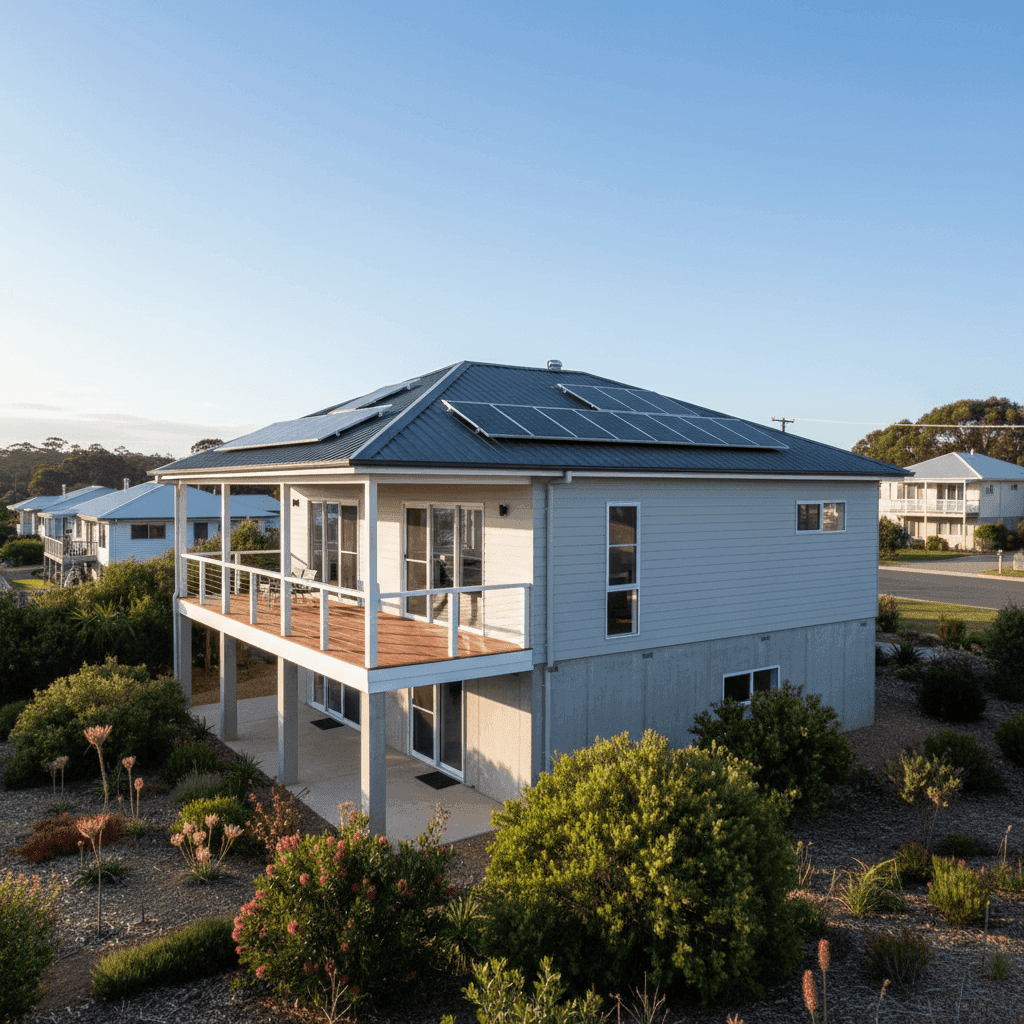
Windy Harbour is a small coastal locality tucked along the southern edge of Western Australia, known for its rugged shoreline, holiday shacks, and the kind of wild weather its name promises. Insuring a free standing home in this area comes with its own set of considerations — and if you've recently received a quote, you may be wondering whether what you're paying is reasonable. This article breaks down a real home and contents insurance quote for a 3-bedroom, 1-bathroom free standing home in Windy Harbour (WA 6262), and puts it in context against state and national benchmarks.
---
Is This Quote Fair?
The annual premium for this property comes in at $6,019 per year (or $577/month), covering a building sum insured of $800,000 and contents valued at $126,000, each with a $1,000 excess.
Our price rating for this quote is Expensive — above average. That assessment holds up when you look at the numbers side by side:
| Benchmark | Annual Premium |
|---|---|
| This Quote | $6,019 |
| WA State Average | $2,811 |
| WA State Median | $2,127 |
| National Average | $5,347 |
| National Median | $2,764 |
Even against the national average — which is already elevated compared to most state figures — this quote sits $672 above what Australian homeowners pay on average. Compared to the WA state average, it's more than double.
That said, context matters. This is a combined home and contents policy with a substantial building sum insured of $800,000. High building replacement values are one of the most significant drivers of premium cost, and a coastal location like Windy Harbour introduces environmental risk factors that insurers price carefully. Still, the gap is wide enough to warrant shopping around.
---
How Windy Harbour Compares
Unfortunately, there isn't enough localised data available to provide a suburb-level average for Windy Harbour specifically — it's a small, sparsely populated area, which makes granular comparisons difficult. You can check the Windy Harbour suburb insurance stats as more data becomes available over time.
What we can say with confidence is that WA as a state sits well below the national average for home insurance premiums. The WA state average of $2,811 is notably lower than the national average of $5,347, suggesting that Western Australian homeowners — in aggregate — enjoy relatively competitive pricing. However, that picture shifts considerably for coastal and regional properties, where risk profiles diverge sharply from metro norms.
Windy Harbour's remote coastal setting likely places it in a higher-risk category for insurers, factoring in exposure to strong winds, storm surge potential, and the logistical cost of rebuilding in a regional area. These elements can push premiums well above both state and national averages, even when cyclone risk is not formally designated.
---
Property Features That Affect Your Premium
Several characteristics of this property have a meaningful impact on what insurers charge. Here's how the key features stack up:
Hardiplank / Hardiflex External Walls
Fibre cement cladding like Hardiplank and Hardiflex is generally viewed favourably by insurers. It's non-combustible, resistant to rot and moisture, and holds up well in coastal environments. This material choice likely has a neutral-to-positive effect on the premium.
Steel / Colorbond Roof
Colorbond steel roofing is one of the most insurer-friendly roofing materials available in Australia. It's durable, fire-resistant, and performs well in high-wind conditions. This is a genuine premium advantage for this property.
Elevated Foundation (At Least 1 Metre)
Being elevated by at least a metre introduces some nuance. On one hand, elevation can reduce flood and storm surge risk — a clear benefit in a coastal setting. On the other hand, elevated homes can be more expensive to rebuild due to the additional structural complexity, which may push up the building sum insured and, in turn, the premium.
Solar Panels
Solar panels add replacement value to a property and introduce some risk (particularly fire risk from inverter faults). Most insurers cover them under building insurance, but their presence can nudge premiums upward slightly.
Ducted Climate Control
Ducted air conditioning systems are a higher-value fixed asset and are typically covered under building insurance. Like solar panels, they contribute to the overall replacement cost, which feeds into the building sum insured calculation.
Slab Foundation & Timber/Laminate Flooring
A concrete slab foundation is a stable, low-risk base that insurers tend to view positively. Timber and laminate flooring, while attractive, can be more susceptible to water damage — something worth keeping in mind for a coastal property where moisture ingress is a real concern.
---
Tips for Homeowners in Windy Harbour
1. Review your building sum insured regularly With a sum insured of $800,000, it's important to ensure this figure accurately reflects current rebuilding costs — not just the market value of the property. Construction costs have risen significantly in regional WA in recent years. Underinsurance is a real risk, but overinsurance means you're paying more premium than necessary. Consider a professional building valuation every few years.
2. Ask about excess options Both the building and contents excess on this policy sit at $1,000. Opting for a higher voluntary excess — say $2,500 — can meaningfully reduce your annual premium. If you have the financial buffer to cover a larger out-of-pocket cost in the event of a claim, this trade-off is often worthwhile.
3. Bundle strategically, but compare separately Combined home and contents policies can offer convenience, but it's worth getting separate quotes for building-only and contents-only cover to see whether bundling is actually saving you money. Some insurers price these products very differently.
4. Don't assume loyalty pays If this policy is with your existing insurer and you haven't shopped around recently, there's a good chance you could find a more competitive rate. The $672 gap between this quote and the national average is significant — and in a market with multiple insurers competing for coastal property business, comparison shopping can deliver real savings.
---
Compare Quotes and Take Control of Your Premium
Whether you're a permanent resident or a holiday homeowner in Windy Harbour, paying above the odds for home insurance isn't inevitable. CoverClub makes it easy to compare quotes from multiple insurers in one place, so you can see exactly what's available for your property — and make a genuinely informed decision.
Get a home insurance quote today at CoverClub and find out if you could be paying less.