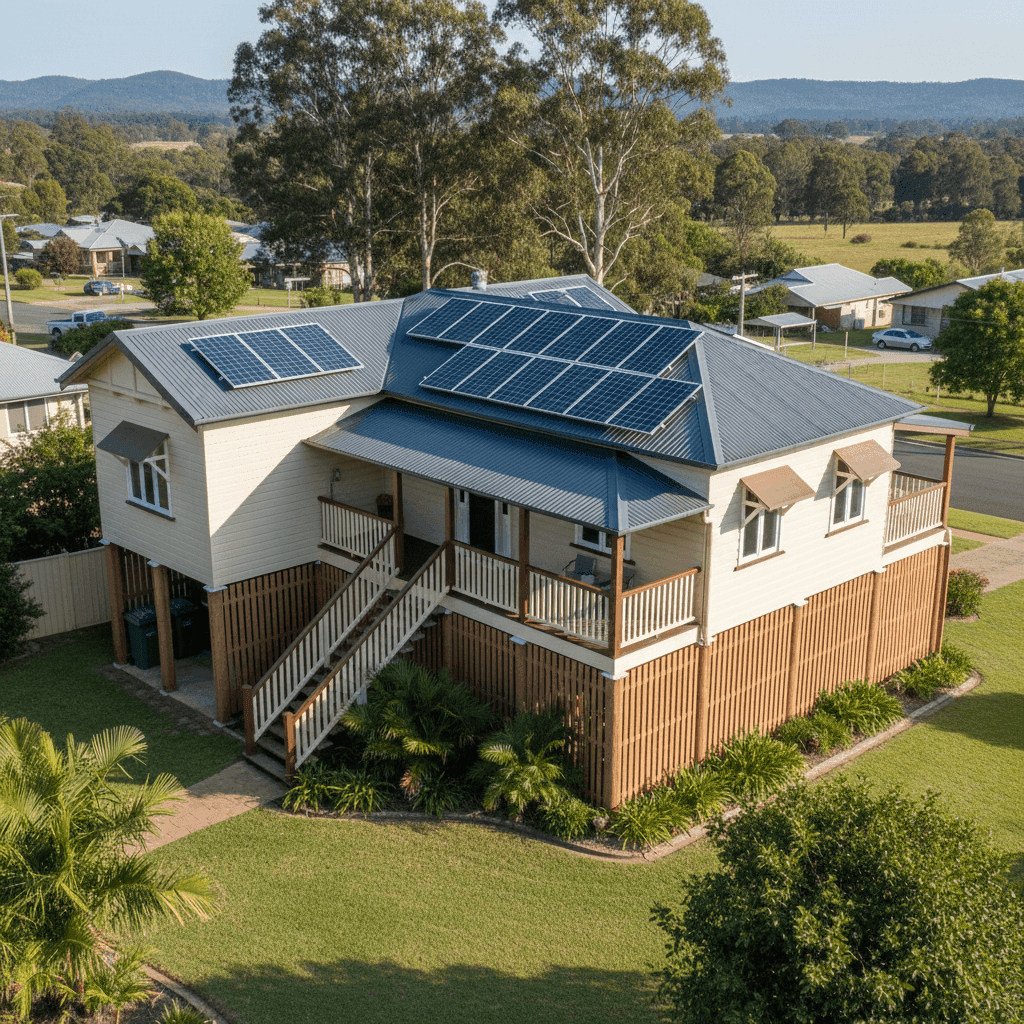
Withcott is a quiet residential locality nestled in the Lockyer Valley, sitting at the foot of the Great Dividing Range just west of Toowoomba. It's a region that attracts homeowners who value space, greenery, and a relaxed semi-rural lifestyle — but like anywhere in Queensland, getting the right home insurance at the right price matters. This article breaks down a real building insurance quote for a three-bedroom, two-bathroom free-standing home in Withcott (postcode 4352), helping you understand what's driving the premium and whether it represents good value.
---
Is This Quote Fair?
The quote in question comes in at $2,486 per year (or $231 per month) for building-only cover, with a $1,000 excess and a sum insured of $847,000. Our price rating for this quote is FAIR — around average.
That assessment is backed up by the numbers. The suburb average for Withcott sits at $2,569 per year, meaning this quote comes in slightly below what most comparable properties in the area are paying. It also falls comfortably within the interquartile range for the suburb — between the 25th percentile of $2,242 and the 75th percentile of $2,904 — which suggests it's a genuinely competitive result rather than an outlier in either direction.
In short, while there may be room to find a slightly cheaper option, this quote is solidly positioned and reflects a reasonable market rate for this type of property in this location.
---
How Withcott Compares
To put this quote in broader context, it's worth looking at how Withcott's insurance costs stack up against Queensland as a whole and the national picture.
| Benchmark | Average Premium | Median Premium |
|---|---|---|
| Withcott (4352) | $2,569/yr | $2,569/yr |
| LGA (Goondiwindi region) | $3,295/yr | — |
| Queensland | $4,547/yr | $3,931/yr |
| National | $2,965/yr | $2,716/yr |
The contrast with Queensland's state average is striking. At $4,547 per year, the average QLD premium is nearly double what this Withcott homeowner is paying. That gap is largely explained by the fact that much of Queensland — particularly coastal and far-north regions — carries significant cyclone, flood, and storm risk, which pushes premiums up dramatically. Withcott, situated inland and outside designated cyclone risk zones, benefits from a more moderate risk profile.
Interestingly, this quote also sits below the national average of $2,965 per year, which is a positive sign. It suggests that despite Queensland's reputation for high insurance costs, well-located inland properties can still attract competitive premiums. The LGA average of $3,295 per year is also worth noting — the Withcott result comes in meaningfully below that figure, which is encouraging.
---
Property Features That Affect Your Premium
Several characteristics of this particular property influence how insurers assess and price the risk.
Weatherboard Timber Walls
Weatherboard wood external walls are a classic feature of older Queensland homes, but this property was built in 2016, meaning the construction is relatively modern. While timber-clad homes can carry a slightly higher fire risk than brick veneer, the newer build date means the materials and workmanship are likely to meet contemporary building standards, which insurers view favourably.
Steel / Colorbond Roof
A Colorbond steel roof is generally well-regarded by insurers. It's durable, low-maintenance, and performs well in high-wind events — an important consideration in Queensland. Compared to older tile roofs, Colorbond is less prone to cracking or displacement in storms.
Elevated on Stumps
This home is elevated by at least one metre on stumps — a hallmark of the traditional Queenslander style. Elevation can be a double-edged sword from an insurance perspective. On the positive side, it provides natural protection against surface water flooding, which can reduce flood-related risk. However, elevated homes can also be more exposed to wind damage and may have higher rebuild costs due to the complexity of the subfloor structure.
Timber and Laminate Flooring
Flooring type can factor into rebuild cost estimates. Timber and laminate floors are generally mid-to-upper range in terms of replacement cost, which aligns with the above average fittings quality noted for this property. Higher-quality fittings typically mean a higher sum insured is appropriate — and at $847,000, this policy reflects that.
Solar Panels
Solar panels are an increasingly common feature on Australian homes and are generally covered under building insurance policies, though it's always worth confirming with your insurer. Their presence can slightly increase the replacement value of the building, which may nudge premiums upward marginally.
No Pool, No Cyclone Zone
The absence of a swimming pool removes one potential liability and complexity from the policy. And being outside a designated cyclone risk area means this home avoids the significant premium loadings that apply to properties in northern Queensland.
---
Tips for Homeowners in Withcott
1. Review Your Sum Insured Annually
At $847,000, the sum insured for this property is substantial. Building costs in regional Queensland have risen considerably in recent years due to labour and material shortages. Make sure your sum insured reflects current rebuild costs — not the purchase price or market value — and revisit this figure each year at renewal.
2. Compare Quotes Before You Renew
Even if your current premium feels reasonable, insurers regularly reprice their books and new entrants to the market can offer competitive rates. Using a comparison tool like CoverClub takes just a few minutes and could save you hundreds of dollars annually.
3. Ask About Flood Cover
Withcott and the broader Lockyer Valley have a documented history with flooding, particularly from Lockyer Creek. Check whether your policy includes flood cover as standard or as an optional add-on — and if it's excluded, consider whether that's a risk you're comfortable carrying.
4. Maintain Your Elevated Subfloor
For homes on stumps, the subfloor area requires regular maintenance. Rotting or damaged stumps can affect the structural integrity of the home and may complicate insurance claims. Keeping this area in good condition is both a safety measure and a way to protect your coverage entitlements.
---
Get a Better Deal on Your Home Insurance
Whether you're a long-time Withcott resident or new to the area, it pays to shop around. CoverClub makes it easy to compare home insurance quotes from multiple insurers in one place — so you can see exactly how your premium stacks up and find a policy that suits your needs and budget. Get a quote today and see what you could be saving.