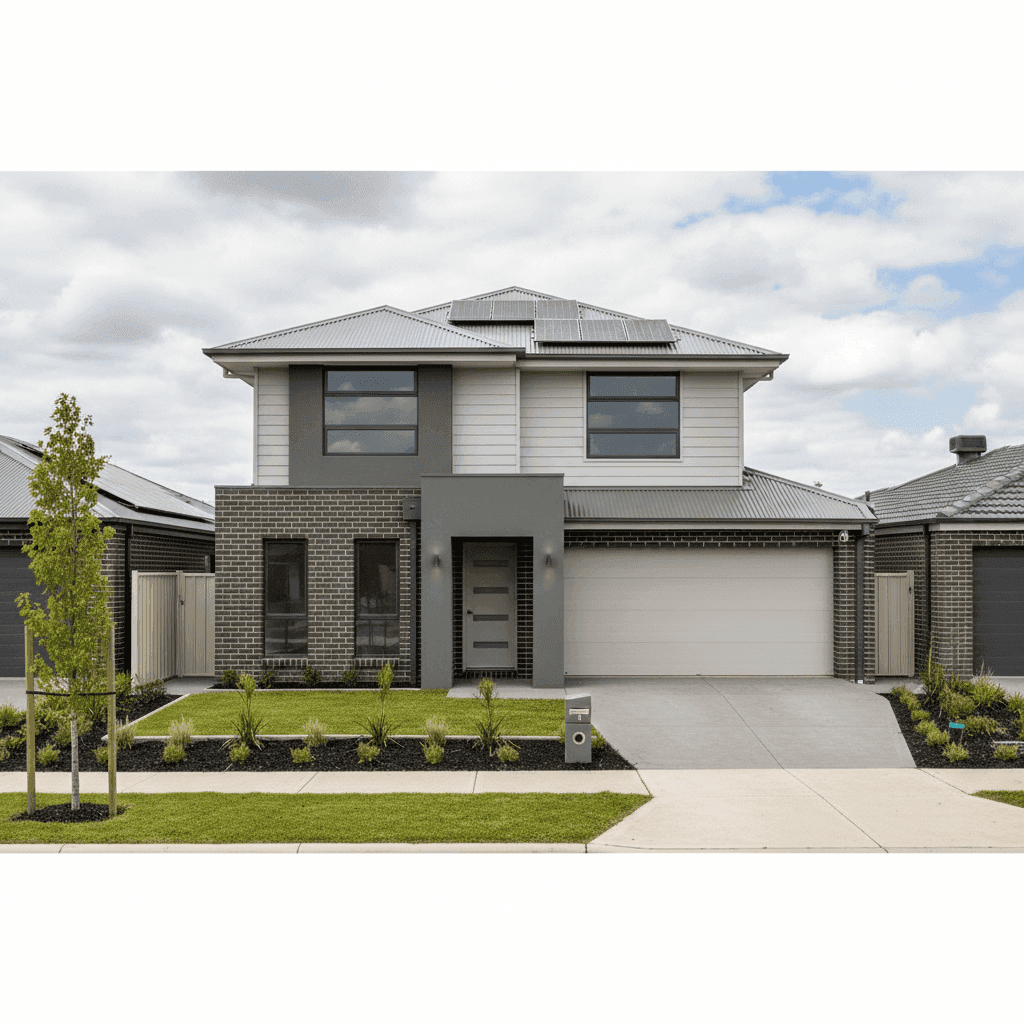
If you own a free standing home in Wollert, VIC 3750, you might be wondering whether your building insurance premium is competitive — or whether you're quietly overpaying. This article breaks down a real building-only insurance quote for a three-bedroom, two-bathroom home in Wollert, comparing it against local, state-wide, and national benchmarks to help you make a more informed decision.
---
Is This Quote Fair?
The short answer: yes — this is an exceptionally competitive quote.
At $818 per year (or roughly $77 per month), this building-only policy for a 214 sqm free standing home in Wollert is rated CHEAP — meaning it sits well below what most homeowners in the area are paying. For a property with a sum insured of $614,000 and a building excess of $2,000, that's a strong outcome.
To put it in perspective, the suburb average for building insurance in Wollert sits at $2,073 per year, and the median is $1,391 per year. Even the cheapest quarter of quotes in the area (the 25th percentile) comes in at $1,254 per year — still more than 50% higher than this quote. In other words, this premium isn't just below average; it's below the floor of what most locals are paying.
That said, it's worth noting that the sample size for Wollert is 13 quotes, so the local data is directionally useful but not as deep as more established suburbs. Still, the gap between this quote and the suburb benchmarks is significant enough to be meaningful.
---
How Wollert Compares
Zooming out to a broader view reinforces just how well-priced this quote is. Here's how Wollert stacks up against the rest of Victoria and the country:
| Benchmark | Annual Premium |
|---|---|
| This Quote | $818 |
| Wollert Suburb Average | $2,073 |
| Wollert Suburb Median | $1,391 |
| LGA (Whittlesea) Average | $1,850 |
| VIC State Average | $2,921 |
| VIC State Median | $2,694 |
| National Average | $2,965 |
| National Median | $2,716 |
The Wollert suburb average of $2,073 is already below the Victorian state average of $2,921 — suggesting that Wollert is a relatively affordable area to insure compared to much of Victoria. The national average of $2,965 reflects the drag of high-risk regions like Far North Queensland and cyclone-prone coastal areas, which pushes the figure up considerably.
Wollert's position in Melbourne's northern growth corridor, away from bushfire-prone regions and coastal flood zones, likely contributes to its lower-than-average risk profile. The City of Whittlesea LGA average of $1,850 per year sits comfortably below the state figure, further suggesting this is a lower-risk pocket of Victoria for home insurance purposes.
---
Property Features That Affect Your Premium
Several characteristics of this particular property work in the homeowner's favour when it comes to insurance pricing.
Double Brick construction is generally viewed favourably by insurers. It offers strong resistance to fire, wind, and impact damage compared to lightweight cladding or weatherboard. This can translate directly into lower premiums, as the cost to repair or rebuild after a claim is often lower — and the likelihood of a claim may be reduced.
Steel/Colorbond roofing is another tick in the right column. Colorbond is durable, low-maintenance, and highly resistant to the elements. It performs well in hail events and doesn't deteriorate as quickly as older tile or terracotta roofing, which can be a significant source of claims.
Slab foundation is the standard for newer builds in Victoria and is generally considered stable and low-risk, particularly in areas without significant soil movement issues.
Construction year: 2025 is a major factor. Brand-new homes are built to the latest Australian building codes, which incorporate modern fire safety, structural, and weatherproofing standards. Insurers typically reward newer builds with lower premiums because the risk of structural defects, outdated wiring, or aged plumbing is essentially zero.
Solar panels are present on this property. While solar adds value and can affect replacement costs, most modern policies include solar panels as part of the building sum insured, and their presence doesn't typically push premiums up significantly.
The absence of a pool and no cyclone risk designation also keep things simple. Pools can introduce liability considerations, and cyclone-rated areas attract loading in some states — neither applies here.
---
Tips for Homeowners in Wollert
Even if your current premium is competitive, there are always ways to stay on top of your cover and protect your investment.
1. Review your sum insured regularly. Building costs have risen sharply across Australia in recent years. A sum insured of $614,000 for a 214 sqm new build may be appropriate today, but reconstruction costs can shift. Use a building cost calculator annually to ensure you're not underinsured — this is one of the most common and costly mistakes homeowners make.
2. Understand what "building only" cover means. A building-only policy covers the physical structure — walls, roof, floors, and fixed fittings — but not your furniture, appliances, or personal belongings. If you haven't already considered contents insurance, it's worth getting a separate quote to ensure you're fully protected.
3. Don't set and forget. Insurance markets move. Even if your current premium is well below average, that doesn't mean it will stay that way at renewal. Set a reminder to compare quotes each year before your renewal date — it takes minutes and could save you hundreds.
4. Check your excess settings. This policy carries a $2,000 building excess. A higher excess generally lowers your premium, but make sure you're comfortable covering that amount out of pocket in the event of a claim. If cash flow is a concern, it may be worth exploring a lower excess option, even if it costs slightly more annually.
---
Ready to Compare Your Own Quote?
Whether you're a first-time buyer in Wollert or a long-term homeowner looking to cut costs, comparing quotes is the fastest way to know if you're getting a fair deal. Get a home insurance quote at CoverClub and see how your premium stacks up against real data from your suburb and beyond. It's free, fast, and could save you significantly at renewal time.