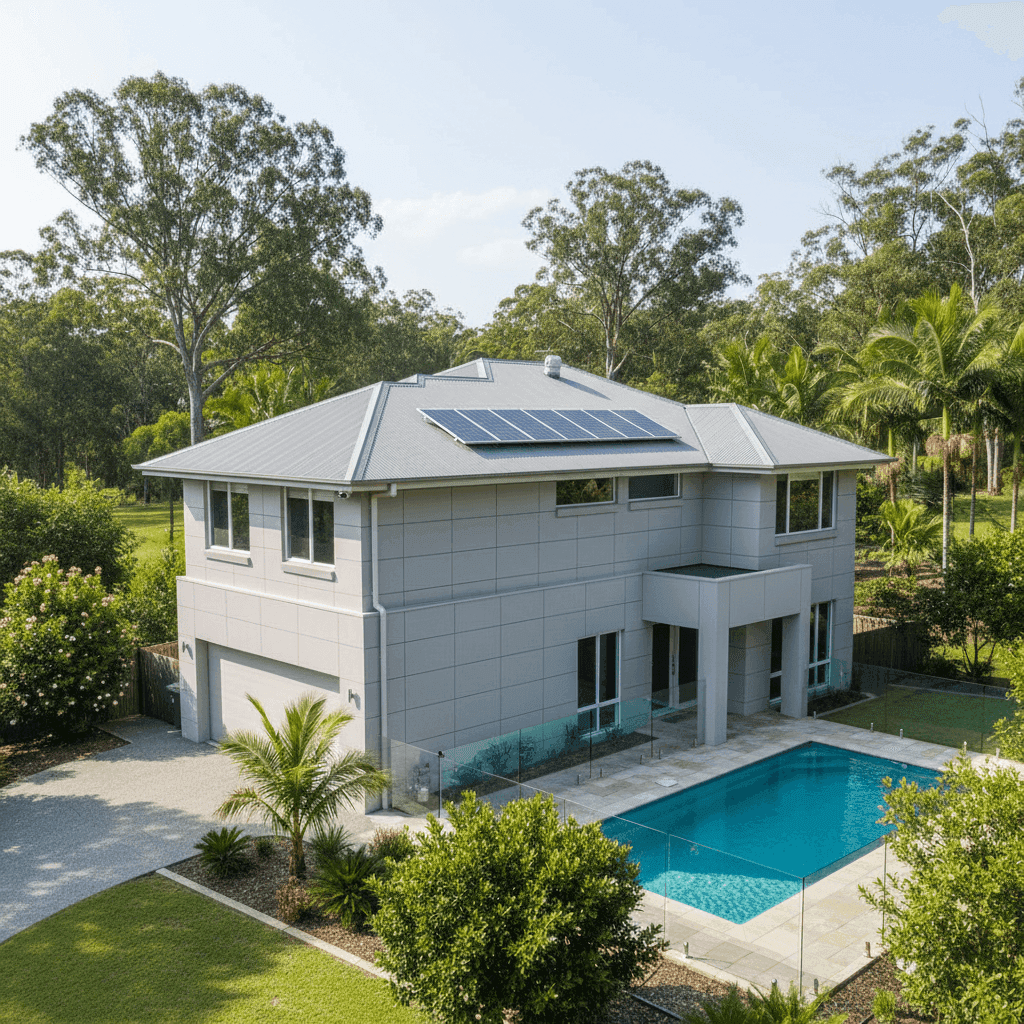
Wollongbar is a quiet, leafy town in the Northern Rivers region of New South Wales, sitting just inland from the coast near Lismore. It's an area that attracts families and professionals looking for space without the hustle of a larger city — and a well-built, five-bedroom free standing home here is a significant asset worth protecting. This article breaks down a recent home and contents insurance quote for a property in Wollongbar (postcode 2477), examining whether the premium represents fair value and what local homeowners should know before renewing or switching their cover.
---
Is This Quote Fair?
The quote in question comes in at $2,633 per year (or $268/month) for combined home and contents cover, with a building sum insured of $1,076,000 and contents valued at $123,000. The building excess sits at $3,000 and the contents excess at $2,000.
Our pricing analysis rates this quote as FAIR — around average for the area. That's a reasonable outcome, though it's worth understanding exactly what "average" means in this context, because the numbers tell an interesting story depending on which benchmark you use.
Compared to the Wollongbar suburb average of $2,239/year, this quote runs about $394 higher — roughly 18% above the local mean. However, it's well within the suburb's interquartile range: the 25th percentile sits at $1,429/yr and the 75th percentile at $2,924/yr, meaning this quote comfortably falls in the upper-middle band of what locals are paying. Given the property's size (277 sqm), above-average fittings, pool, and solar panels, a premium above the suburb median of $1,933 is entirely expected.
---
How Wollongbar Compares
One of the most striking aspects of this quote is just how favourably Wollongbar compares to broader benchmarks. Take a look:
| Benchmark | Average Premium | Median Premium |
|---|---|---|
| Wollongbar (suburb) | $2,239/yr | $1,933/yr |
| NSW (state) | $9,528/yr | $3,770/yr |
| National | $5,347/yr | $2,764/yr |
| Lismore LGA | $18,453/yr | — |
The figures are stark. The NSW state average of $9,528/year is more than three and a half times the Wollongbar suburb average — a reflection of the enormous variability in risk across the state, driven largely by flood-prone and cyclone-affected areas. Even the national average of $5,347/year dwarfs what Wollongbar homeowners are typically paying.
Perhaps most telling is the Lismore LGA average of $18,453/year — a figure heavily influenced by the catastrophic flooding that devastated the region in 2022. Wollongbar, while geographically part of the Lismore LGA, sits on higher ground and carries a substantially lower risk profile than lower-lying parts of the region. This geographic advantage is clearly reflected in local premiums.
For a five-bedroom home with a seven-figure sum insured, a quote of $2,633 looks genuinely competitive in this broader context.
---
Property Features That Affect Your Premium
Several characteristics of this property will have influenced the quote, both positively and negatively.
Hebel external walls are a modern, lightweight aerated concrete panel product that offers excellent fire resistance and structural durability. Insurers generally view Hebel favourably compared to older materials, which can contribute to a more competitive premium.
Steel/Colorbond roofing is widely regarded as one of the best roofing choices in Australia. It's durable, low-maintenance, and highly resistant to fire and storm damage — all factors that reduce insurer risk. Combined with a concrete slab foundation, this property has a solid structural profile that supports a reasonable premium.
Vinyl flooring is practical and cost-effective to replace, which can help keep contents and building replacement costs more predictable for insurers.
Above-average fittings quality is a factor that pushes the sum insured higher — and rightly so. Kitchens, bathrooms, and fixtures of above-average quality cost more to repair or replace, which is reflected in both the $1,076,000 building sum insured and the premium itself.
The swimming pool adds both asset value and liability considerations. Pools require specific coverage and can marginally increase premiums due to the cost of repair or replacement and associated liability risks.
Solar panels are increasingly common on Australian homes, but they do add to the replacement value of the building. A quality solar system can cost tens of thousands of dollars to replace, so ensuring they're explicitly covered under your building policy is essential.
Finally, it's worth noting this property is not in a cyclone risk area, which is a meaningful premium advantage for a Northern Rivers property. Cyclone-rated cover can add significantly to premiums in coastal and far-north Queensland and NSW regions.
---
Tips for Homeowners in Wollongbar
1. Confirm your flood cover status explicitly. Even though Wollongbar sits on higher ground than much of the Lismore LGA, the 2022 floods demonstrated how quickly conditions can change across the Northern Rivers. Review your policy documents carefully to confirm whether flood is included — it's not always standard — and understand exactly what your insurer defines as a flood event versus storm surge or rainwater runoff.
2. Review your sum insured annually. With a building valued at $1,076,000, any underinsurance gap could be costly. Construction costs have risen significantly in recent years, particularly in regional NSW where trades and materials can command a premium. Use a building cost calculator each year at renewal to ensure your sum insured keeps pace with real replacement costs.
3. Check that your solar panels and pool are explicitly listed. Both your solar system and pool should be itemised or acknowledged in your policy. Some standard policies have sub-limits or exclusions for solar panels, and pool damage (especially motor and pump components) may require specific cover. Ask your insurer directly if you're unsure.
4. Consider whether your excess levels are working for you. With a $3,000 building excess and $2,000 contents excess, you're carrying a meaningful share of risk yourself — which is one reason the premium is relatively contained. If your financial position allows you to absorb these amounts comfortably in the event of a claim, this is a sensible trade-off. If not, it may be worth modelling a lower excess option at your next renewal.
---
Compare Your Options with CoverClub
Whether you're renewing an existing policy or shopping for the first time, it pays to see what the market has to offer. CoverClub makes it easy to compare home and contents insurance quotes tailored to your specific property — so you're not leaving money on the table or, worse, finding yourself underinsured when it matters most. Get a personalised quote today and see how your premium stacks up against your neighbours.