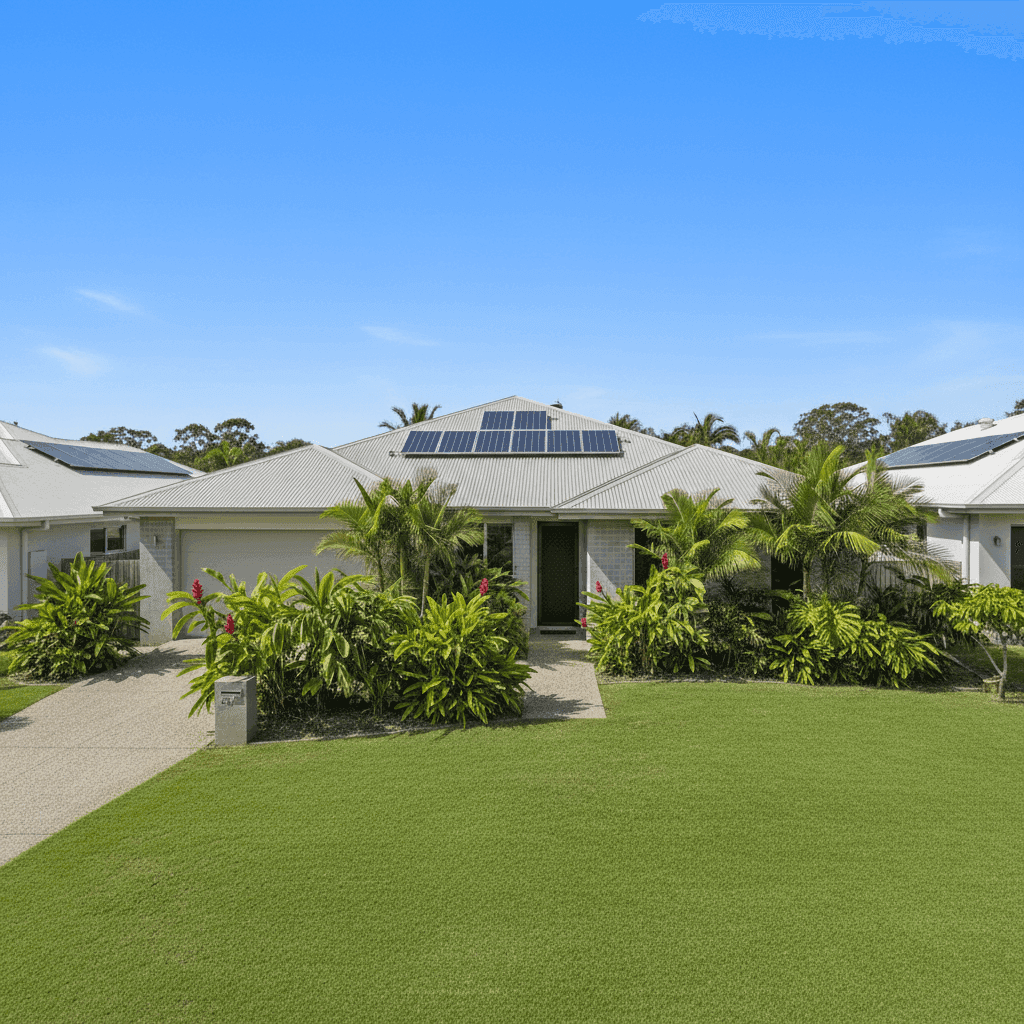
Wongaling Beach, nestled along the stunning Mission Beach coastline in Far North Queensland, is a beautiful place to call home — but insuring a property here comes with its own set of considerations. This article takes a close look at a real home and contents insurance quote for a four-bedroom, free-standing home in the area (postcode 4852), breaking down whether the premium is competitive and what's driving the cost.
---
Is This Quote Fair?
The quote in question comes in at $4,069 per year (or $368 per month) for combined home and contents cover, with a building sum insured of $700,000 and contents valued at $50,000. The building excess is $2,000, and the contents excess sits at $1,000.
Based on our pricing data, this quote is rated Expensive — above the suburb average. The suburb average for Wongaling Beach sits at $3,409 per year, with a median of $3,333. That means this quote is roughly 19% above the local average and about 22% above the median — a meaningful gap worth investigating before accepting the offer.
That said, it's worth noting that the suburb sample size here is relatively small (six quotes), so the local benchmark should be interpreted with some caution. Premiums can vary considerably depending on the insurer, the specific coverage terms, and how individual risk factors are assessed.
---
How Wongaling Beach Compares
To put this quote in proper context, it helps to zoom out and look at the broader picture.
| Benchmark | Annual Premium |
|---|---|
| This Quote | $4,069 |
| Suburb Average (Wongaling Beach) | $3,409 |
| Suburb Median | $3,333 |
| Suburb 75th Percentile | $3,778 |
| LGA Average (Cassowary Coast) | $5,573 |
| QLD State Median | $3,903 |
| QLD State Average | $9,129 |
| National Average | $5,347 |
| National Median | $2,764 |
A few things stand out here. First, the Queensland state average of $9,129 is extraordinarily high — a reflection of the significant number of high-risk properties across the state, particularly in cyclone-prone and flood-affected regions. The state median of $3,903 is a more representative figure for typical Queensland homeowners, and this quote sits just below that mark.
Compared to the national picture, the quote is below the national average of $5,347 but above the national median of $2,764. This is consistent with what you'd expect for a property in a cyclone-risk zone — premiums in these areas are structurally higher than the national median, even for well-built homes.
Interestingly, the Cassowary Coast LGA average of $5,573 is considerably higher than this individual quote, which suggests the quote may actually be on the more competitive end when viewed through a regional lens, despite being above the immediate suburb average.
---
Property Features That Affect Your Premium
Several characteristics of this property have a direct bearing on the premium — both positively and negatively.
Cyclone Risk Zone
This is the single biggest factor. Wongaling Beach sits in a designated cyclone risk area, and insurers price this risk accordingly. Cyclone cover typically includes damage from high winds, storm surge, and associated debris — all of which are genuine threats along the North Queensland coast. Expect this factor alone to add significantly to any premium in this postcode.
Construction: Concrete Walls & Colorbond Roof
On the positive side, the property's construction profile is quite strong. Concrete external walls are highly regarded by insurers for their resilience against wind, impact, and fire. Combined with a steel/Colorbond roof, which performs well in high-wind events when properly installed and secured, this home has a construction profile that should attract more favourable underwriting treatment than a timber-framed or fibre cement equivalent.
Slab Foundation
A concrete slab foundation is generally viewed favourably by insurers. It reduces exposure to certain types of water damage and pest-related structural issues, and it's a solid choice for the region's climate.
Solar Panels
The property has solar panels installed, which adds replacement value to the building sum insured. Solar systems can be damaged in severe weather events, and insurers factor this into their risk calculations. It's worth confirming with your insurer exactly how your solar system is covered — whether it falls under building cover or requires a separate endorsement.
New Build (2026)
As a newly constructed home, this property benefits from modern building codes, which in Queensland have been progressively strengthened to improve cyclone resilience. Newer homes in cyclone zones are generally built to higher wind-resistance standards than older stock, which can positively influence underwriting assessments.
Vinyl Flooring & Standard Fittings
Vinyl flooring is practical and cost-effective to replace, which may have a modest positive effect on the contents and building replacement cost calculations. Standard fittings (as opposed to premium or luxury fixtures) also help keep the sum insured at a more manageable level.
---
Tips for Homeowners in Wongaling Beach
1. Shop Around — Even in a Niche Market
With only a handful of insurers actively competing for cyclone-zone business in Far North Queensland, it can feel like there's little choice. But premiums can still vary by hundreds — or even thousands — of dollars between providers. Use a comparison service like CoverClub to see multiple quotes side by side before committing.
2. Review Your Sum Insured Carefully
A $700,000 building sum insured is a significant figure. Make sure it reflects the full cost to rebuild your home from scratch — including demolition, materials, and labour at current Queensland rates — rather than the market value of the property. Underinsurance is a common and costly mistake, particularly when construction costs have risen sharply in recent years.
3. Ask About Cyclone Excess Clauses
Many policies in cyclone-prone areas include a separate, higher excess that applies specifically to cyclone-related claims. This can be substantially more than the standard building excess. Make sure you understand exactly what you'd be liable for out of pocket in the event of a cyclone claim, and factor this into your financial planning.
4. Maintain Your Property to Reduce Risk
Insurers in cyclone zones often look favourably on well-maintained properties. Keeping trees trimmed back from the roofline, ensuring roof fixings and flashings are in good condition, and securing any outdoor structures can all reduce your risk profile — and may support a better outcome at renewal time.
---
Compare Your Options with CoverClub
Whether you're buying a new policy or reviewing your existing cover, it pays to know where your premium sits relative to the market. CoverClub makes it easy to compare home insurance quotes for properties across Australia, including in high-risk areas like Wongaling Beach. You can also explore detailed suburb-level insurance data for Wongaling Beach to better understand what others in your area are paying. Don't settle for the first quote — a few minutes of comparison could save you a meaningful amount each year.