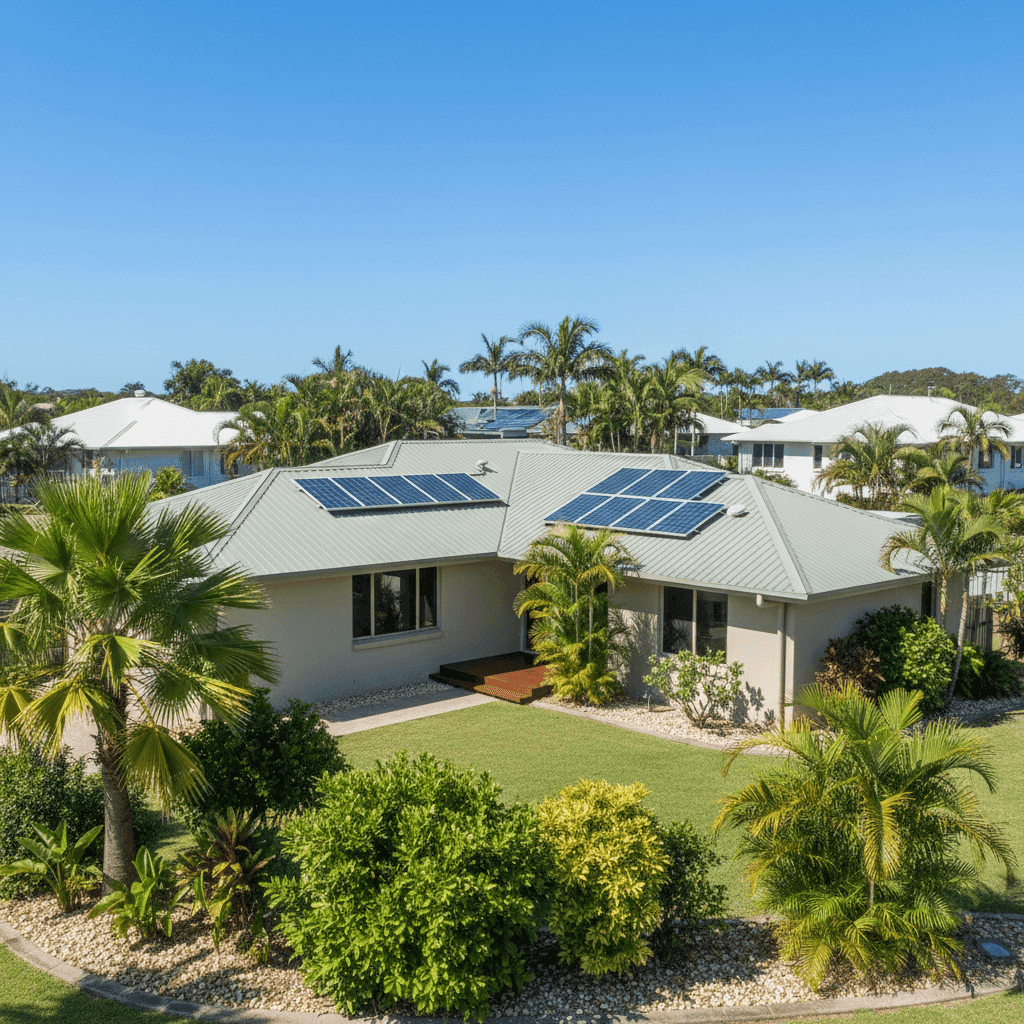
If you own a free standing home in Wongaling Beach, QLD 4852, you've probably noticed that insurance premiums here don't come cheap. Sitting on the Cassowary Coast — one of Australia's most cyclone-exposed stretches of coastline — this beachside suburb commands some of the highest home insurance premiums in the country. In this article, we break down a real home and contents insurance quote for a 3-bedroom, 2-bathroom property in the area, and put it into context against local, state, and national benchmarks.
---
Is This Quote Fair?
The quote in question comes to $3,295 per year (or $317/month) for combined home and contents cover, with a building sum insured of $515,000 and contents valued at $170,000. The building excess sits at $3,000, and the contents excess at $1,000.
Our price rating for this quote is FAIR — Around Average.
That assessment holds up when you look at the numbers. The suburb median premium for Wongaling Beach sits at $3,331/year, meaning this quote lands just below the midpoint — a solid result in a postcode where premiums can swing dramatically. The suburb average is slightly higher at $3,677/year, which is often pulled upward by outlier quotes at the expensive end of the market.
In practical terms, this homeowner is paying less than the typical Wongaling Beach resident while still holding a healthy sum insured. That's a reasonable outcome, though as we'll explore below, there's still room to do better.
---
How Wongaling Beach Compares
To understand what "fair" really means here, it helps to zoom out and look at the broader picture.
| Benchmark | Annual Premium |
|---|---|
| This Quote | $3,295 |
| Suburb Median (Wongaling Beach) | $3,331 |
| Suburb Average | $3,677 |
| LGA Average (Cassowary Coast) | $5,573 |
| QLD State Average | $4,547 |
| QLD State Median | $3,931 |
| National Average | $2,965 |
| National Median | $2,716 |
A few things stand out immediately. First, the Cassowary Coast LGA average of $5,573 is staggering — nearly 70% above the national average. This reflects the outsized natural hazard risk across the region, particularly cyclone exposure. The fact that this quote comes in well below the LGA average is meaningful.
Second, this quote sits below both the QLD state average ($4,547) and the QLD median ($3,931) — a genuine positive for a property in one of Queensland's higher-risk coastal corridors. You can explore how Queensland premiums compare more broadly on our QLD insurance statistics page.
Third, the quote is above the national average ($2,965) and median ($2,716) — but that's entirely expected. Properties in cyclone-prone coastal Queensland simply carry more risk than the average Australian home, and premiums reflect that reality. See how this stacks up against the rest of the country on our national insurance statistics page.
For a deeper look at what homes in this postcode are paying, visit the Wongaling Beach insurance statistics page, which draws on a sample of 30 quotes from the area.
---
Property Features That Affect Your Premium
Every property is different, and insurers weigh up a range of physical characteristics when calculating your premium. Here's how this particular home's features play into the pricing:
Cyclone Risk Zone
This is the single biggest factor. Wongaling Beach sits firmly within a designated cyclone risk area, which means insurers apply significant loadings to account for the potential for wind damage, storm surge, and related destruction. This alone can push premiums well above the national norm.
Concrete External Walls
Concrete construction is generally viewed favourably by insurers. It's more resistant to wind and impact damage than timber weatherboard, and performs well in cyclone conditions. This likely provides some premium relief compared to a timber-framed home in the same location.
Steel/Colorbond Roof
Colorbond roofing is a common and practical choice in Far North Queensland. It's durable, lightweight, and performs reasonably well in high-wind events. However, roofs remain one of the most vulnerable parts of a home in a cyclone, so insurers still factor in this risk carefully regardless of material.
Slab Foundation & Tile Flooring
A concrete slab foundation is considered low-risk from an insurance perspective — there's no subfloor cavity to flood or rot, and the structure is stable. Tile flooring similarly adds little risk and is practical in a tropical climate.
Solar Panels
The property includes solar panels, which add replacement value to the building and can slightly increase the cost to rebuild. It's worth confirming with your insurer that solar panels are explicitly covered under your building policy, as some policies have specific conditions or sub-limits.
Building Size & Age
At 139 sqm and built in 1997, this is a modestly sized home of moderate age. A $515,000 sum insured works out to roughly $3,700/sqm — broadly reasonable for a concrete construction in regional Queensland, though it's always worth reviewing your sum insured periodically to account for rising construction costs.
---
Tips for Homeowners in Wongaling Beach
Living in a cyclone risk zone means insurance is non-negotiable — but that doesn't mean you should simply accept the first quote you receive. Here are some practical steps to make sure you're getting value:
- Compare multiple quotes every year. Premiums in this postcode vary widely — the gap between the 25th percentile ($2,411/yr) and the 75th percentile ($5,020/yr) in Wongaling Beach is over $2,600. That's a significant spread, and shopping around is the most reliable way to land closer to the lower end. Get a comparison quote at CoverClub to see what's available for your property.
- Review your sum insured carefully. Construction costs in regional Queensland have risen substantially in recent years. Make sure your building sum insured reflects what it would actually cost to rebuild your home today — not what you paid for it, and not a figure set years ago. Underinsurance is a serious risk in the event of a total loss.
- Ask about cyclone mitigation discounts. Some insurers offer reduced premiums for homes that have been upgraded to meet higher wind resistance standards — such as tie-down strapping, reinforced roofing, or cyclone-rated shutters. If you've made any improvements, make sure your insurer knows about them.
- Consider your excess strategically. This quote carries a $3,000 building excess, which is on the higher side. A higher excess typically reduces your premium, but it also means a larger out-of-pocket cost when you claim. Make sure the excess is set at a level you could comfortably cover in an emergency — particularly relevant in a region where storm damage claims can come with little warning.
---
Ready to Compare?
Whether you're renewing your current policy or shopping for the first time, it pays to see what the market has to offer. CoverClub makes it easy to compare home and contents insurance quotes tailored to your property and location. Start your comparison at CoverClub and find out if you could be paying less for the same level of cover.