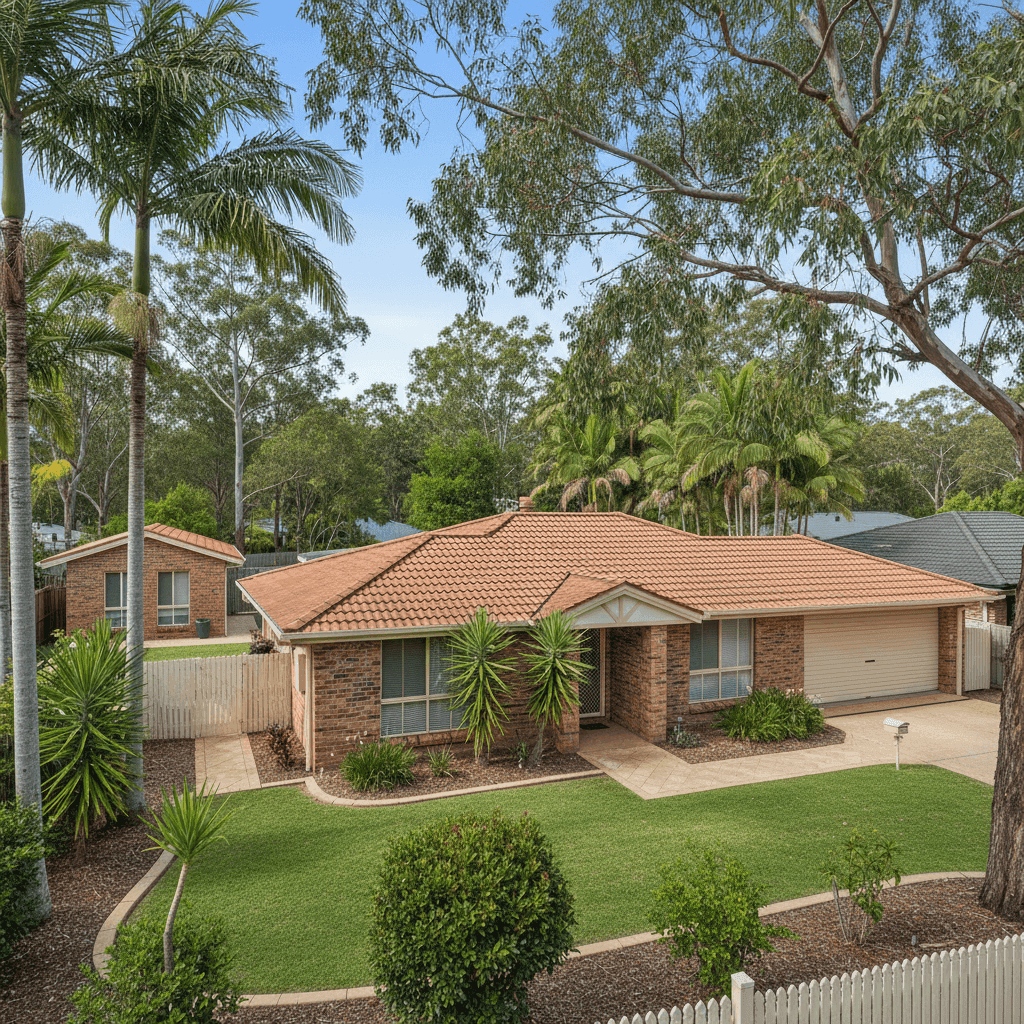
If you own a free standing home in Wongawallan, QLD 4210, you'll know this leafy hinterland suburb on the northern fringe of the Gold Coast offers a relaxed lifestyle — but that doesn't mean your home insurance should be an afterthought. We recently analysed a home and contents insurance quote for a three-bedroom, two-bathroom brick veneer home in the area, and the results are worth unpacking for any local homeowner thinking about their coverage.
---
Is This Quote Fair?
The quote in question came in at $5,370 per year (or $515 per month), covering a building sum insured of $728,000 and contents valued at $71,000, each with a $1,000 excess. Our price rating for this quote? Cheap — below average. That's genuinely good news.
To put it in perspective: the suburb average premium for Wongawallan sits at $9,396 per year, and the median is $6,196. This quote lands well beneath both figures — and even falls below the suburb's 25th percentile of $5,602, meaning it's cheaper than at least 75% of quotes we've seen for comparable properties in the area. For a property of this size and profile, that represents meaningful savings.
It's worth noting that Wongawallan premiums can vary wildly — the 75th percentile sits at $13,970 per year, which is nearly 2.6 times this quote. That spread tells you just how much insurers can differ in how they price the same suburb, which is exactly why comparing quotes matters.
---
How Wongawallan Compares
Zooming out to a broader view paints an interesting picture. Here's how this quote stacks up across different benchmarks:
| Benchmark | Premium |
|---|---|
| This Quote | $5,370/yr |
| Wongawallan Suburb Average | $9,396/yr |
| Wongawallan Suburb Median | $6,196/yr |
| Gold Coast LGA Average | $8,161/yr |
| QLD State Average | $9,129/yr |
| QLD State Median | $3,903/yr |
| National Average | $5,347/yr |
| National Median | $2,764/yr |
A few things stand out here. First, Queensland as a state carries some of the highest average home insurance premiums in the country — largely driven by elevated weather risks including floods, storms, and cyclones in many parts of the state. The QLD average of $9,129 per year is notably higher than the national average of $5,347.
Interestingly, this quote is almost exactly in line with the national average, which is a strong outcome for a Queensland property. It's also well below the Gold Coast LGA average of $8,161 — suggesting the insurer has priced this particular property favourably relative to the broader region.
You can explore more local data on the Wongawallan suburb stats page to see how quotes in the area trend over time.
> Keep in mind: The suburb sample size here is 8 quotes, so while directionally useful, the local averages may shift as more data comes in.
---
Property Features That Affect Your Premium
Every home is different, and insurers weigh up a range of factors when calculating your premium. Here's how the features of this particular property likely influence its pricing:
Construction (Brick Veneer + Tile Roof)
Brick veneer walls and a tiled roof are generally viewed favourably by insurers. Brick veneer offers solid fire resistance and durability, while tiles are considered a low-maintenance, long-lasting roofing material. Both tend to attract more competitive premiums compared to, say, timber weatherboard or corrugated iron.
Age of the Home (Built 1982)
At over 40 years old, this home is considered a mid-aged property. Insurers may factor in the potential for ageing plumbing, wiring, and structural components. That said, a brick veneer home on a slab foundation from this era is generally well-regarded for its structural integrity — slab foundations in particular are associated with lower subsidence risk.
Granny Flat
The presence of a granny flat adds complexity to a home insurance policy. It increases the replacement value of the property and may affect contents coverage depending on whether the flat is occupied by a tenant or family member. It's important to confirm with your insurer that the granny flat is explicitly covered under your policy and that the building sum insured accounts for it.
Ducted Climate Control
Ducted air conditioning systems are a valuable inclusion and contribute to the overall sum insured. They can also be a source of claims (e.g., mechanical breakdown or storm damage to external units), so it's worth checking whether your policy covers these systems and under what conditions.
No Pool, No Solar
The absence of a swimming pool and solar panels simplifies the risk profile slightly. Pools can introduce liability concerns, and solar systems — while increasingly common — add to the replacement cost and can complicate roof-related claims. Neither applying here keeps things straightforward.
Flooring: Tiles
Tiled flooring throughout is a practical and durable choice for Queensland's climate. From an insurance standpoint, tiles are less susceptible to water damage than carpet or timber, which can be a minor positive in the eyes of underwriters.
---
Tips for Homeowners in Wongawallan
Whether you're reviewing an existing policy or shopping for a new one, here are four practical tips tailored to homeowners in this part of South East Queensland:
- Review your building sum insured regularly. Construction costs have risen sharply in recent years, and a sum insured set several years ago may no longer reflect the true cost to rebuild your home — especially with a granny flat on the property. Use a building cost calculator or speak with a quantity surveyor to make sure you're not underinsured.
- Confirm granny flat coverage explicitly. Not all standard home insurance policies automatically cover secondary dwellings. Ask your insurer directly whether the granny flat is included in your building cover, and whether any contents within it are also protected.
- Check your storm and water damage inclusions. South East Queensland is no stranger to severe storms and flash flooding. Even though Wongawallan is not classified as a cyclone risk area, storm surge, heavy rainfall, and localised flooding can still cause significant damage. Make sure your policy clearly defines what's covered under storm versus flood events.
- Consider paying annually rather than monthly. This quote is $5,370 per year or $515 per month — that's $6,180 annualised if you pay monthly, a difference of $810. Paying upfront in one lump sum is a simple way to reduce your effective premium without changing your coverage at all.
---
Compare Your Options with CoverClub
A below-average quote is a great start, but it's still worth making sure you're getting the right level of cover — not just the cheapest price. CoverClub makes it easy to compare home and contents insurance quotes for properties across Wongawallan and the broader Gold Coast region. Get a quote today and see how your current premium stacks up against the market.