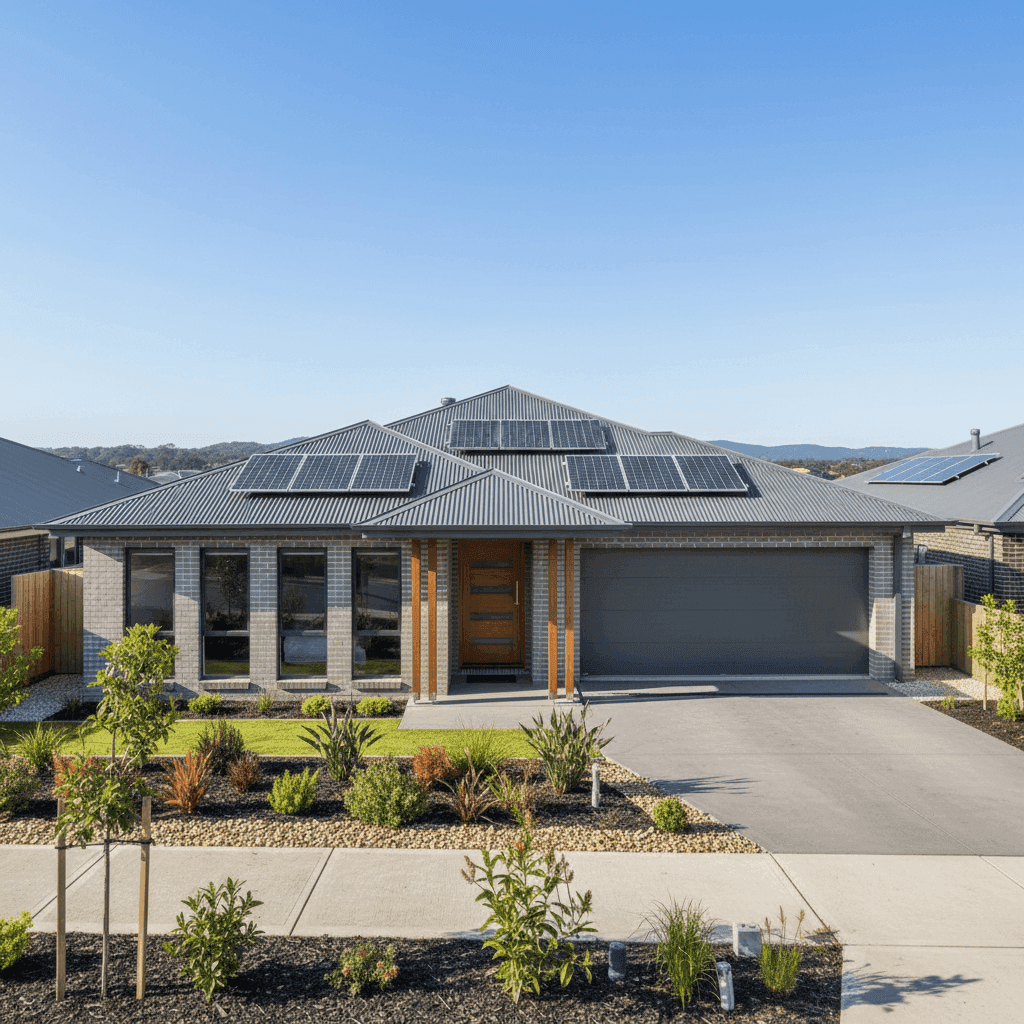
Home insurance costs in Australia can vary enormously — even within the same postcode. If you own a home in Wongawilli, NSW 2530, understanding where your premium sits relative to the broader market can be the difference between feeling confident in your cover and wondering if you're paying too much (or too little). This article breaks down a real home and contents insurance quote for a four-bedroom, free-standing home in Wongawilli, comparing it against suburb, state, and national benchmarks so you can make a more informed decision.
---
Is This Quote Fair?
The annual premium for this property comes in at $1,314 per year (or roughly $130 per month), covering both building and contents for a sum insured of $616,000 on the building and $72,000 on contents. Our price rating for this quote is CHEAP — below average — which is genuinely good news for the homeowner.
To put that in perspective: the suburb average premium in Wongawilli sits at $5,070 per year, and the median is even higher at $5,859. This quote is less than a quarter of what many comparable properties in the area are paying. Even against the suburb's 25th percentile — meaning the cheapest quarter of quotes — this premium of $1,314 comes in well below the $2,243 mark.
It's worth noting that the building excess is set at $3,000 (with a $1,000 contents excess), which is on the higher side. A higher excess is one of the most common ways to bring a premium down, so part of the competitive pricing here may reflect that trade-off. Still, for a well-built, modern home, this could be a very sensible arrangement.
---
How Wongawilli Compares
To fully appreciate this quote, it helps to zoom out and look at the bigger picture. Here's how Wongawilli stacks up against state and national figures:
| Benchmark | Average Premium | Median Premium |
|---|---|---|
| Wongawilli (suburb) | $5,070/yr | $5,859/yr |
| Wollongong LGA | $2,530/yr | — |
| NSW (state) | $3,801/yr | $3,410/yr |
| National | $2,965/yr | $2,716/yr |
What stands out immediately is that Wongawilli's suburb average of $5,070 is significantly higher than both the NSW state average of $3,801 and the national average of $2,965. The Wollongong LGA average of $2,530 is notably lower than the suburb figure, which suggests that premiums within Wongawilli itself are being pushed up by specific local risk factors — possibly related to bushfire exposure or other geographic considerations in pockets of the suburb.
It's also worth noting that the suburb sample size is 12 quotes, which is a relatively small dataset. While the figures are directionally useful, a larger sample would give us greater statistical confidence. That said, the spread between the 25th percentile ($2,243) and 75th percentile ($8,629) is enormous, highlighting just how much individual property characteristics and insurer pricing models can influence the final number.
Against all of these benchmarks, a premium of $1,314 is remarkably competitive.
---
Property Features That Affect Your Premium
Several characteristics of this property likely contribute to its favourable premium. Let's unpack the key ones:
Construction year (2020): A home built in 2020 benefits from modern building codes, which require higher standards for structural integrity, fire resistance, and weather resilience. Insurers generally view newer homes as lower risk, and this is reflected in more competitive pricing.
Brick veneer walls and Colorbond roof: Brick veneer is a popular and well-regarded construction type in Australia — it offers solid weather resistance while being cost-effective to repair. A steel Colorbond roof is similarly valued for its durability and resistance to fire and extreme weather. Together, these materials present a relatively low-risk profile to insurers.
Slab foundation: Concrete slab foundations are straightforward to assess and generally resistant to subsidence and pest damage, which can reduce uncertainty for underwriters.
Above-average fittings quality: Higher-quality fittings typically mean higher replacement costs — which can push premiums up. However, in this case, the sum insured of $616,000 appears to adequately reflect this, and the overall premium remains competitive.
Solar panels: The property has solar panels, which add some replacement value to the building sum insured. Most standard home insurance policies cover solar panels as part of the building, so it's important to ensure they're factored into your sum insured calculation.
Ducted climate control: Similarly, ducted systems are a significant fixed asset and should be included in your building sum insured. At $616,000, this property appears to be well covered for its 214 sqm footprint.
No pool, no cyclone risk zone: The absence of a pool removes a common liability consideration, and being outside a cyclone risk area means the policy doesn't need to account for that peril — both factors that can help keep premiums down.
---
Tips for Homeowners in Wongawilli
Whether you're reviewing your existing cover or shopping around for the first time, here are some practical steps worth considering:
1. Review your sum insured regularly. Building costs have risen sharply across Australia in recent years. A sum insured set even two or three years ago may no longer reflect the true cost of rebuilding your home. Use a building cost calculator or speak with a quantity surveyor to make sure $616,000 still holds up — especially with above-average fittings and solar panels in the mix.
2. Understand your excess trade-off. This policy carries a $3,000 building excess. That's manageable for major claims but means smaller issues — like storm damage to a fence or minor roof repairs — may not be worth claiming. Make sure your emergency fund can cover that gap before you commit to a high-excess policy.
3. Check what's included for solar panels and ducted systems. Not all policies treat solar panels and ducted air conditioning the same way. Some insurers cover them as part of the building automatically; others require them to be specifically listed. Read the Product Disclosure Statement (PDS) carefully and confirm with your insurer.
4. Compare quotes annually. Even if you're happy with your current premium, the home insurance market is competitive and pricing changes frequently. Spending 15 minutes comparing quotes at renewal time could save you hundreds of dollars — especially given the wide spread of premiums seen in Wongawilli.
---
Find a Better Deal with CoverClub
Whether this quote is your current policy or one you're considering, it's always worth seeing what else is on the market. CoverClub makes it easy to compare home and contents insurance quotes from multiple insurers in one place — so you can be confident you're getting the right cover at the right price. Get a quote today and see how your premium stacks up.